
Building A Recycled Rooftop Garden
Lauren and I moved into an apartment in Brooklyn (Park Slope) with two friends, Katie and Evan, three weeks ago. After several trips to IKEA and much elbow grease, our room is set up. One of the best features about the place is that we are on the fourth floor and have access to a roof directly above us. You have to climb out of our bedroom window and up a fire escape to get there, and we aren't totally sure if we're supposed to be doing it, but the view is too good to not.
Instead of finding a job right away, which I should really have been doing, I decided to turn the empty space on the roof into a garden. The first planter came in the form of a suitcase which fell apart on the way from the car up the stairs. We bought the suitcase in Delhi to cart copies of 100 Days of India back to the states and it survived all the way to the third floor of our apartment before failing us. It seemed sad to just throw it away, so I flung it up onto the roof and proceeded to cut some holes in the bottom with my Leatherman.

I went round the corner and bought a bag of organic potting soil and a packet of bok choi seeds. Lugging it up the stairs and then up the fire escape wasn't fun, and to my horror it didn't even fill the suitcase halfway. Back down and around the corner again, this time to get two more bags. This did it and I got the seeds straight in the ground. It was pleasing, but by no means did this constitute a garden.

Over the next few days I collated materials from the streets around our place. People in Park Slope seem to throw all sorts of things out on the pavement in front of their apartments. This happened in Portland, Oregon, too, but due to the rain, everything always looked soggy and unsavory. You rarely found a gem worthy of bringing home. Here, I found an old oak bed which was dismantled, some slats from a different bed, several 5-gallon buckets, a large drawer which was mostly in one piece and a whole load of random lengths of pine. I didn't even have to search hard, it was epic.
Lauren was worried about bed bugs, which are still a big problem in New York, but I contended that they can't burrow through ceilings. I tried to get the wood through the door and onto the roof as fast as possible. Some of the pieces were light and easy to get up the fire escape but others were challenging. An oak headboard was the hardest item to deal with. Lauren stood at the top of the ladder whilst I hoisted it up. It wasn't quite long enough/I wasn't quite tall enough, so she ended up having to heave more of it than we expected. Dangerous times. I do not recommend this! I vowed to choose manageable pieces of wood in the future.
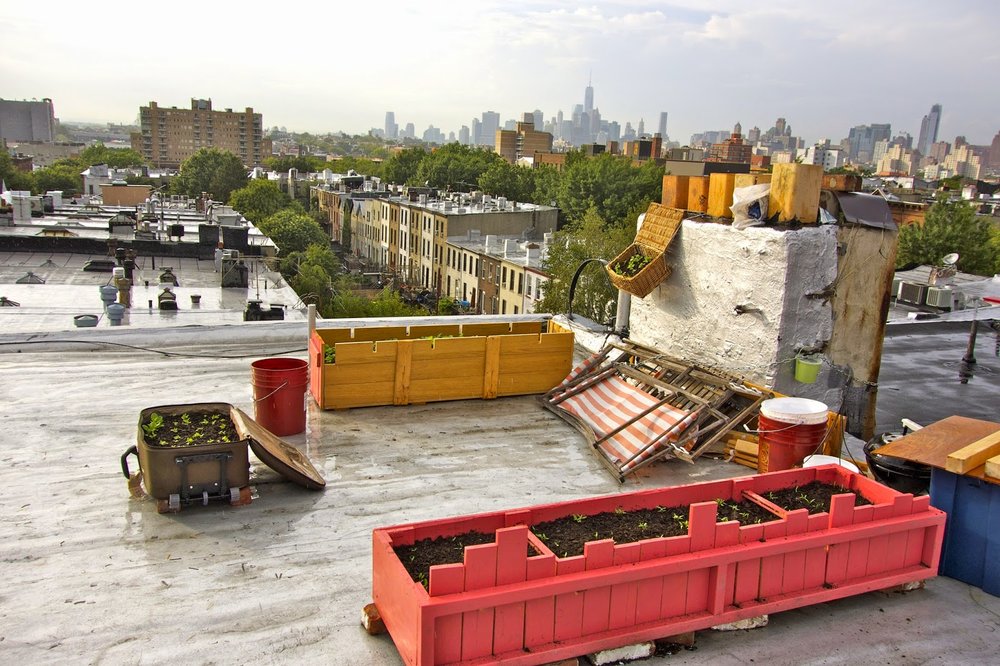
Anyway, an afternoon sawing up lengths and a packet of nails later, and I had two more planters. Holes drilled in the bottom of each for drainage. We'd made a set of tea shelves for the kitchen, too, and had some pink paint left over (a mix of an old 1/3 can or red and 1/2 a can of white) so one of the planters got pinked. It took two trips to Home Depot to pick up enough soil to fill them. In the pink planter (below), we planted spinach, rainbow chard and golden beets, and in the unpainted one below it, mustard greens and a mix of other lettuce leaves. Oh and a bit of sage at the end. One final touch was a basket found nearby too which we strung up and planted with a mix of everything.

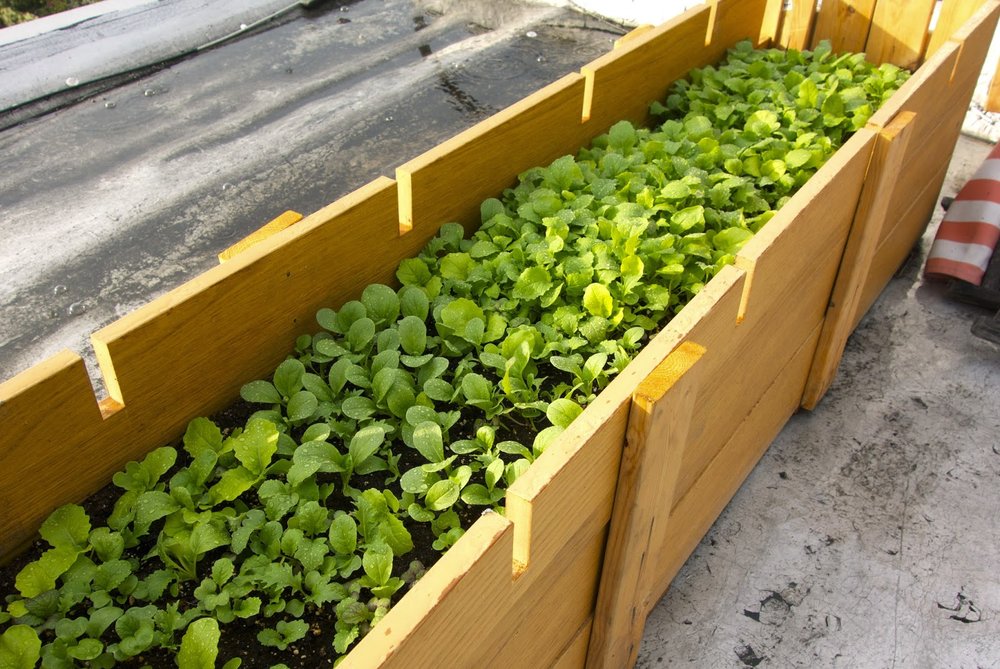


The rooftop garden in all its glory so far. Deckchairs at the ready!
In my next post I will be discussing and detailing the next step in the formation of the rooftop garden: building a WORM FARM! I can tell you are excited.
Vistit to Golden Bridge Pottery, Pondicherry
Adil Writer, who my last post focused on, recommended I visit the Golden Bridge Pottery, just down the road in Pondicherry. Most of the potters in Auroville trained with Ray Meeker and Deborah Smith there. Its only half an houror so away.
An abridged history of them and the pottery: before coming to India, Deborah apprenticed for a year with Yamomoto Toshu in Bizen, and Ray studied architecture and ceramics. The Sri Aurobindo Ashram drew them to this corner of southeastern India. They opened in 1971, and became the first producers of hand thrown glazed stoneware in South India.
Over the years a plethora of excellent potters have come and teach at Golden Bridge, including; Jim Danisch, Mike Dodd and Betty Woodman. Everyone we met in Aurovile talked about Golden Bridge Pottery as an inspiring place, but when we got off the bus in Pondi, (supposedly nearby) no rickshaw driver knew where it was. We had to borrow a policeman's phone to call and get directions... the rickshaw driver wasn't happy because the policeman negotiated for us and we got a far cheaper ride than he would have given us alone.
An abridged history of them and the pottery: before coming to India, Deborah apprenticed for a year with Yamomoto Toshu in Bizen, and Ray studied architecture and ceramics. The Sri Aurobindo Ashram drew them to this corner of southeastern India. They opened in 1971, and became the first producers of hand thrown glazed stoneware in South India.
Over the years a plethora of excellent potters have come and teach at Golden Bridge, including; Jim Danisch, Mike Dodd and Betty Woodman. Everyone we met in Aurovile talked about Golden Bridge Pottery as an inspiring place, but when we got off the bus in Pondi, (supposedly nearby) no rickshaw driver knew where it was. We had to borrow a policeman's phone to call and get directions... the rickshaw driver wasn't happy because the policeman negotiated for us and we got a far cheaper ride than he would have given us alone.
We arrived to find Ray, a very tall, friendly American, standing over a ginormous ceramic bust while one of his assistants meticulously scraped glaze off her muscular shoulders. The glaze had been applied incorrectly, so it had to be removed and re-applied. It was dusty work! He showed us around a bit, pointing out his collection of fabulous kilns: one massive 1400 cubic metre wood-fired kiln in which he fires large sculptural pieces, plus several smaller kilns and one very sweet anagama, made with a bamboo former.

Close up on the kiln bricks:


Here is Deborah's kiln plan:
 \
\The Anagama:

They have a small shop on the premises which has some lovely pots in it:


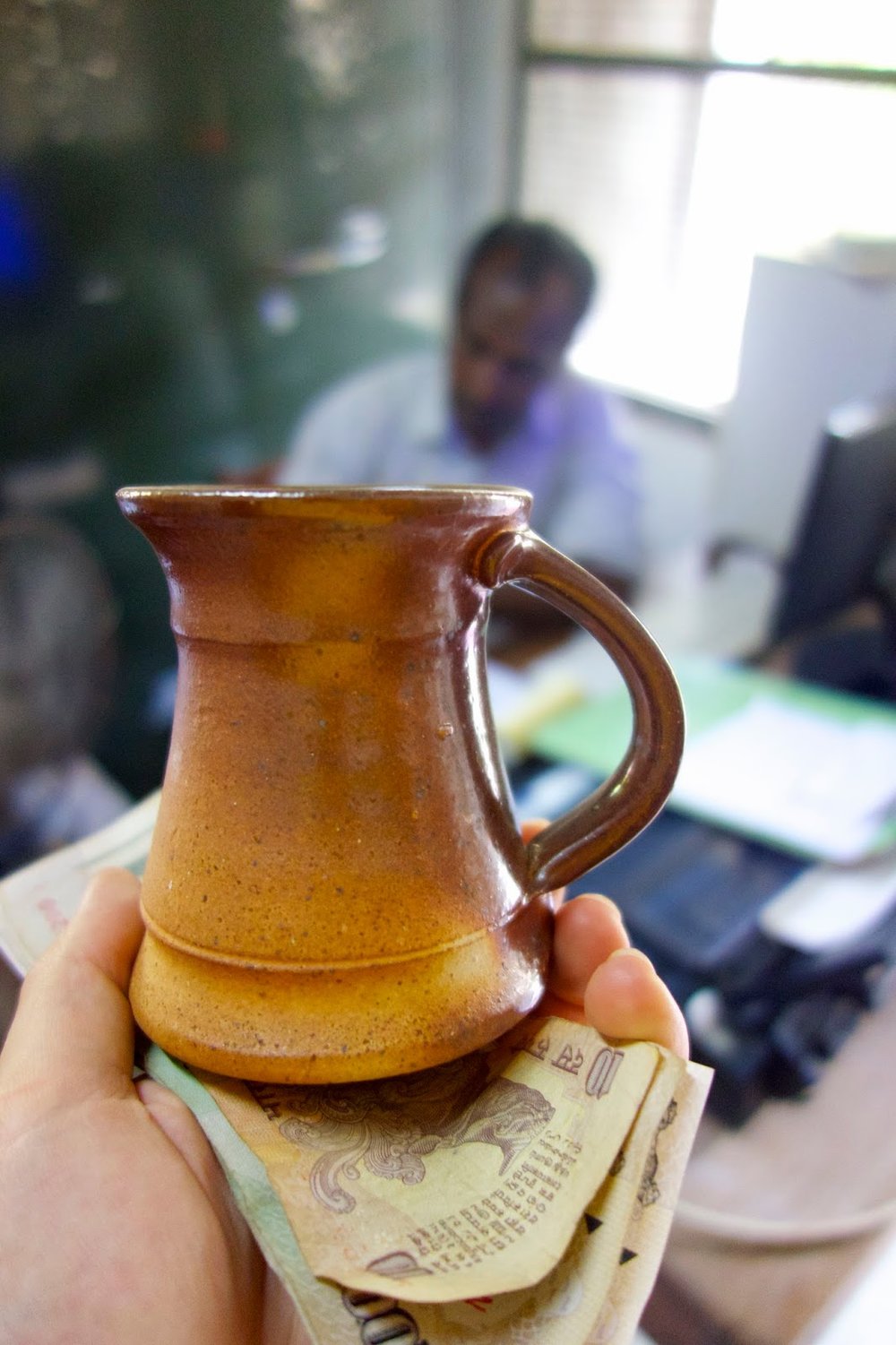
We bought a beautiful, tiny teapot and got to meet the potter who made it (pictured below). He explained to me how he made such tiny lids and spouts. Sri Aurobindo and the Mother are on the wall in the background.

Casserole dishes:
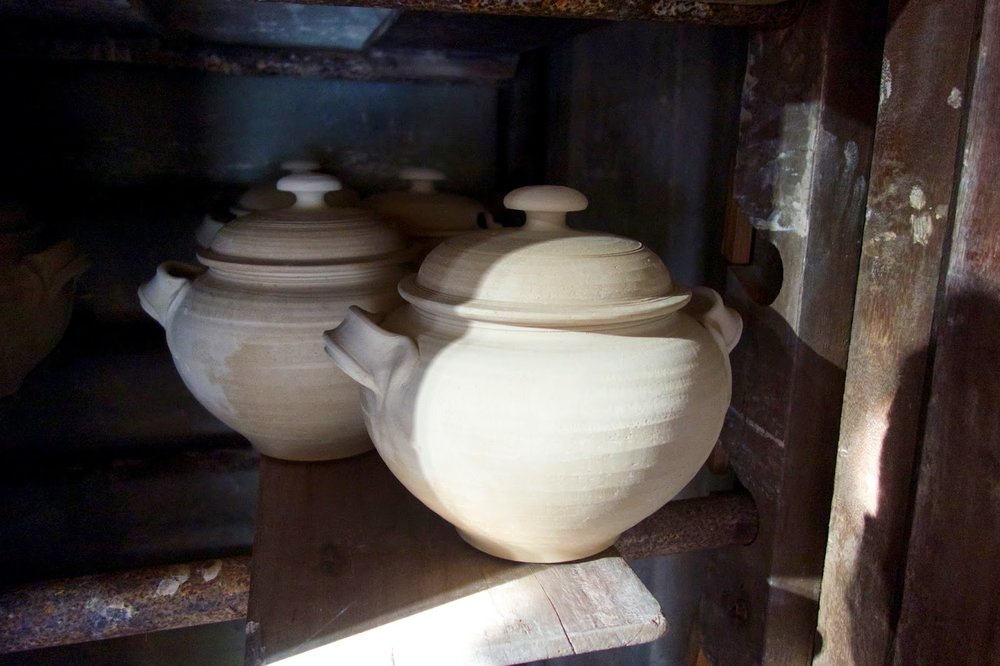
Stacks for the wood firing:

Bags of clay:

These are the drying pans, used after the clay is mixed to dry out:

Every summer, Ray and Deborah have a pottery course, and we got to see it in action. The course is 7 months long, and as we were leaving Ray asked if I'd like to come and teach it the following year. Tempting offer, but that's a while to be hanging out in Pondicherry!

Fresh off the wheel:

Traditional earthenware horses hang out in the grounds:

So this is my last post from India. I've been back awhile but just got round to finishing this. Lauren and I finished driving cross country, from L.A. to New York, and just moved into an apartment with a couple of friends. Here's a picture of what we spent all day putting together yesterday:
 |
| 'Brimnes' by IKEA |
Adil Writer & His Mad Ceramic Wall Hangings. Mandala Pottery, Auroville.
Whilst visiting the Dana Community, I saw Adil Writer and Anamika making pieces for the wall. I had been thinking about this possibility, as it seems that people are more willing to buy art that hangs on the wall rather than sits on a shelf (or at least they're willing to pay more for it).
Until I saw the finished result I was dubious as to whether these pieces would work. It seemed like Adil and Anamika were just throwing old bits of dry clay on thick square slabs. Adil told me he never recycles clay to be thrown with again, instead letting it dry out and then using it for pieces like this. As the layers built up, forms took shape. The work was very fast and spontaneous, no time for thinking or conceptualizing.
I thought this was the end of them. Ready for firing. So went around and saw what everyone else was up to, taking some pics and videos of the other potters at work. After some time (in India people always tell you things will happen in "some time"), someone came to tell me Adil wanted to show me something.
When I got back he was already in full flow, slapping the square slabs on the concrete floor. Not once or twice but many times; he didn't even stop when the slabs ripped and tore in pieces. I thought this was utter madness, but he seemed to have done it before.
After this I was led to another workspace where larger squares of clay had been laid out, all cross-hashed and slipped, ready to accept a shaggy crust.
The solid backing gives the torn surface pieces support and allows them to be hung safely. During the firing the top layer curls up like a lily pad. Here is a finished one:
After the performance Adil invited me upstairs to the studio where a lot of his finished works were hanging around, waiting to be shipped off for exhibitions.

Hands littered the floor.
Before I left I popped my head in another little space and found a selection of large platters.
And some finished ones:
So that's a taster or the ceramics being made at Mandala Pottery. Next post will be about the pottery where most of the potters in the Dana Community trained: Golden Bridge Pottery in Pondicherry.
Until I saw the finished result I was dubious as to whether these pieces would work. It seemed like Adil and Anamika were just throwing old bits of dry clay on thick square slabs. Adil told me he never recycles clay to be thrown with again, instead letting it dry out and then using it for pieces like this. As the layers built up, forms took shape. The work was very fast and spontaneous, no time for thinking or conceptualizing.
 |
| Each slab got numerous different clays on it. |
 |
| Crumbly surface. |
 |
| The final splosh on each was red iron oxide, liberally applied. |
 |
| Bloody corner. |
I thought this was the end of them. Ready for firing. So went around and saw what everyone else was up to, taking some pics and videos of the other potters at work. After some time (in India people always tell you things will happen in "some time"), someone came to tell me Adil wanted to show me something.
When I got back he was already in full flow, slapping the square slabs on the concrete floor. Not once or twice but many times; he didn't even stop when the slabs ripped and tore in pieces. I thought this was utter madness, but he seemed to have done it before.
 |
| There it goes. |
 |
| And again. |
 |
| Never mind those tears. |
After this I was led to another workspace where larger squares of clay had been laid out, all cross-hashed and slipped, ready to accept a shaggy crust.
 |
| The surface of the clay slapped n the floor was stretched and cracked-a nice effect even unfired. |
 |
| Anamika and Adil played with the 3D possibilities of the technique, too. |
 |
| Mini mountain range. |
 |
| Up close. |
The solid backing gives the torn surface pieces support and allows them to be hung safely. During the firing the top layer curls up like a lily pad. Here is a finished one:
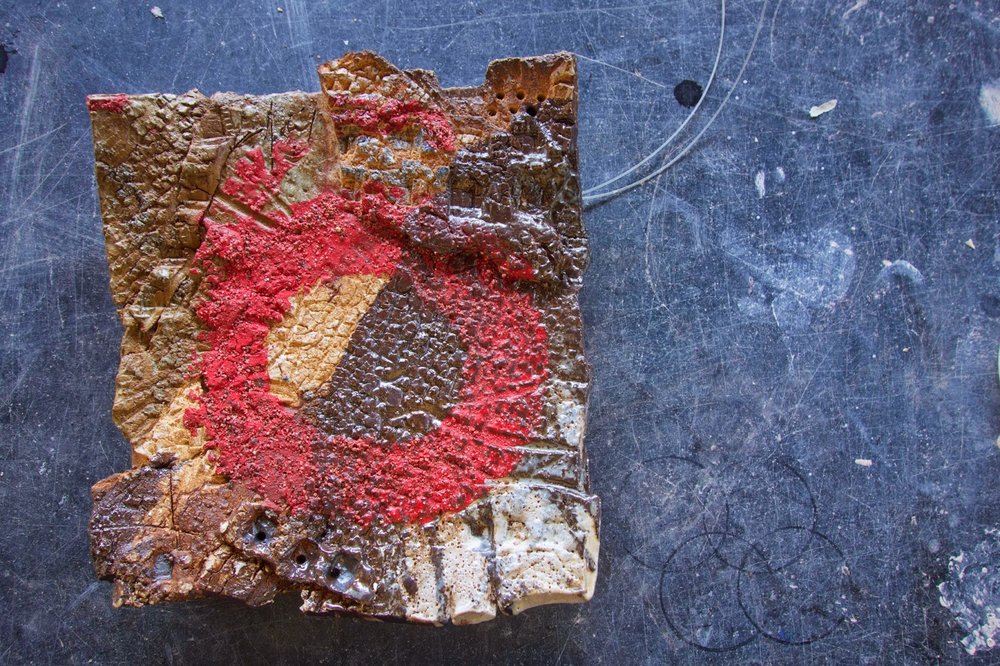 |
| Ready for the wall. |
Hands littered the floor.
 |
| Spooky. |
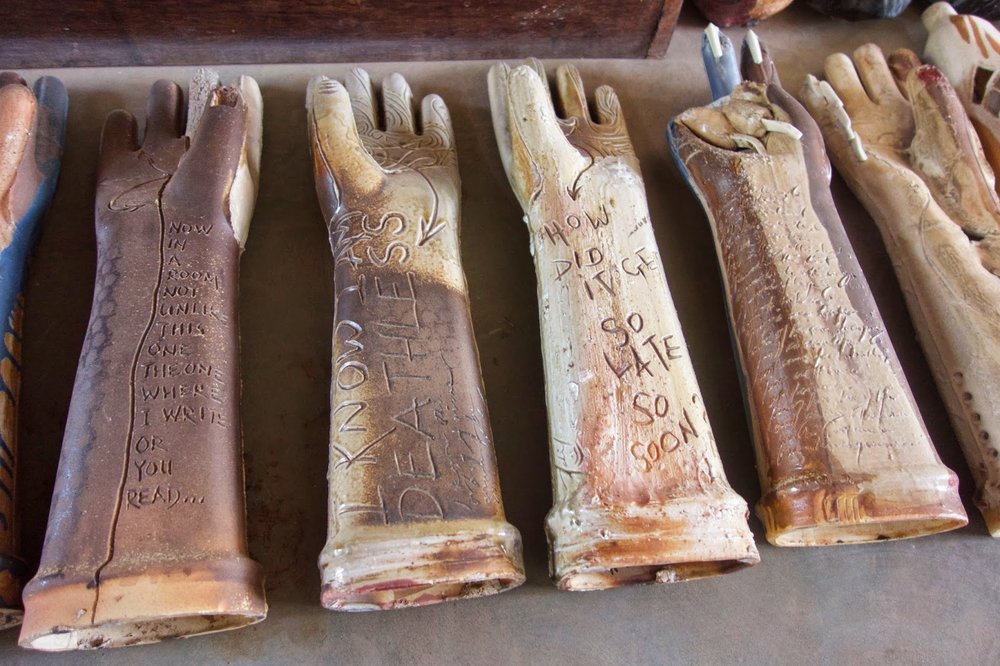 |
| How did it get so late so soon? |
Before I left I popped my head in another little space and found a selection of large platters.
 |
| Sturdy feet. |
 |
| Ready for glazing. |
 |
| Textured surface. |
And some finished ones:
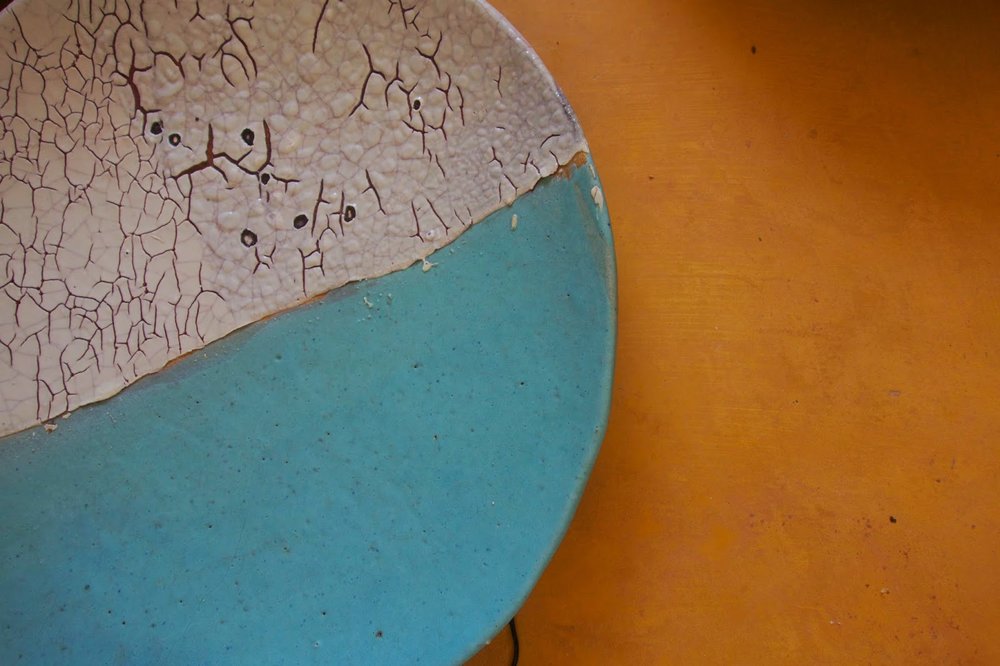 |
| You can see the same idea of playing with texture in the platters as the wall hangings. |
 |
| Nice swish. |
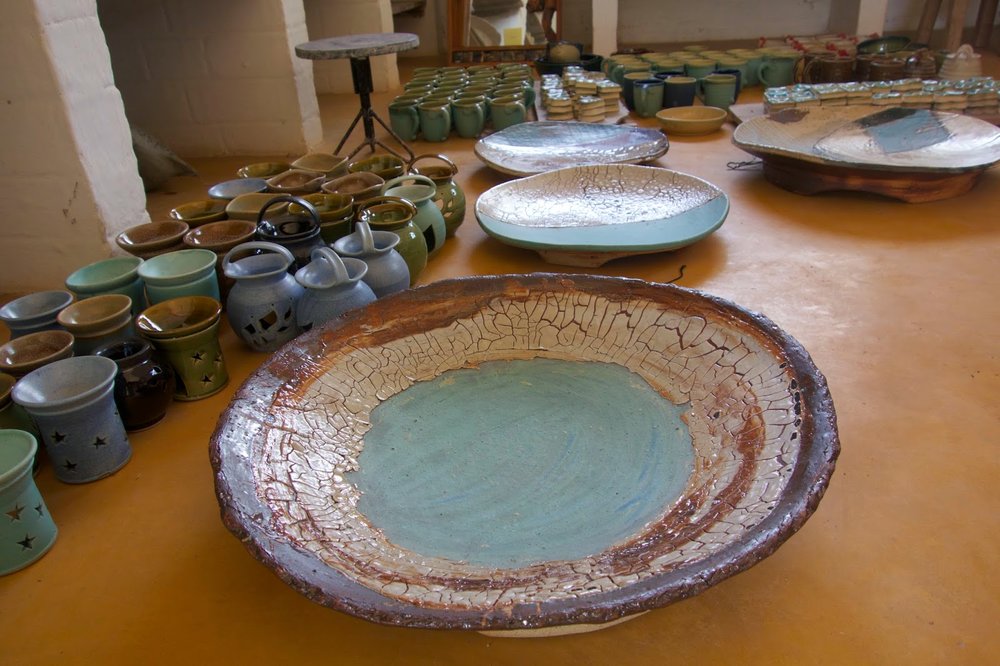 |
| I love the mad crackle glaze mixed with the blue. |
So that's a taster or the ceramics being made at Mandala Pottery. Next post will be about the pottery where most of the potters in the Dana Community trained: Golden Bridge Pottery in Pondicherry.
The Dana Pottery Community, Auroville, Part 3 (Oil Burners)
The instant I saw this potter making oil burners, I was interested. Unusually so, because of a terrible mistake I'd made earlier in our trip around India. It began in Mysore, at a lovely indoor market where two brothers beckoned us into their shop...
We didn't really want to go in but they insisted, giving us a demonstration on how to make incense sticks. Reasonably interesting stuff. "Chai?" they asked. "Sure," we said. The shop was founded by the brothers' grandfather (greasy pictures on the wall attested this) and it specialises in oils of all sorts. They let us smell the selection: jasmine, lotus, lemongrass, rose, sandalwood... you name the flower and he had the oil. Decanters lined the walls. You can easily make your own perfume by adding five or so drops to 100ml of high % alcohol. This idea intrigued me, and I thought about the possibility of doing this in the future, and blowing some more perfume bottles to put them in. (I have blown a few and it's great fun). They told us you can post the oils home, no problem. We were charmed good and proper, and left with eight little glass bottles bearing 40ml of fine-smelling oil. They were wrapped up decently with string, and came with a free wad of incense.
I kept them in the middle of my roll of clothes and carried my back pack tentatively all the way to Kochi. In Kochi we try to post them home with a whole load of spices, knives and other things we'd picked up. "No oils," the postmaster said. Oh dear. So I've been carrying this fragile package around for the last two months, trying not to damage it. My backpack now smells like the inside of Chanel's bathroom, and I'm pretty sure one or more of the bottles has exploded. I put them in a cardboard box inside a plastic bag and by now the cardboard is soaked and disintegrating, the bag all sloppy inside.
But I still have hope some of the glass vials are intact. The way that most people use these oils in India is by putting a drop or two in the top of a burner, with a candle underneath, so the smell slowly fills the house. If I have any bottles intact by the time I get home, I want to make a few of these and try it out.
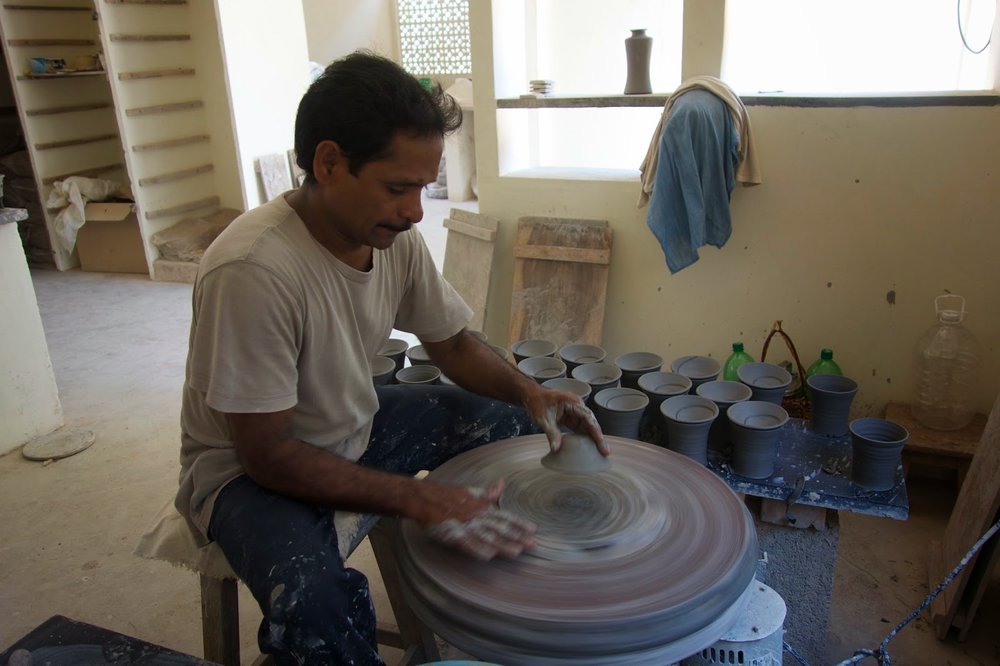
So. When I arrived, the potter was throwing the tops of the burners, the bottoms already completed. He was throwing them off the hump at great speed, putting in the final swish with a practiced hand.

Le video:
Next up, trimming:

And then joining. Here are the bodies ready for their tops:

A joined one, up close:
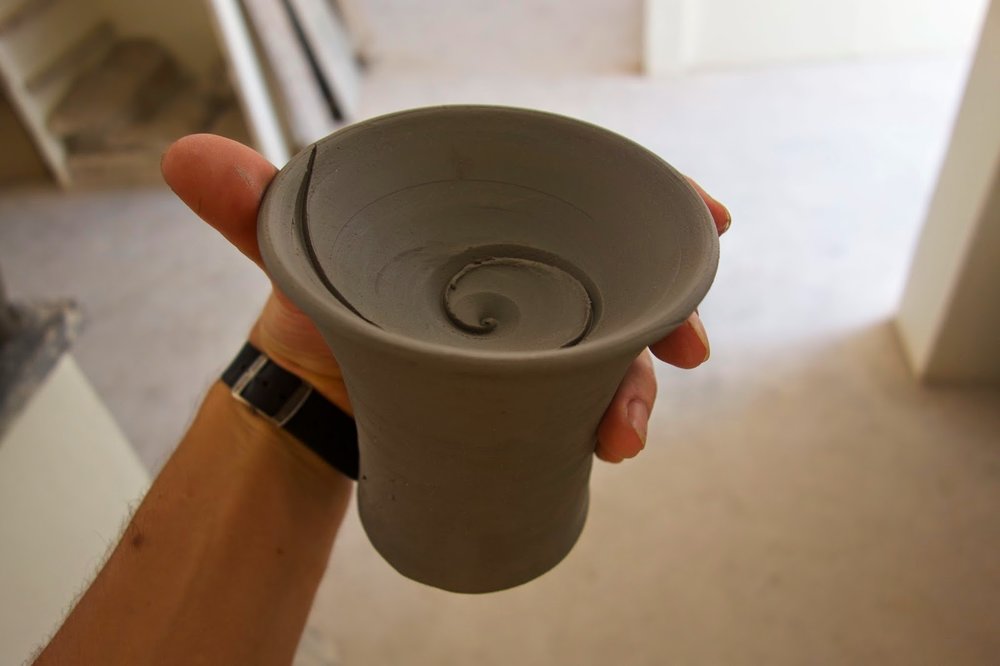 Gorgeous workshop. The afternoon light was spectacular through these windows. The little holes cut into the sides of these oil burners will create a similar effect when a candle is lit inside.

Post-handling:
 Here they are lined up to dry, ready for firing.

In the kiln they go.

We didn't really want to go in but they insisted, giving us a demonstration on how to make incense sticks. Reasonably interesting stuff. "Chai?" they asked. "Sure," we said. The shop was founded by the brothers' grandfather (greasy pictures on the wall attested this) and it specialises in oils of all sorts. They let us smell the selection: jasmine, lotus, lemongrass, rose, sandalwood... you name the flower and he had the oil. Decanters lined the walls. You can easily make your own perfume by adding five or so drops to 100ml of high % alcohol. This idea intrigued me, and I thought about the possibility of doing this in the future, and blowing some more perfume bottles to put them in. (I have blown a few and it's great fun). They told us you can post the oils home, no problem. We were charmed good and proper, and left with eight little glass bottles bearing 40ml of fine-smelling oil. They were wrapped up decently with string, and came with a free wad of incense.
I kept them in the middle of my roll of clothes and carried my back pack tentatively all the way to Kochi. In Kochi we try to post them home with a whole load of spices, knives and other things we'd picked up. "No oils," the postmaster said. Oh dear. So I've been carrying this fragile package around for the last two months, trying not to damage it. My backpack now smells like the inside of Chanel's bathroom, and I'm pretty sure one or more of the bottles has exploded. I put them in a cardboard box inside a plastic bag and by now the cardboard is soaked and disintegrating, the bag all sloppy inside.
But I still have hope some of the glass vials are intact. The way that most people use these oils in India is by putting a drop or two in the top of a burner, with a candle underneath, so the smell slowly fills the house. If I have any bottles intact by the time I get home, I want to make a few of these and try it out.
So. When I arrived, the potter was throwing the tops of the burners, the bottoms already completed. He was throwing them off the hump at great speed, putting in the final swish with a practiced hand.
 | |||
| Oil burner tops. |
 |
| Le hump |
Next up, trimming:
And then joining. Here are the bodies ready for their tops:
A joined one, up close:
Post-handling:
In the kiln they go.
The Dana Pottery Community, Auroville, Part 2 (Candle Holders)
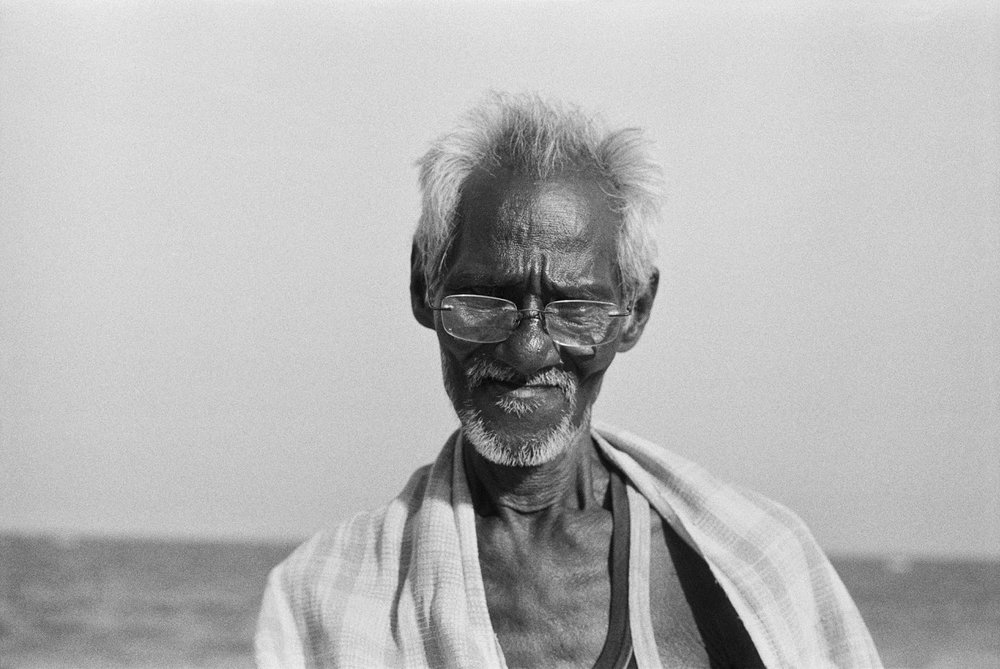
It has been a little while since I last posted; I've been working nonstop with Lauren on our book, 100 Days of India. We just finished designing it in Adobe InDesign and have sent it off to the printers. It's been a hectic week! Here is one of my black & white snaps that didn't make the final cut for the book. It was taken on a hot afternoon at the beach in Auroville, Tamil Nadu.
But now I'm on to writing the second installment of my visits to the Dana Community of potters. This one is about candle holders. These are big sellers in India as many people use them everyday in their shrines at home. I took three videos of the process. The first is the throwing, then trimming and finally altering (cutting the hole in the side).
He had finished his quota of these for the day, but had a couple of balls left and was kind enough to show me how he throws them. I was impressed by his easy throwing style and the slow speed of the kick wheel.
After a couple of hours, the pots are lightly trimmed on a chuck:
Soon after trimming, perhaps half an hour later, they are marked out with calipers and a compass and the holes are cut.
With a hole each side (the size of the opening in the top), they look kind of alien. But I was assured they looked nice when glazed and lit up with a candle.
Soon I will be posting on how they make oil burners--another top-selling item in their repertoire.
But now I'm on to writing the second installment of my visits to the Dana Community of potters. This one is about candle holders. These are big sellers in India as many people use them everyday in their shrines at home. I took three videos of the process. The first is the throwing, then trimming and finally altering (cutting the hole in the side).
He had finished his quota of these for the day, but had a couple of balls left and was kind enough to show me how he throws them. I was impressed by his easy throwing style and the slow speed of the kick wheel.
 |
| Still spinning. |
After a couple of hours, the pots are lightly trimmed on a chuck:
 |
With a hole each side (the size of the opening in the top), they look kind of alien. But I was assured they looked nice when glazed and lit up with a candle.
 |
| Freshly cut. |
 |
| A couple of hours later. Halfway to dry. |
Soon I will be posting on how they make oil burners--another top-selling item in their repertoire.
The Dana Pottery Community, Auroville, Part 1 (Incense Holders)
I had been told by numerous people that the Dana Community was the hub of ceramic activity in Auroville, so I made it my mission to visit. It took me a while to find, tucked away in a dusty corner of the labyrinthine town, but when I got there I wasn't disappointed. All hands were on deck, with a bisque kiln being fired and a huge order being packed up for shipment to Germany.
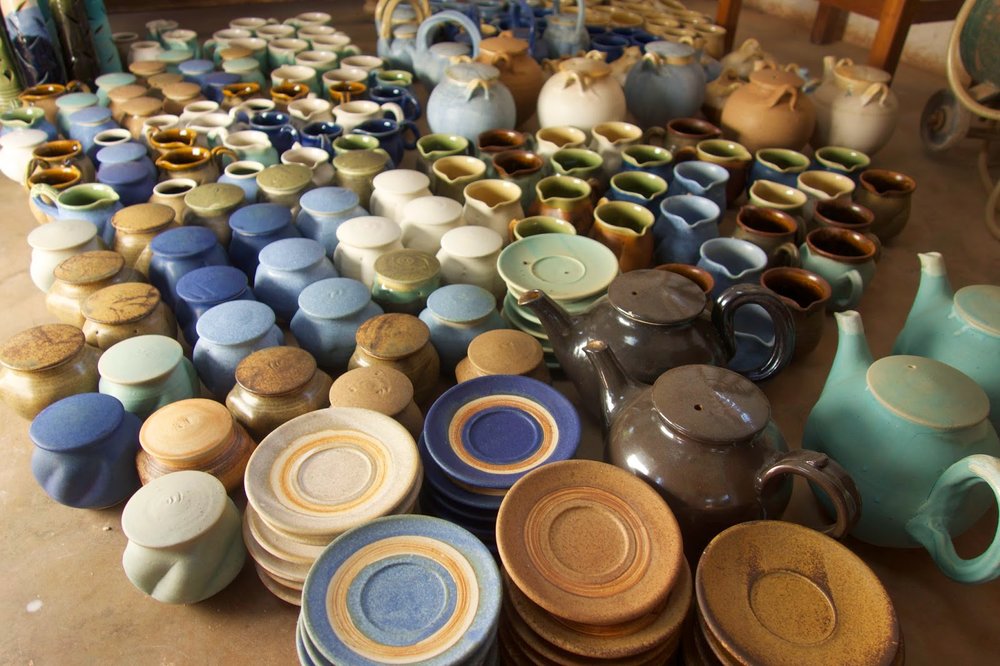

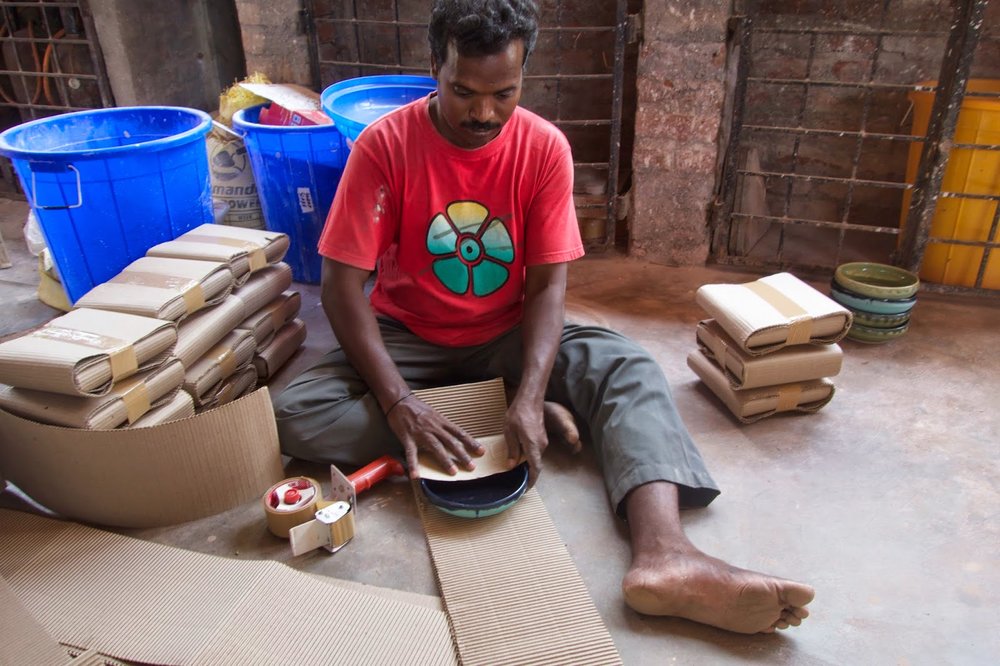

The two main set ups are Flame Pottery and Mandala Pottery but both work together and share clay/firings etc. I saw many different forms being produced on the wheel as well as some slab work. I took lots of pics and a few videos, so it will take a few posts to show them all.
Firstly, some pics of the place itself. There were pots everywhere!


A couple of walls had these amazing traditional tribal paintings on them. So exuberant:


Now on to the first product in detail. It's a simple incense holder, made and sold in the thousands. All this process involves is: rolling out a slab, cutting the shape from a template, cleaning up the edges with a sponge, punching a hole in the thinner end and propping it up to dry. Ready for firing. So quick and elegant.


 |
| I would have bought one of these if they weren't so impractical to carry around for the next 2 months in my rucksack. |
 |
| Bisque |
 |
| They fire primarily with wood, using some gas too. |
The two main set ups are Flame Pottery and Mandala Pottery but both work together and share clay/firings etc. I saw many different forms being produced on the wheel as well as some slab work. I took lots of pics and a few videos, so it will take a few posts to show them all.
Firstly, some pics of the place itself. There were pots everywhere!
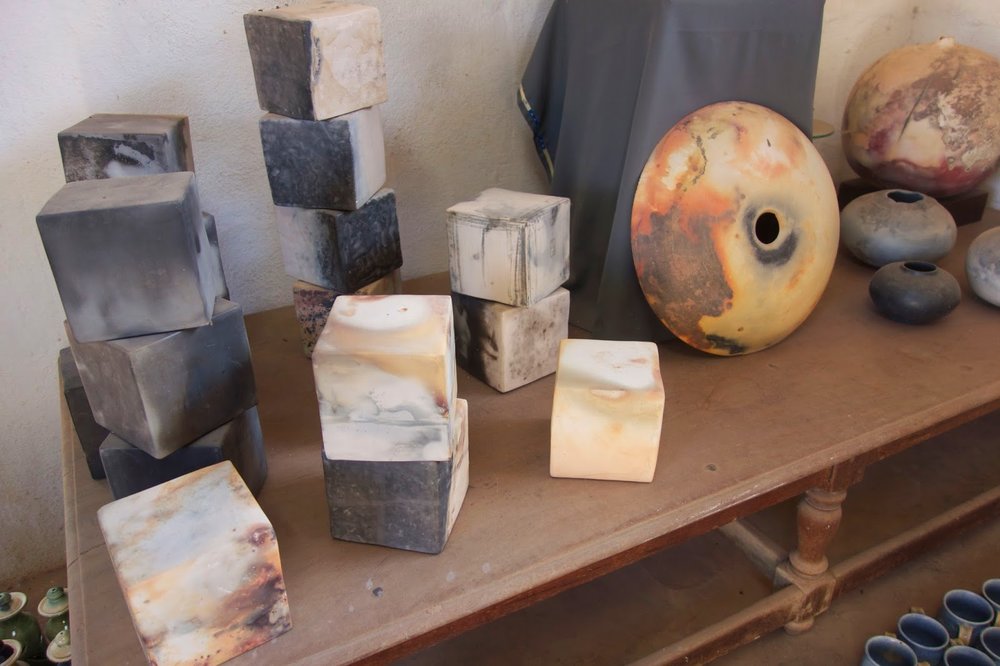 |
| Some of Anamika's work: incredible surface effects from pit firing. |
 |
| Nice swish. |
 |
| Frogs! |
A couple of walls had these amazing traditional tribal paintings on them. So exuberant:
 |
| One of the clay drying pans. |
Now on to the first product in detail. It's a simple incense holder, made and sold in the thousands. All this process involves is: rolling out a slab, cutting the shape from a template, cleaning up the edges with a sponge, punching a hole in the thinner end and propping it up to dry. Ready for firing. So quick and elegant.
 |
| Next to a finished one. |
Here's a little video of the incense holder production: