
Artifact: Max Saunders MFA thesis show, USU, April 2022
It’s hard to believe that we are halfway through April already and the two ceramic grad students, Max Saunders and Austin Riddle, have installed their thesis shows. I posted about Austin’s show yesterday, so check that out if you missed it.
In my first year at USU, I was impressed with Ayla Murray, Matt Sloan and Josh Scott’s thesis shows… but that’s feeling very far away for me. This year, with these shows going up, I am feeling the pressure build up to mine next year. Anyway, enough of my anxiety, this is a blog post is to document Max’s show for anyone who could not make it in person.
First up, here’s Max’s statement about the exhibition:

“ARTIFACT”
“My work is heavily inspired by archeology, geology, and a sense of time. Clay, deposited in the soil years ago, is wedged and shaped to pleasing forms. Often I will sketch in clay for months or years as I search for the correct weight and balance for the pot. Once I am happy with the shape, I use it as a canvas for a pallet of gestural marks. I carve, stretch, and beat the clay in ways that emphasize or change its form. These marks are often read as a sign of geological weathering or erosion. I chose to woodfire my work as it adds an extra layer of dynamic marks to the piece, which can be controlled with careful loading and firing strategies.
The overall goal is to create objects that can be interacted with in a variety of ways. Cups are drunk from and their surface is explored, revealing exciting moments from the creation and firing processes. My current series of sculptural vessels allows me to take this mark making process and explore it more deeply, as the ultimate form has no need to be functional. Ultimately these forms are for both visual and tactile exploration. I seek to create work that is visually and physically dynamic, carrying a sense of age while remaining fresh and immediate.”
Here’s a couple of wide shots to show you how “Artifact” looks in the gallery:


For anyone into wood firing, this show is a treat! Since I have been at USU, Max has been the main wood firer on campus. He has tried many approaches with different clays, slips and washes and different firing and cooling schedules. The pots and sculptures in “Artifact” came from 6 or 7 different train kiln firings. The firings ranged from cone 10 to cone 13 (possibly hotter even in some spots). Max saved the best from each firing over the last year for this exhibition.
I’ve seen his method, particularly in the sculptural forms, develop a lot over the past couple of years. Max has really honed in on the marks he makes and tying the forms to the wood fired surfaces. More than anything, the variation of surface Max achieved is remarkable.
Lets start with some photos of his sculptural axe pieces:


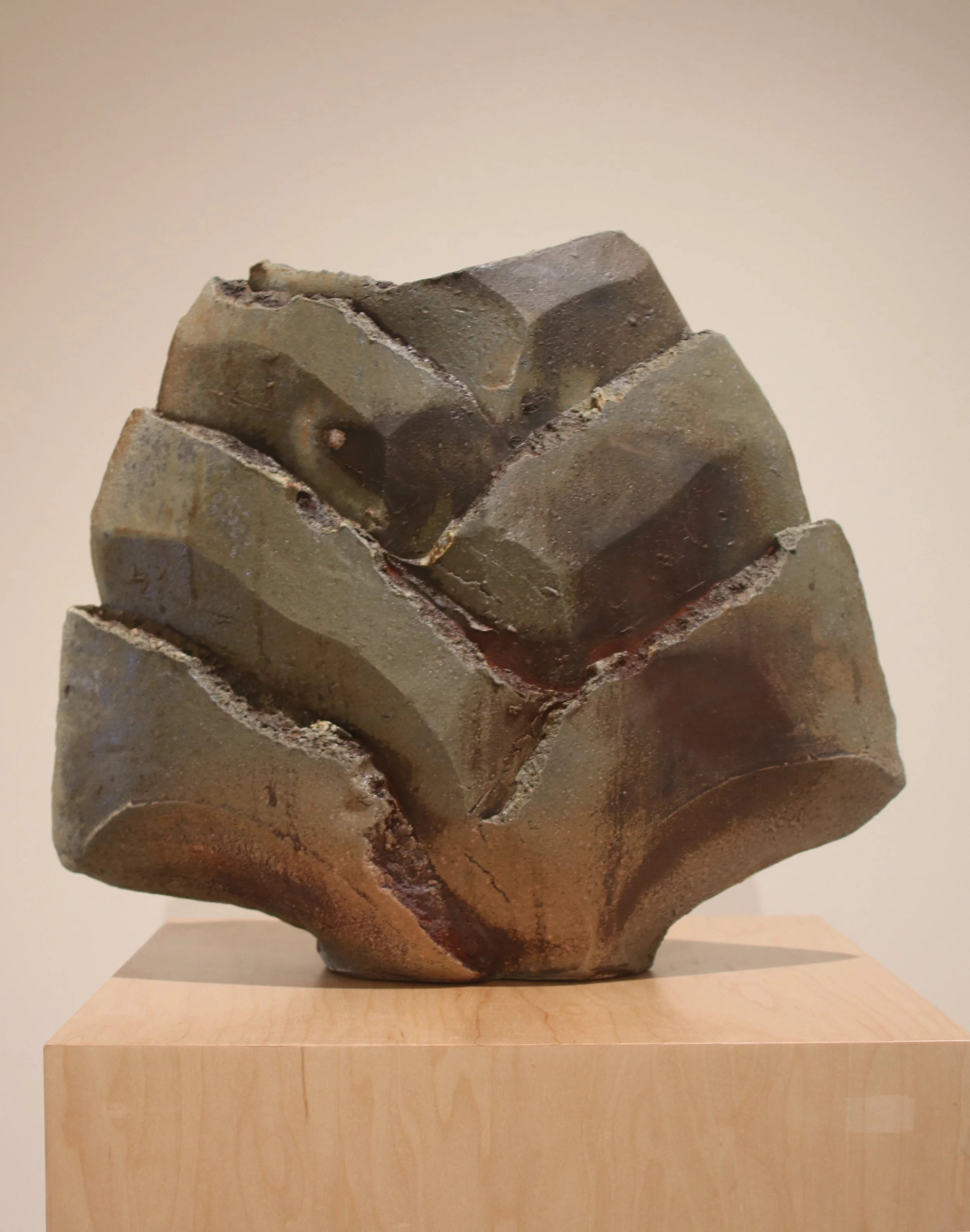


Here are some close ups:


Alongside these sculptural vessels Max displayed an array of cups and teapots too. These show off the variety of wood fired surfaces he achieved on smaller canvases.


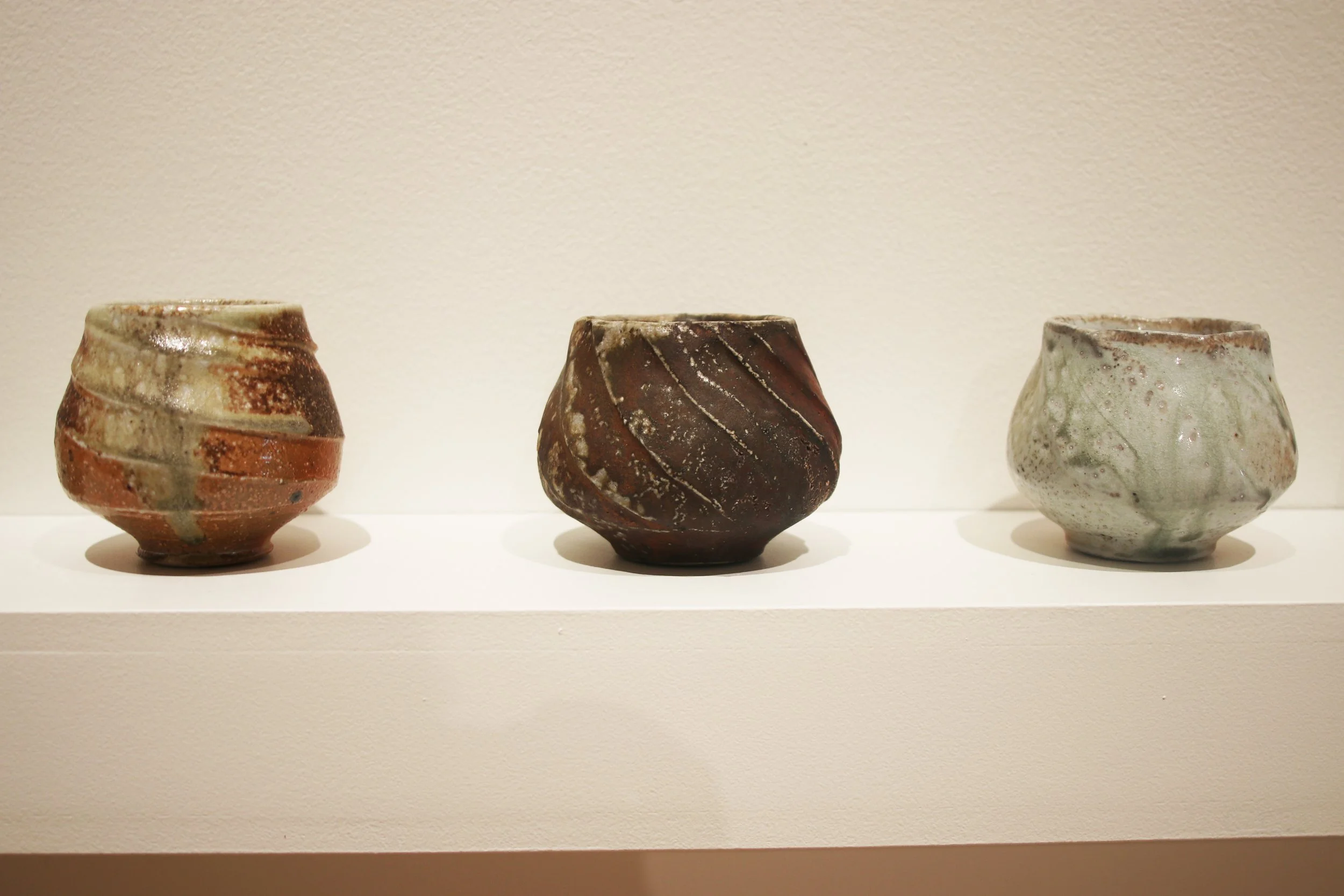


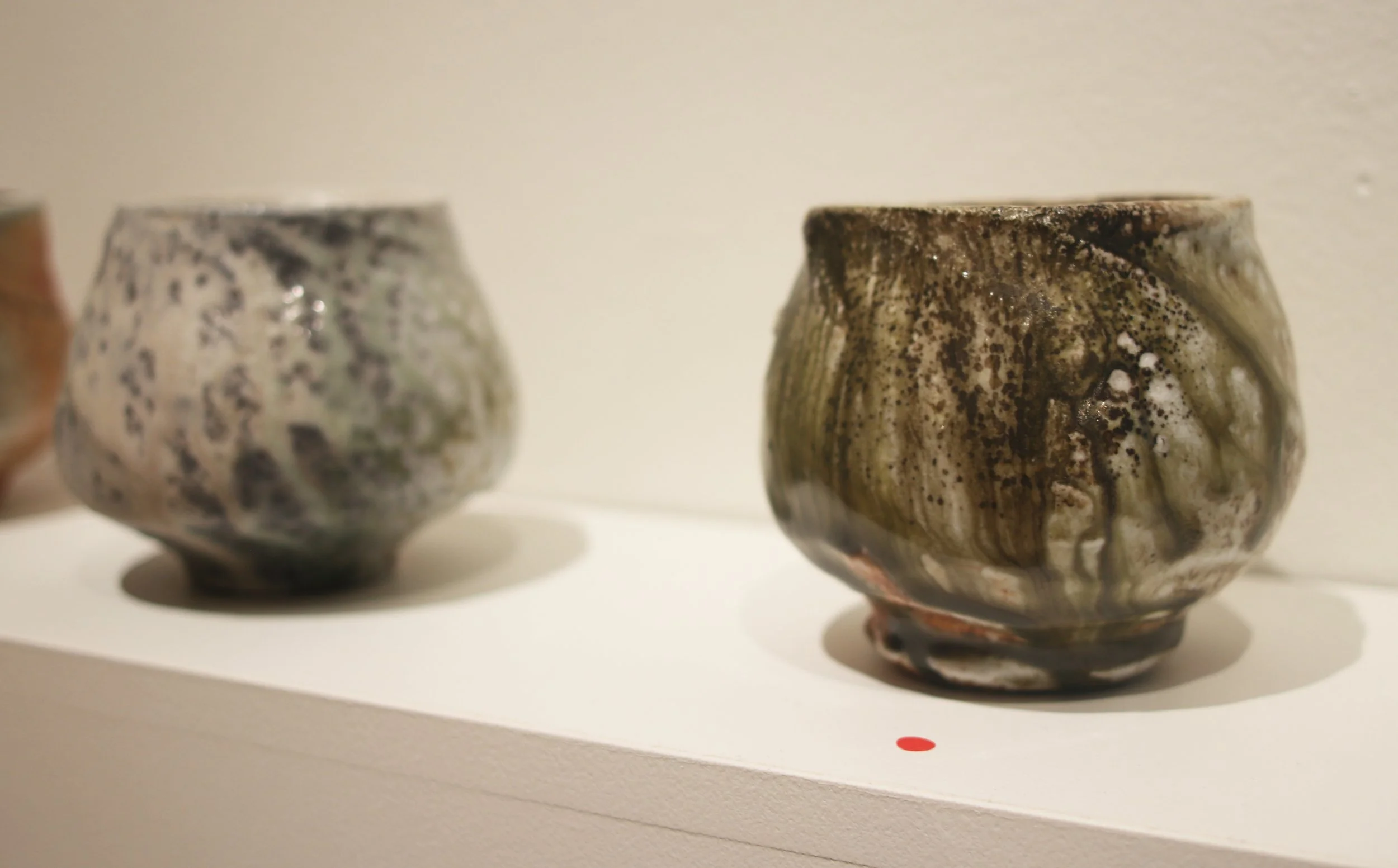
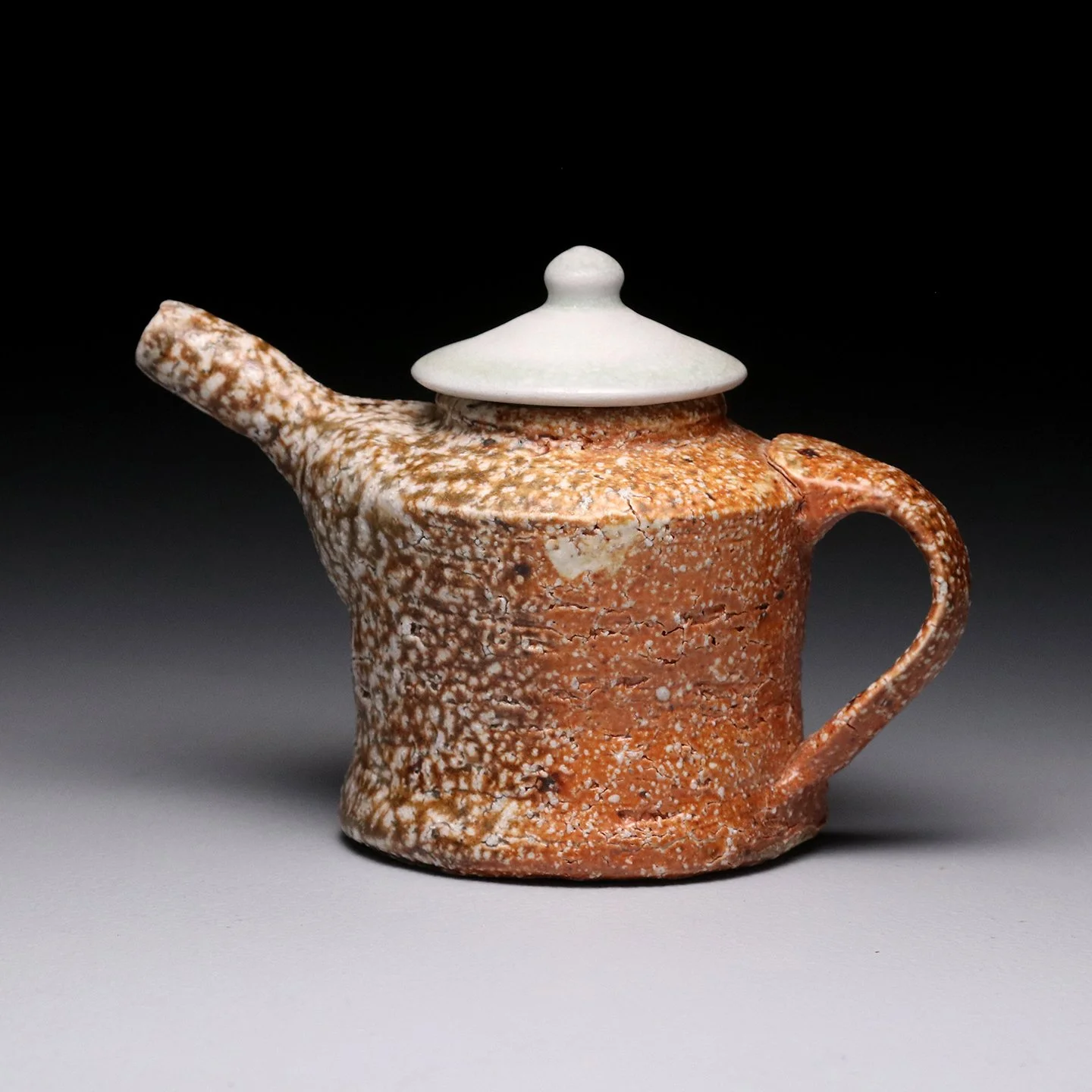
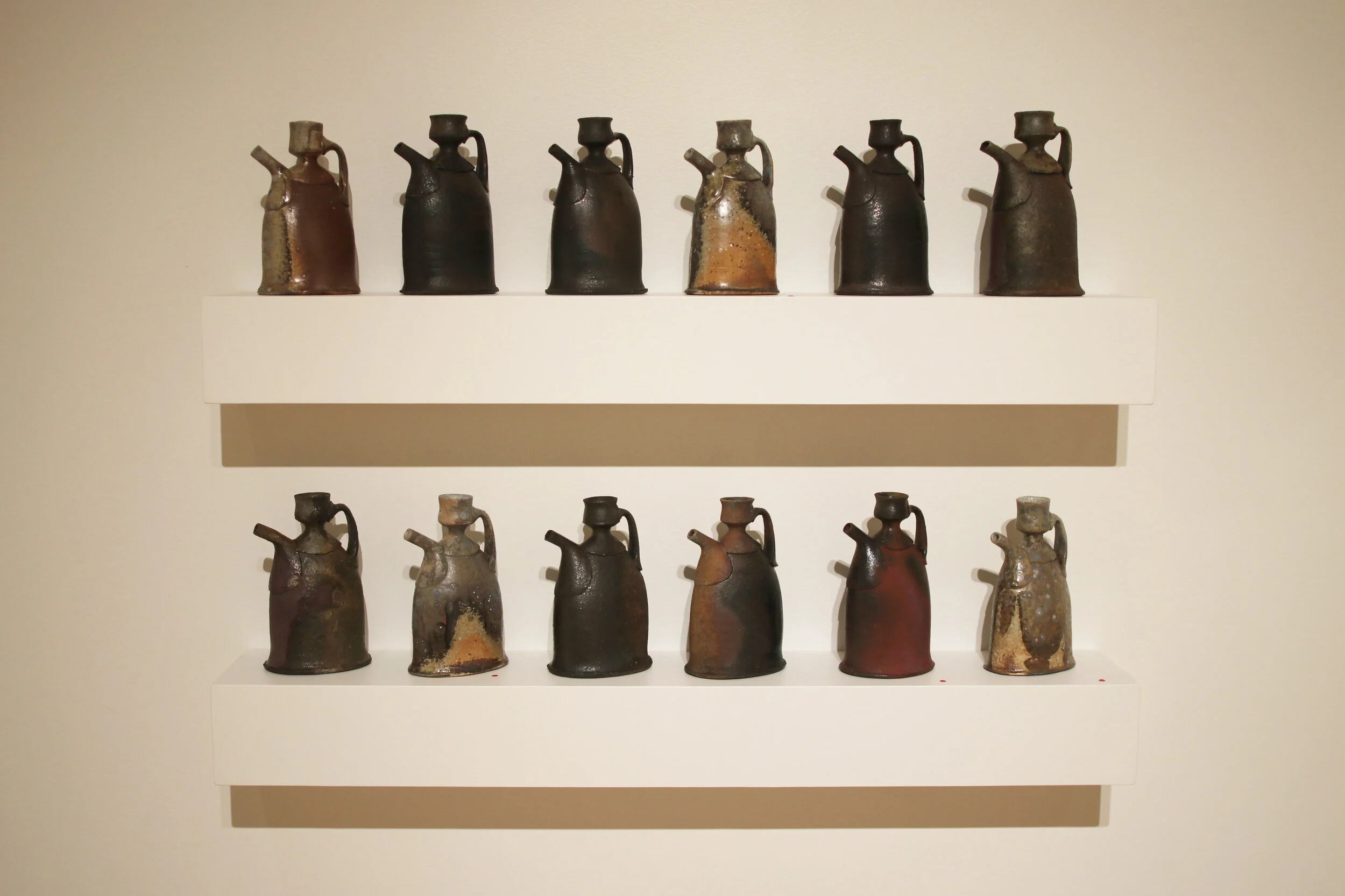
Now on to the teapots! As you may know, I am a bit obsessed with teapots and had to acquire one of these. The first one pictured here is coming home with me!


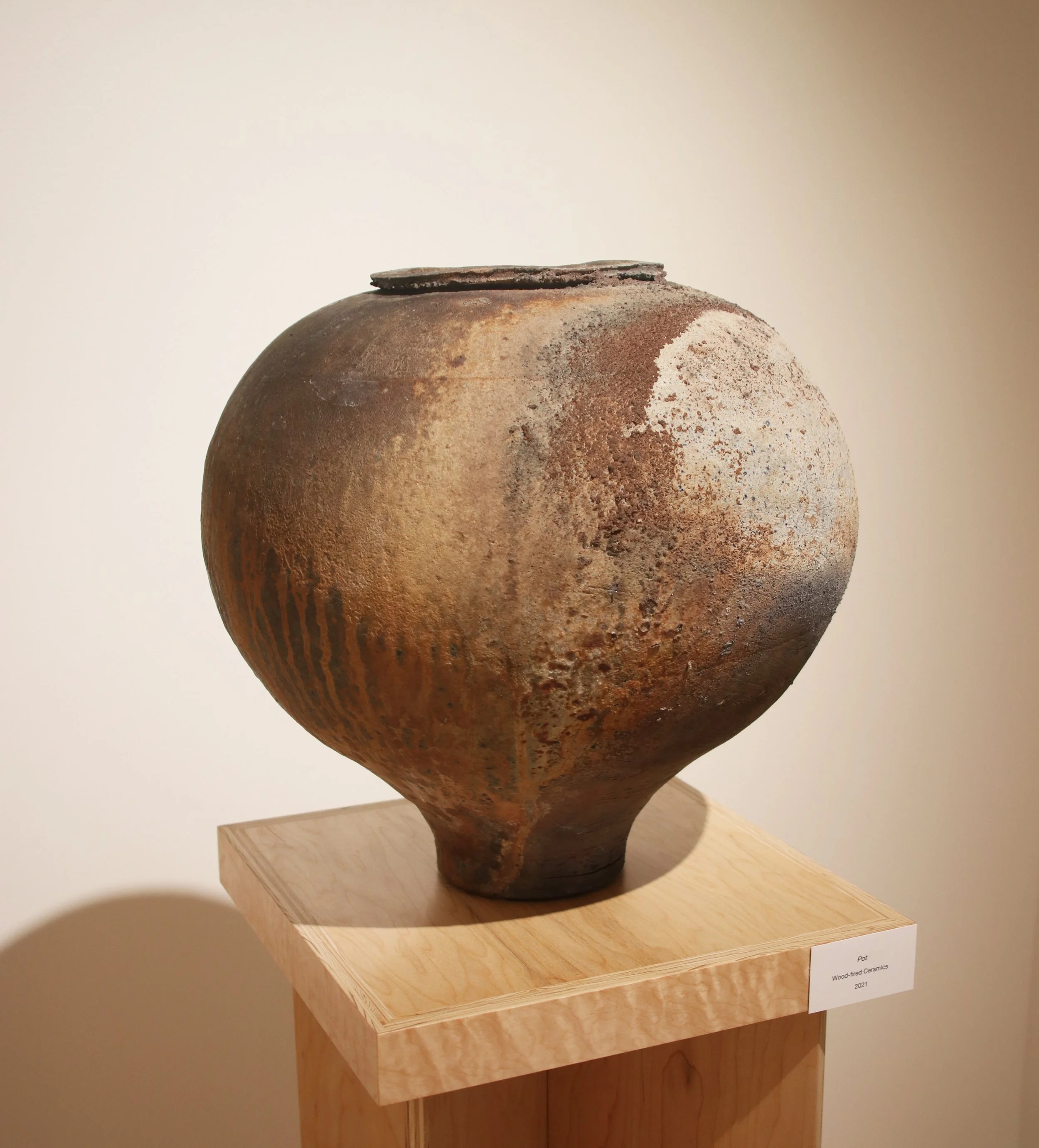
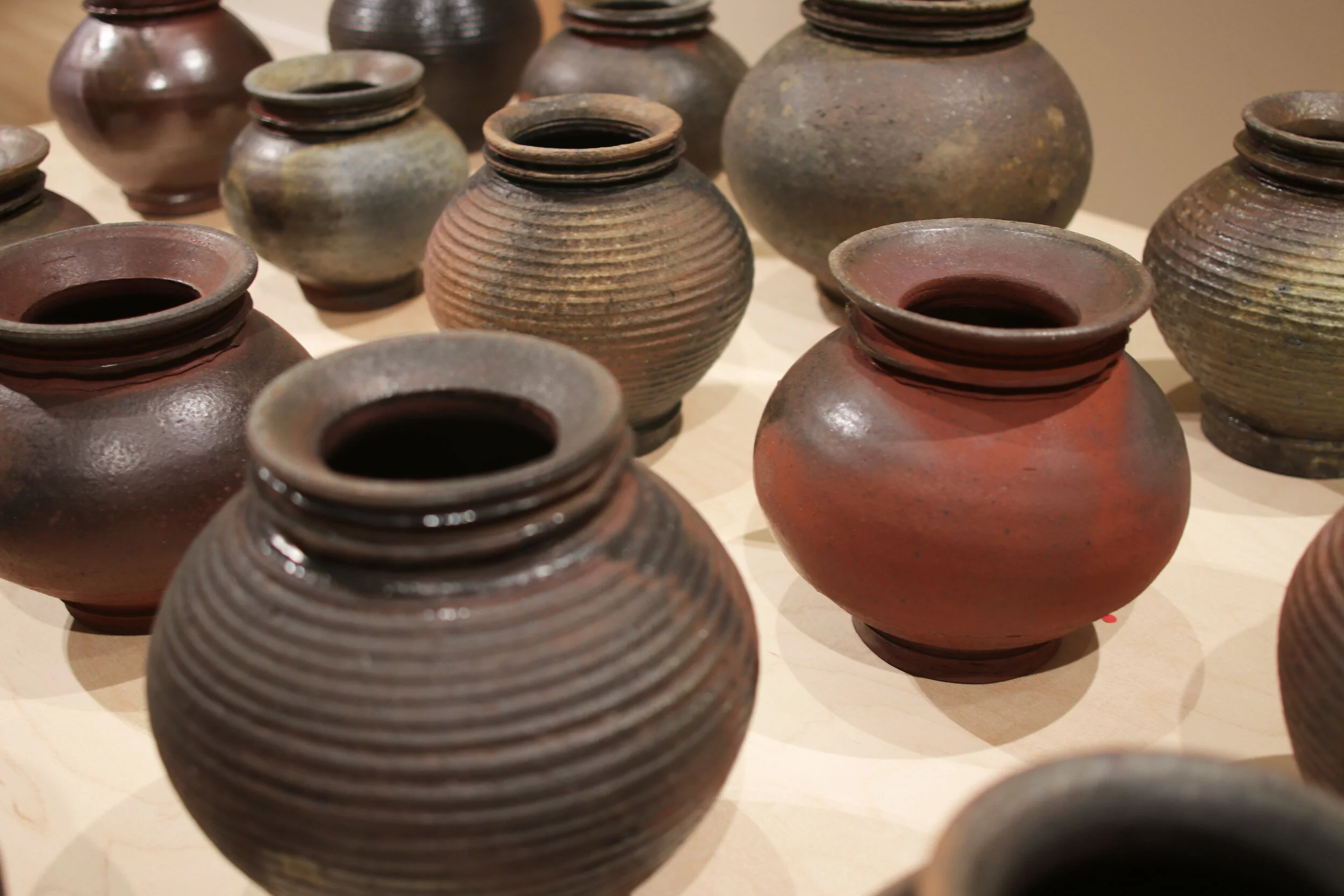
Max also showed one of his voluminous coil pots in the show. This one has a particularly intriguing surface:

Let’s end with some pictures during the opening reception (including two very cute pictures: one of Max and his dad, and one of my daughter, Juniper):


“Artifact” is up in the Tippets and Eccles Gallery at USU until Friday 22nd April; come on over if you live anywhere close!
Sweet Nothing: Austin Riddle MFA thesis show, USU, April 2022
When I walked into Austin’s MFA show, "Sweet Nothing,” the scent of baby’s breath flowers was the first thing that struck me. The breath of these babies smell pretty damned good. Not even a hint of spilt milk.
Before I get into my impressions of the show, here is Austin’s thesis statement to give you some context:

“Sweet Nothing”
These pots were made as companions for you and your home. A vase for your table, full of freshly picked flowers as you and your partner eat breakfast and plan your day's activities. Large platters and compartment trays to present home-cooked meals with friends on a warm summer evening. Whiskey sippers that nestle in warm hands, topped off as needed from a half-empty bottle of Jack Daniels.
As a maker, I play these moments on repeat in my mind. As a designer, these scenarios direct the formal elements I develop for each piece. Pushing out an exaggerated belly on a modestly portioned whiskey sipper that complements the negative space of your palm, while keeping the rim thick and beveled to a crisp that fills the void of your lips. Satin, subdued surfaces formulated to mimic aging pastels of a soft vintage quilt that lay jumbled upon a morning bed. My approach has always been to design for my fantasy of Sunday morning breakfast with a fictitious loved one and the pots that elevate that tender moment. Pots can be conductors of romantic sentiment. I hope the viewer will invite these pots into their homes where they can quietly enrich simple and significant moments.
This exhibition is my creative effort towards understanding my yearning for a romantic life I can’t seem to create or explain for myself. I believe the pots can represent this weight, to be romantic without explanation, to exist at home in the present while remaining hopeful for the future."
Here are a couple of shots of how the gallery was laid out:


I’ve seen Austin’s style shift over the last two years. When he came to USU, he was making cone 10 soda fired pots with lots of decoration. He has stripped back the decoration, moved to electric firing at cone 3, and simplified his process. His forms owe a debt to his love of mid-century modern art and craft, but this comes across as a hint rather than bashing you over the head.
The pots in “Sweet Nothing” have a consistent feel. The pastel palette ties them together, as well as the precise but warm forms. Thin stripes complement and break up the rhythm of the pots. Austin is not skimpy with his use of clay and the pots have a nice feel and comfortable weight to them.
It was a pleasure to walk through the gallery and see all of Austin’s hard work and discipline pay off.
Anyway, I will stop rambling and show you the work. Let’s start with his vases full of sweet babies’ breath. I particularly enjoyed seeing the inventive forms Austin came up with for this series of vases…


Now on to plates, bowls and trays…


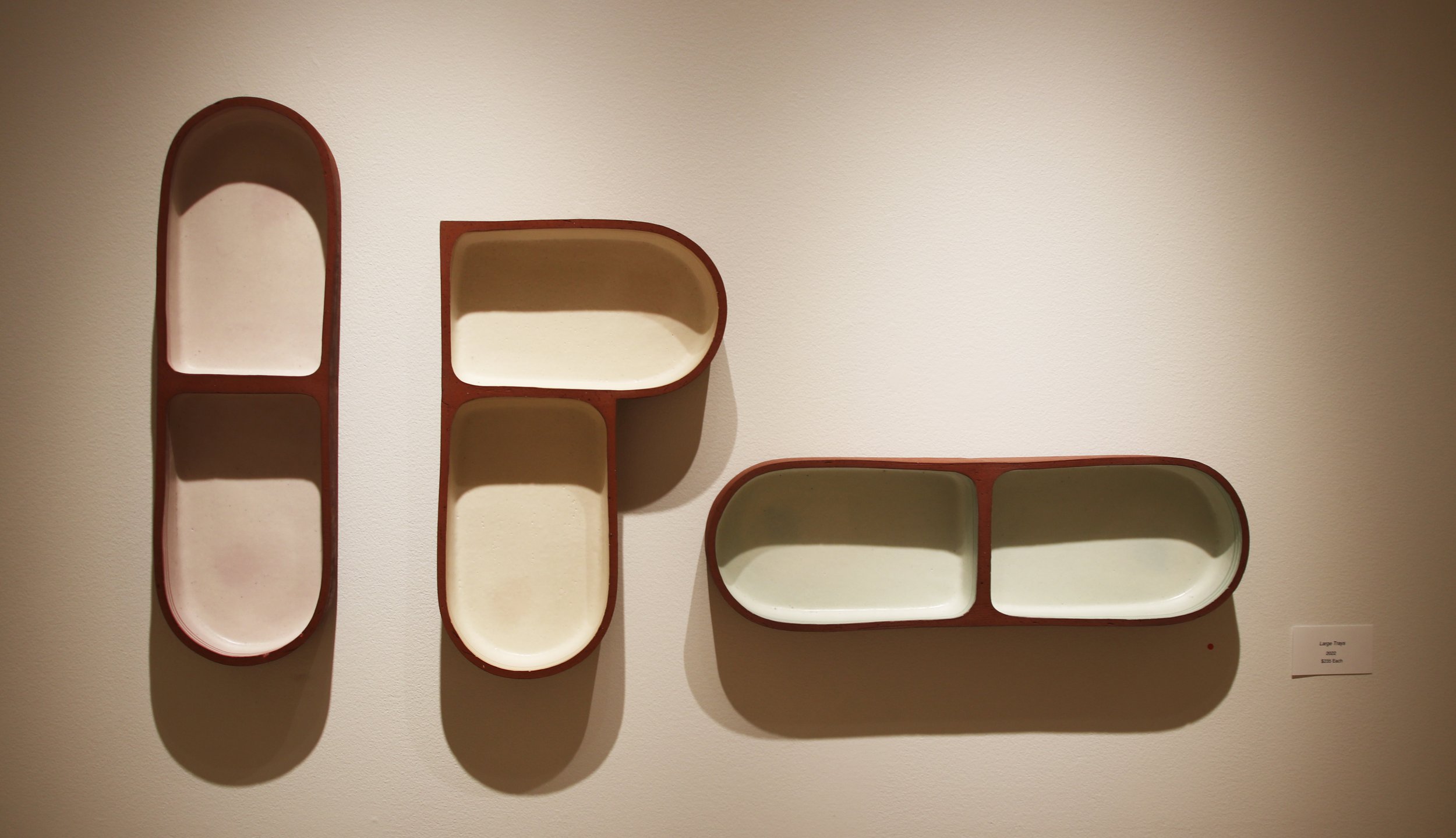
Cups, mugs and shooters…


Butter dishes, canisters and flasks…


And finally here’s a couple of pictures of Austin rolling his sleeves up to end on. He is also a motorcycle enthusiast so this is a practiced maneuver!


The show is up in the Tippets and Eccles Gallery at USU until Friday 22nd April so come on over if you live nearby!
The Juried Functional Teapot Show II, Elliott Fouts Gallery, Sacramento, March 2022
First: I want to say a big thank you to Elliott and Michelle at the Elliott Fouts Gallery for hosting us!
I juried this show (the second iteration of the Juried Functional Teapot Show) with Cooper Jeppesen and John Neely. John was our guest artist for the inaugural Juried Functional Teapot Show and he is currently my professor at Utah State University. He makes outstanding teapots. Cooper had a teapot included in the inaugural show and also makes outstanding teapots. His lids fit so snuggly and spouts pour so well, they could make a teapot enthusiast weep.
It was a challenge to pick from all the submissions we received, but we managed to whittle them down to just 10. Each of the jurors presented a teapot also, and we invited Pete Pinnell to be our guest artist and show two teapots.
Here is how it looked in the gallery:


Here’s the writing on the wall…
And the other writing on the wall…

I wanted to share some images from the opening reception and the way the show looked and then I will include closer images of each maker and their teapot. At the end I will include a link to the PDF of the catalogue which is free for anyone to download.


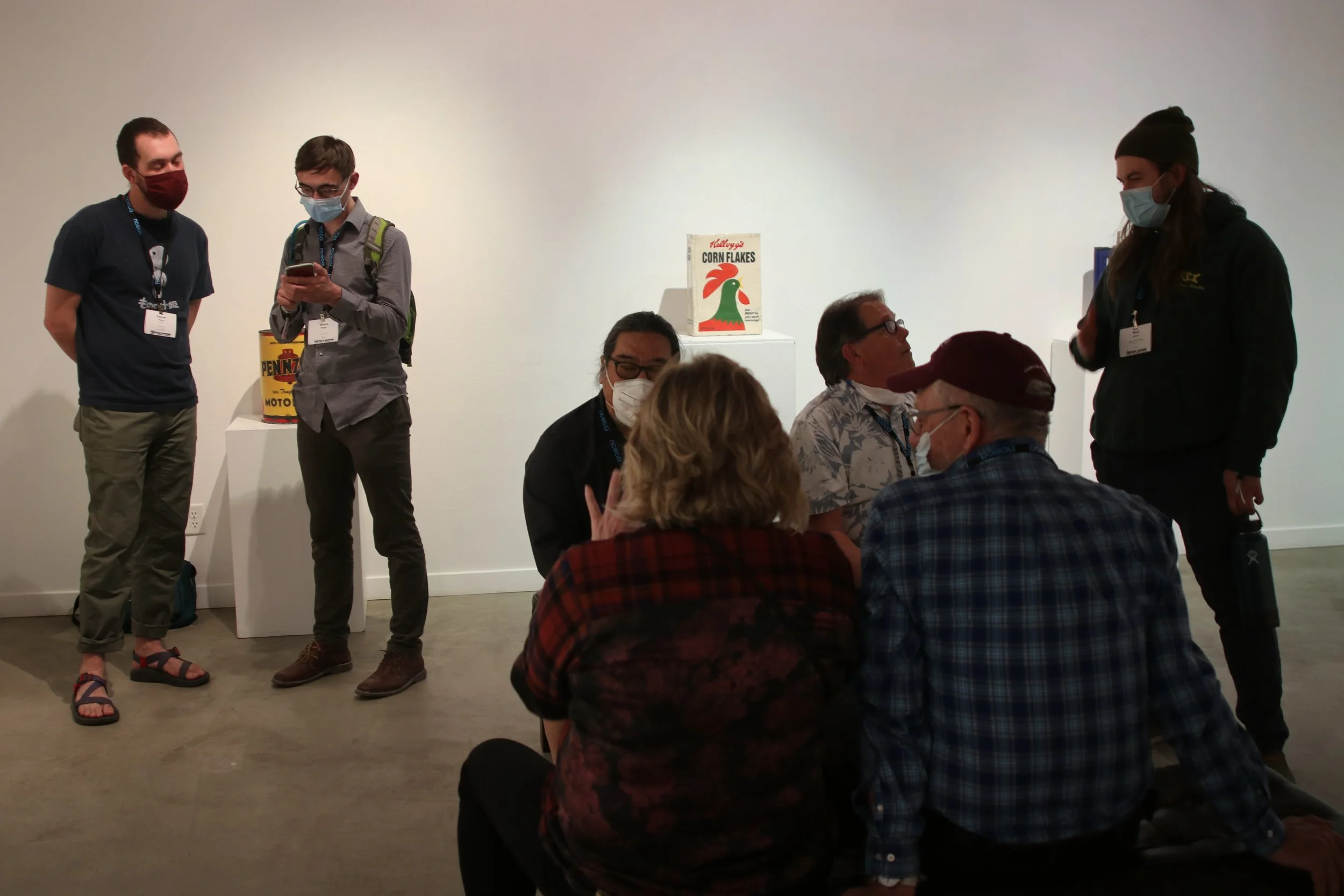

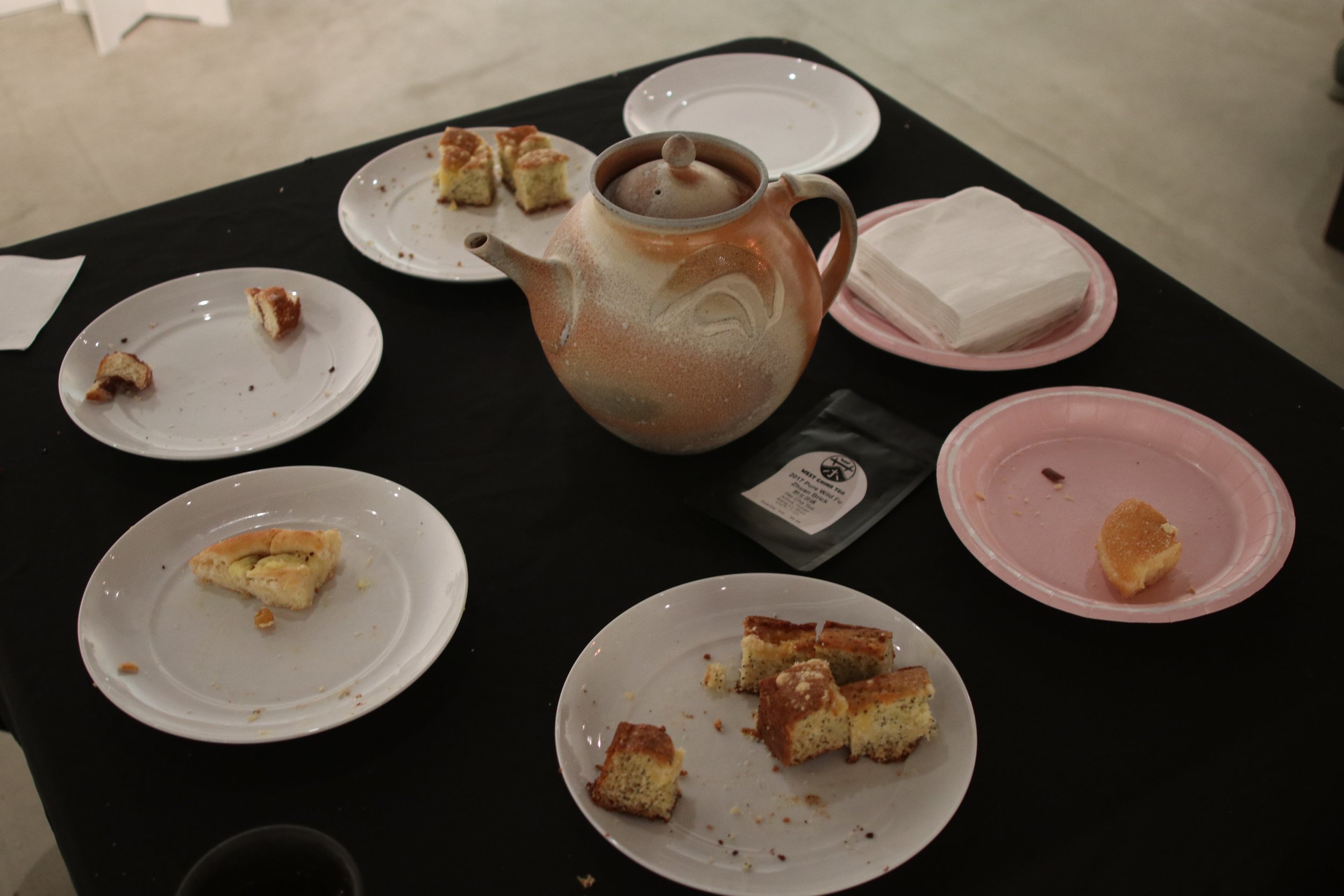


Now, here is each teapot with the makers’ exhibition labels and prices above them…


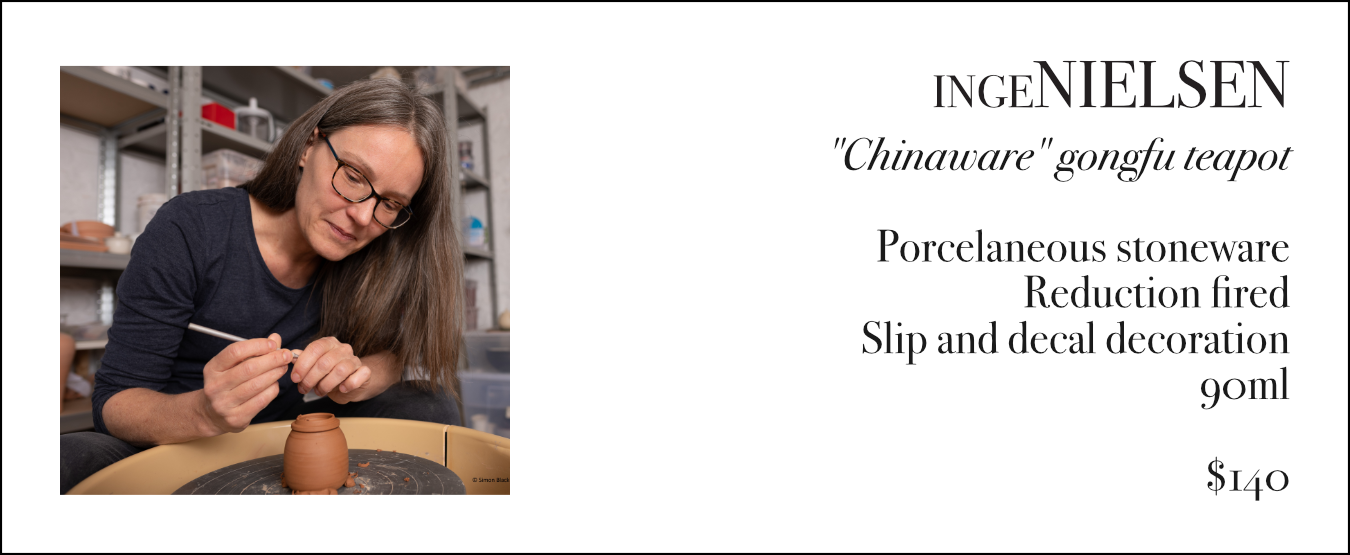




If you would like to download the catalogue for The Juried Functional Teapot Show II, go to the end of my shop page and click the link. I will leave it up there, along with the catalogue for the inaugural show. You can access and download them at any point!
One last picture. Thanks for reading! The Juried Functional Teapot Show III will be in 2024, in Richmond, VA.

The Aberration of the Species: Ayla Murray's MFA Thesis Show at Utah State University (2021)
It is my pleasure to present some pictures from Ayla Murray’s thesis show “The Aberration of the Species.” I am frankly amazed by what Ayla managed to pull off. Almost all of the work in the exhibition was made in her final term as a grad student at USU. The show is both provocative and beautifully crafted.
To give you the context for the show here is Ayla’s thesis statement…
“Technology is the foundation upon which society has been built. Early achievements, such as the wheel and agricultural systems, provided people with an alternative to nomadic life in the form of settled communities for the first time in human history. Today people are members of several communities not limited to the physical realm; they are also participants in an altogether different form of community with the help of a little something called the Internet.
Since 1960, the exponential growth of technology and the proliferation of personal devices has permanently altered every aspect of our lives. The ensuing generations have been raised in a time aptly dubbed the Digital Age, in which communication, entertainment, healthcare and the global economy have become intertwined with technical advancement. It may be said that the sole purpose of continued innovation is a desire for complete ease and efficiency of the systems that make life possible. However, if this utopian vision is achieved, what then becomes of humanity and the activities that occupy our waking hours?
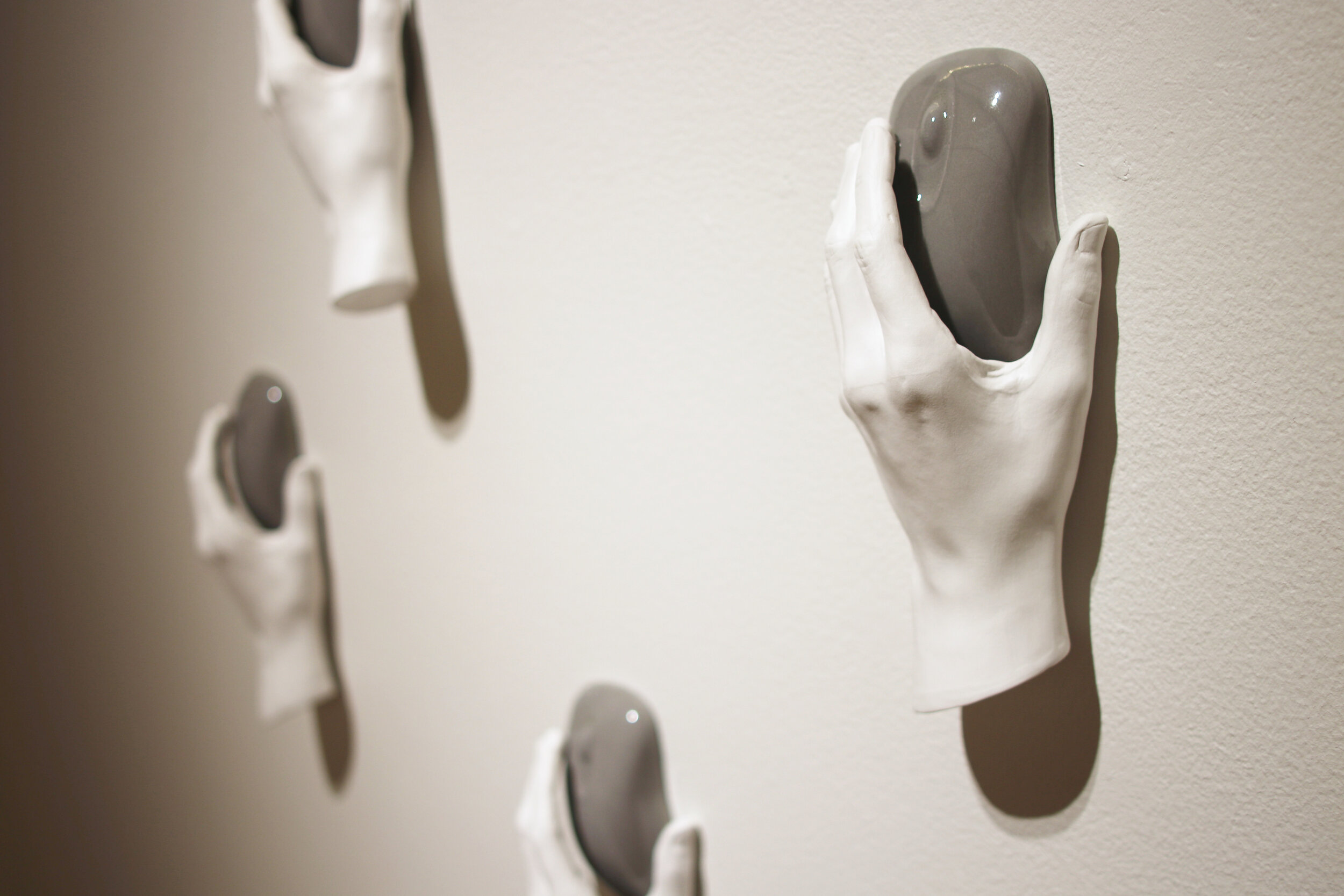
The flaws in this fantasy are already apparent. At this very moment the phone in your pocket or the computer on your desk places the world at your fingertips. The ability to have your image seen and words heard by the masses was once reserved for rulers and gods, but now is achieved by anyone who can find the power button. These devices offer us an escape to an alternative world where we can manipulate how others perceive us by fabricating an idealized version of ourselves. In some cases we begin to believe this is reality rather than fallacy and struggle to separate these two conflicting realms. In this world, we can engage in anonymous discourse and avoid uncomfortable personal conversations, which has begun to inhibit the development of healthy relationships with friends, family and our own self image.
While this is pure conjecture on my part and, hopefully, destined to become nothing more than a nightmare, The Aberration of the Species is an attempt to confront this uncomfortable by-product of technological advancement and what it may lead to in the future. I have created an atmosphere of curiosity and unease by utilizing Sigmund Freud’s concept of the uncanny; incorporating near-human representations, fragmented appendages and reflective surfaces. With the combination of these subjects and familiar symbols of contemporary communication I aim to encourage the viewer to ponder their own relationship with technology and how it has distorted their perception of themselves and others.”
- Ayla Murray
Shown Nothing But What Is Shown, 2021.
I brought my wife Lauren and fresh baby Juniper (just a few weeks old) along to the Tippetts and Eccles gallery to see the exhibition. We were struck right away by the busts along the wall, drawn to check them out and walk down the line.
Distorted Realities, 2021.
Here’s some close-up shots of Distorted Realities (click on any image to see it enlarged).


This is the view from down the other end of the gallery after checking out all the busts…

After the initial excitement of being there, I found walking through the exhibition rather unsettling. Dismembered hands protruded from the white walls. Half a brain with a USB cord attached sat staring at a severed head. The disfigured busts all lined up made me think of the terra cotta warriors… of the future, each one with a different glitch in their appearance. The interactions between humanity and technology blurred in every piece, and asked us to examine our relationship with the devices we use. Perhaps most unsettling was the hooded figure sat on a small bench, engrossed in a mobile device, seemingly unaware of the quiet horror of its surroundings. This is a familiar sight to us all, and placed amongst the rest of the exhibition it made me question the speed at which technology is infiltrating society. I could wax on, but Idon’t want to espouse too much.
This piece below is called Profile.


The piece below is called Autopilot (Heads in the Cloud).

I love the piece pictured below. It is called The Prospect of a Lasting Existence and it gives a sense of serenity to the exhibition. It made me think of a Buddha head in its size and serene expression. Despite the calm feeling to the piece, the title gives it an unsettling sense. Unlike the Buddha, a spiritual figurehead, this is a symbol of science. This is humanity striving for perfection and an answer to the problem of death. The Prospect of a Lasting Existence sat opposite the glitched busts of Distorted Realties. This juxtaposition made me wonder if the Distorted Realities were the failed experiments that led to this symbol of perfection. The scale of this piece is remarkable (I have included a picture with our baby Juniper), and helps with its association as an almost religious icon. Very thought provoking! I was also amazed that Ayla got this out of the kiln in one piece! Excellently crafted.
The Prospect of a Lasting Existence, 2021.
The Prospect of a Lasting Existence, 2021.
The Prospect of a Lasting Existence, 2021.
And lastly here he/she is, in the center of it all…
Portrait of a 21st Century Youth, 2021
Portrait of a 21st Century Youth, 2021
Common Objectives: Josh Scott MFA Thesis Show at Utah State University (2021)
Earlier this year, grad students Josh Scott, Ayla Murray and Matt Sloan completed their MFAs here at Utah State University. They all put on fabulous shows and I felt compelled to document them. Over the next few days, I will be posting about each one.
First up is Josh Scott and his show, “Common Objective.” Josh Scott’s pottery is some fine stuff. Hope you enjoy the pictures, but before we get to that, here’s the context for the exhibition…

Hailing from Florida, and back living there now, Josh Scott makes fabulous wood-fired pots. He has a lovely touch with clay, leaving just enough marks from the making process to keep the pots feeling fresh.
I’ve had the pleasure of helping Josh fire over the past year and saw most of these pots come out of the kiln. There is a big difference in seeing the pots fresh from the kiln and then all set up in the gallery. A lot of sanding and cleaning goes on before they make it to the pedestal.
Josh is a meticulous maker as well as cleaner of pots. It was wonderful to walk through the gallery see them all arranged. I’m happy to say that I snagged a couple for my own collection.
Here’s how the gallery looked from each end…


Now let’s get in to the pots. First up I want to show some of Josh’s teapots…


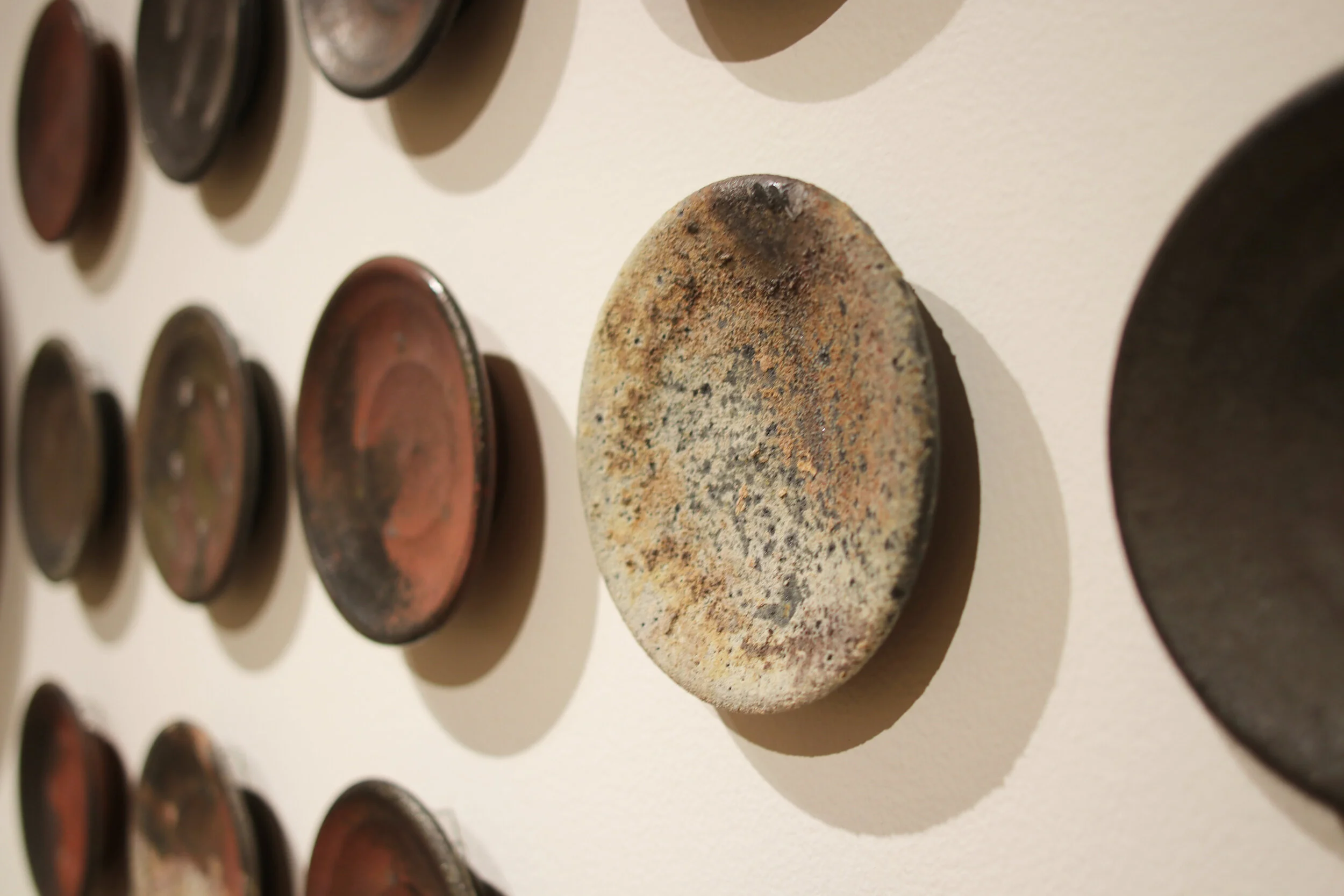
Here are a nice collection of wall-hung dishes…




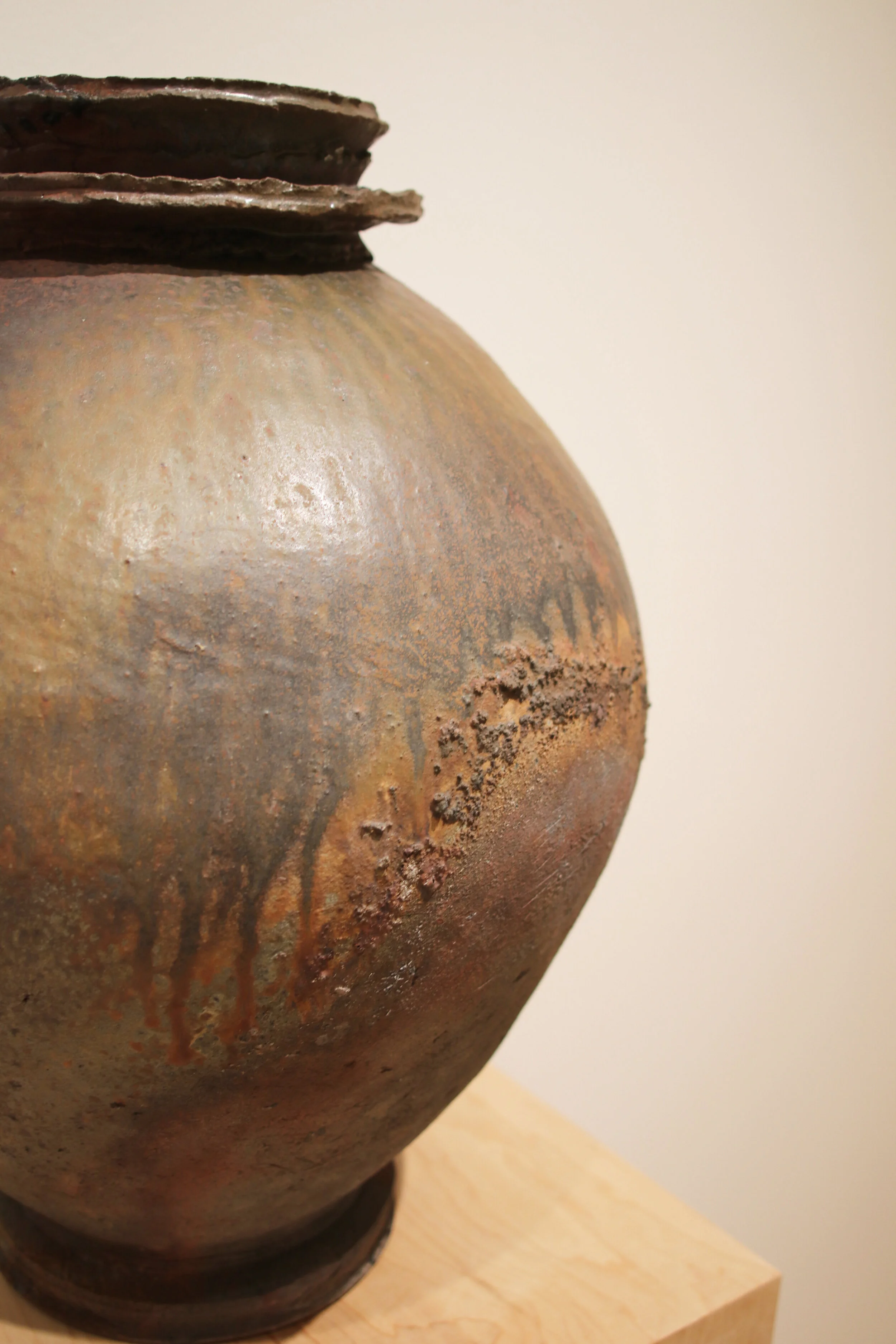
Here is a larger pot that was fired right in the front of “Bob,” one of the train kilns here at USU. It has quite a spectacular surface…


Here’s close up pictures of some of the other pots in the show…




I saved some ewers for the end. These are some of Josh’s favorite pots to make and it shows! I have one in my kitchen full of soy sauce right now…


Check out his website here: https://www.joshscottpottery.com/
Test Soda Firing #3 (10/12/20)
For my third soda firing, I wanted to re-test all the clay bodies I had made for my second firing in a different atmosphere. I had seen what they looked like in a lightly reduced atmosphere, but was curious what would happen if I again ignored body reduction but reduced the kiln hard during the soda introduction.
I also took the opportunity to try and hone in on some of the successful clay tests by making some more. I mixed up 7 more stoneware clays (50lbs each) and 5 more porcelain test bodies (10lbs each). I threw these into the same shapes as my original tests: trimmed bowls and cups. I had a few orders to fill so I hoped for the best and made them out of these untested bodies too. I also threw a few flower pots to help fill up the kiln.
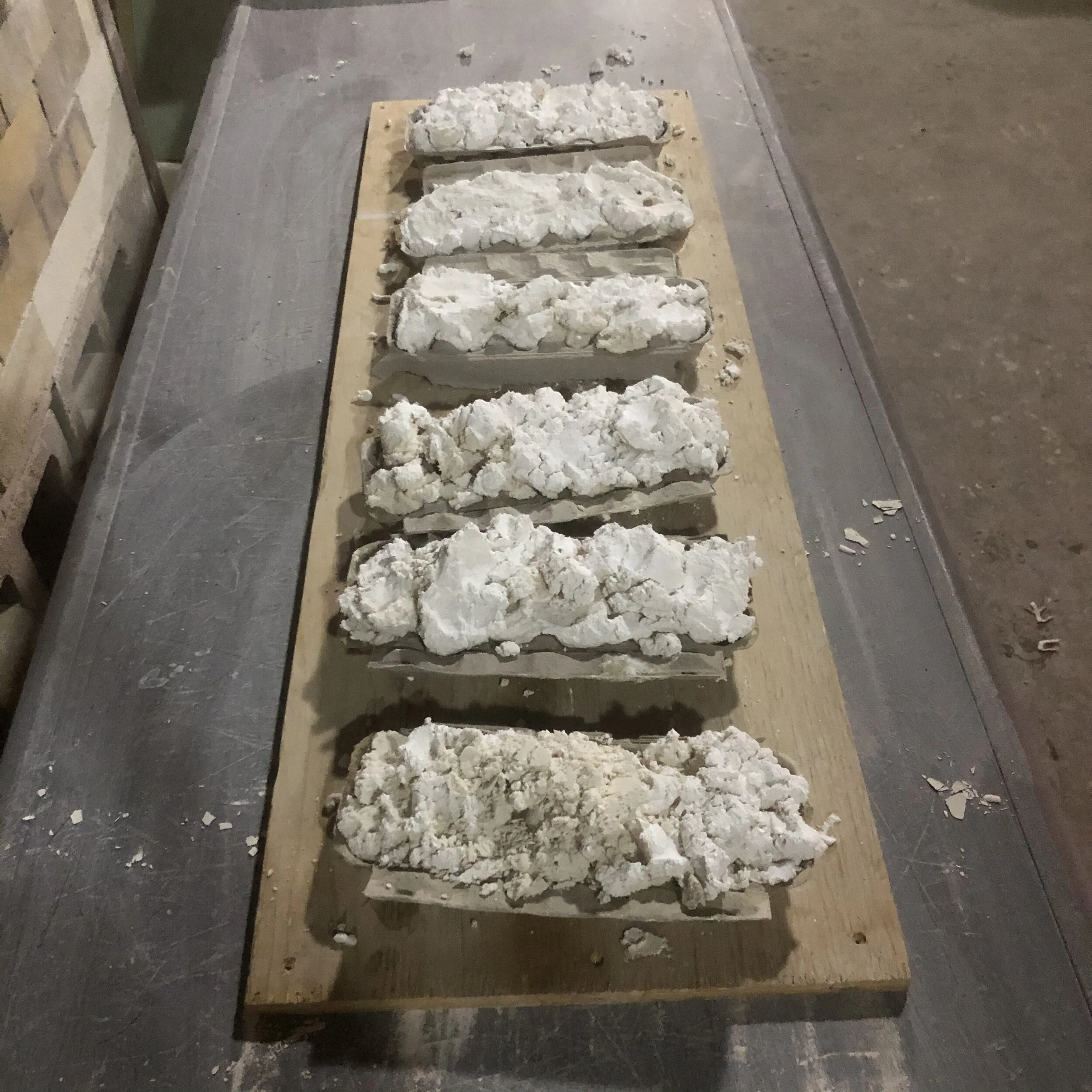
For this firing I pre-mixed my soda using Gail Nichols’ recipe. 50% whiting, 25% light soda ash and 25% baking soda (15lbs soda : 15lbs whiting). Supposedly the whiting helps separate the soda particles so they can vaporise more effectively. I had to take dense soda ash and heat it to 600°F in an electric kiln to convert it to light soda ash. I mixed the dry ingredients first and then added water. As I mixed the solution with an electric drill it started to turn slushy and then solid at a certain point. It was very much like making plaster. I spooned this mixture out into egg cartons as you can see below. Mixing the soda this way was super easy. It took much less time to introduce than spraying.

I would chuck in half an egg box in each side along with several pieces of wood, and then pushed the damper in to 3". I also turned the air and gas down a little during this soda period. I took my time with the soda introduction, starting at cone 7 and continuing up to cone 10/11. After introducing the soda and wood, I kept the kiln in pretty heavy reduction for half an hour (during which time the temperature crashed about 150 degrees) and then I opened the damper back up to 6” to regain the temp for half an hour. So these cycles were an hour long (5/6 hours of soda all together). I think I could maybe cut this down but it made it easy to manage, coming out every half hour to adjust the kiln.
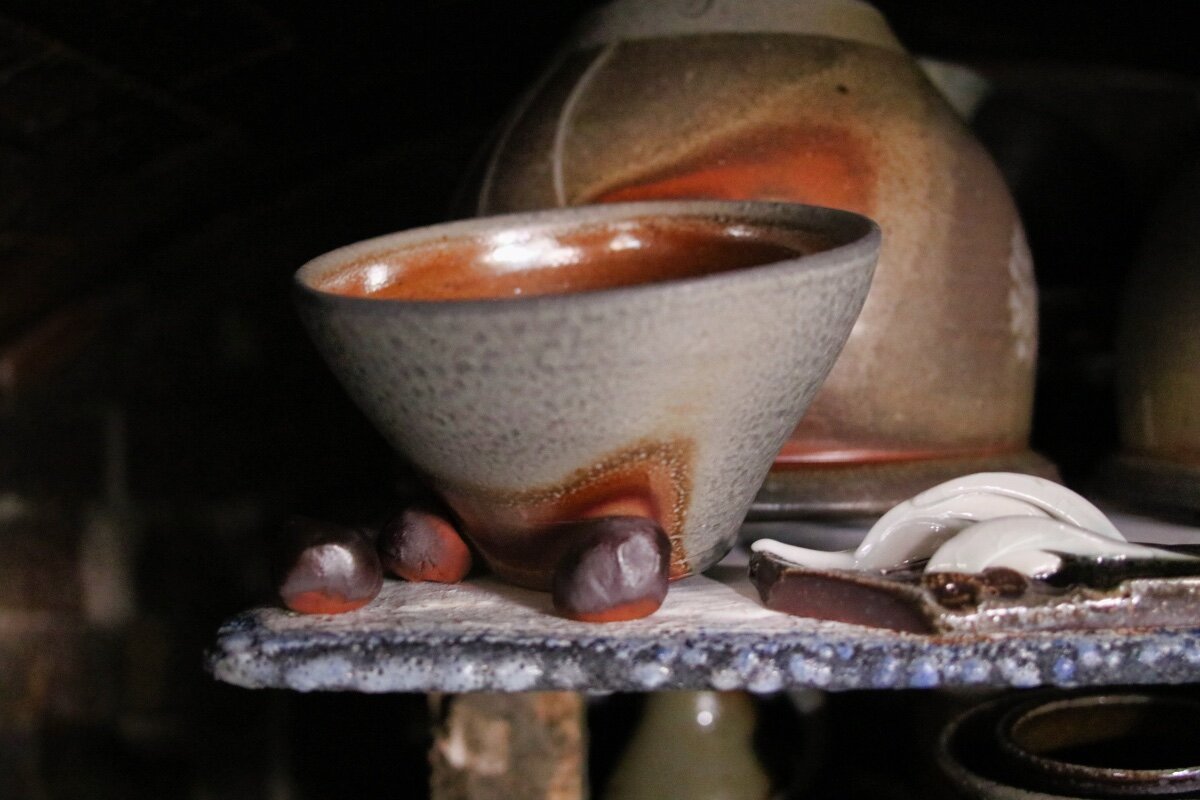
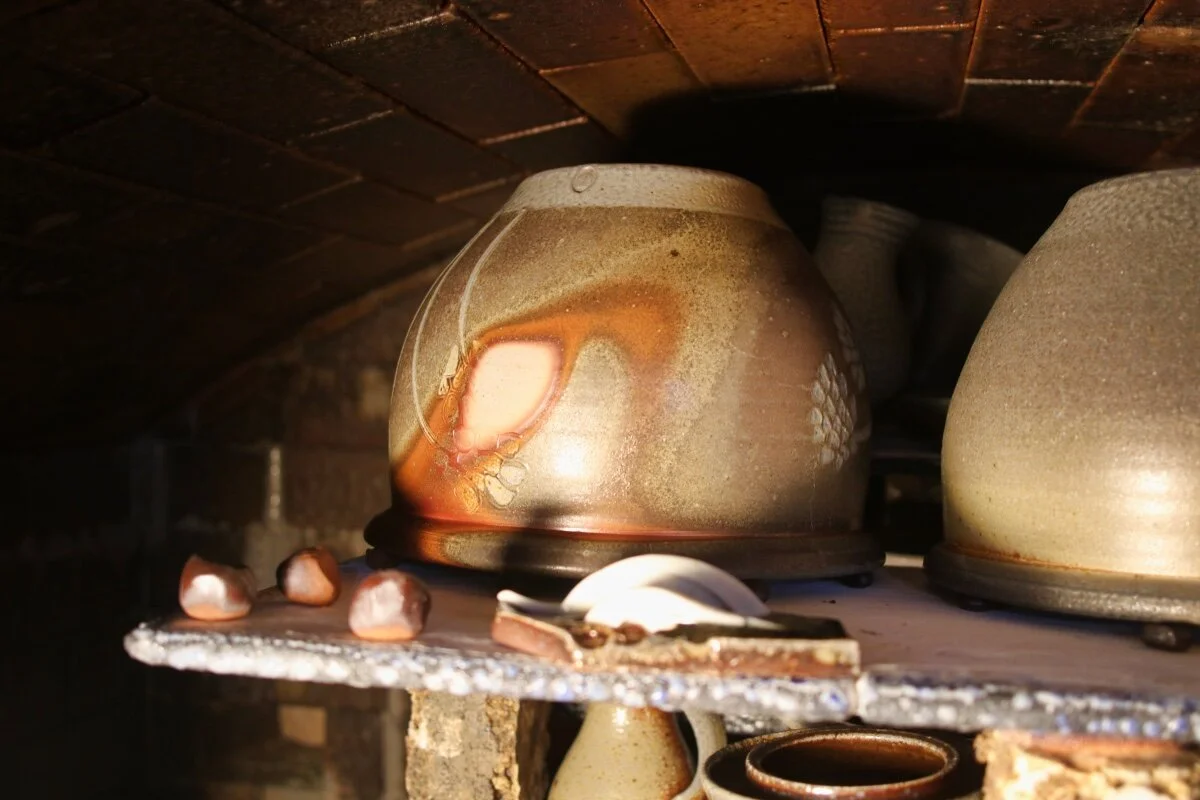
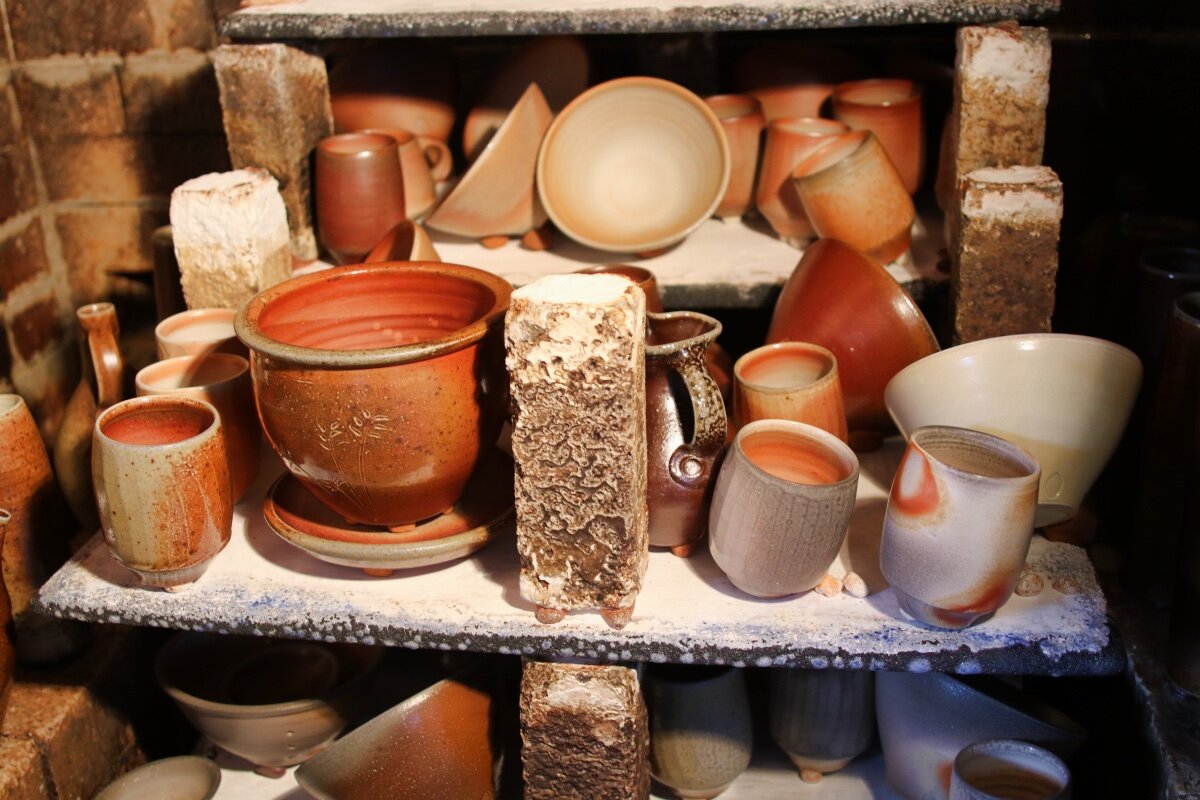
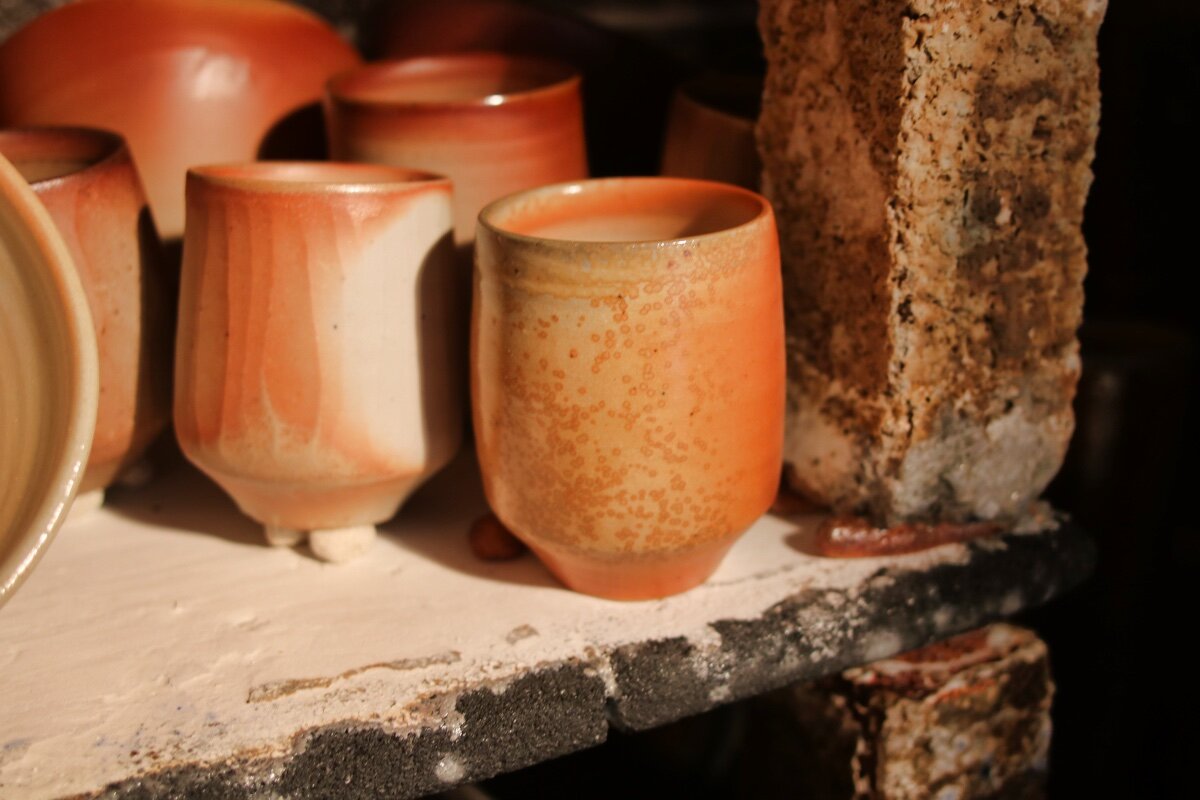
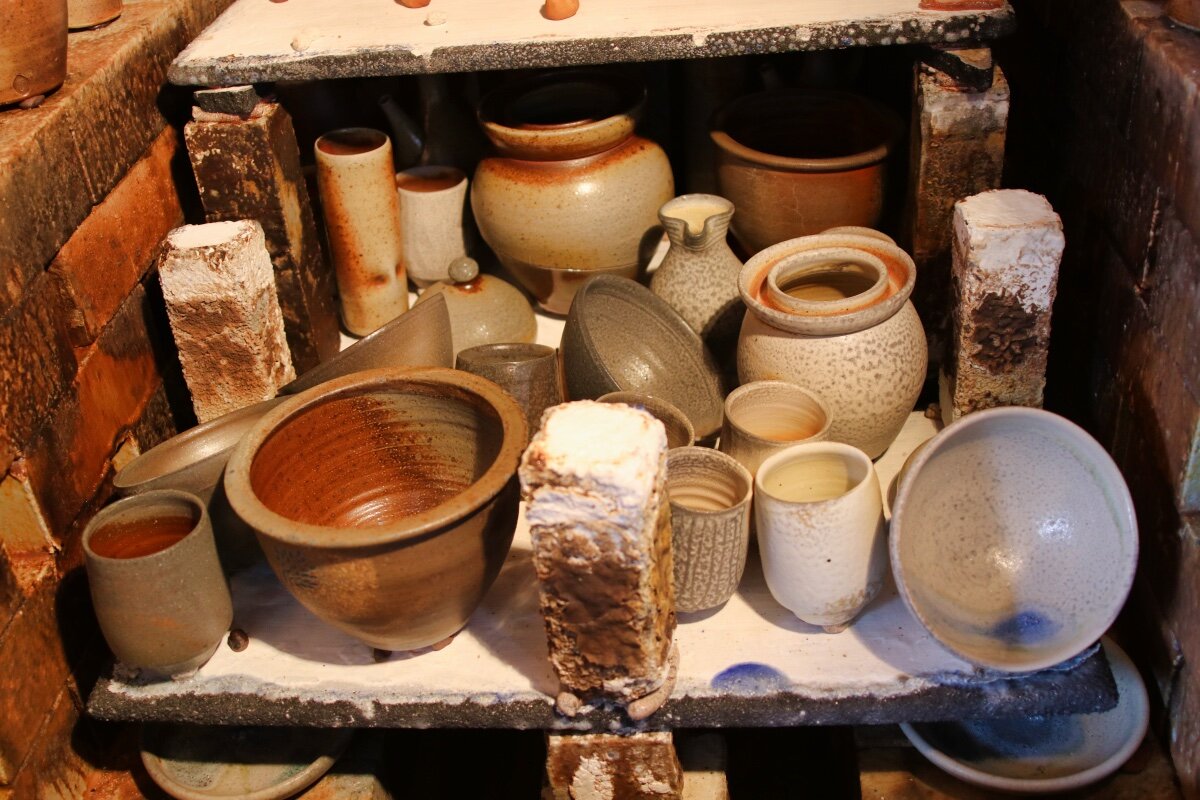
Here are some pictures from the unload…










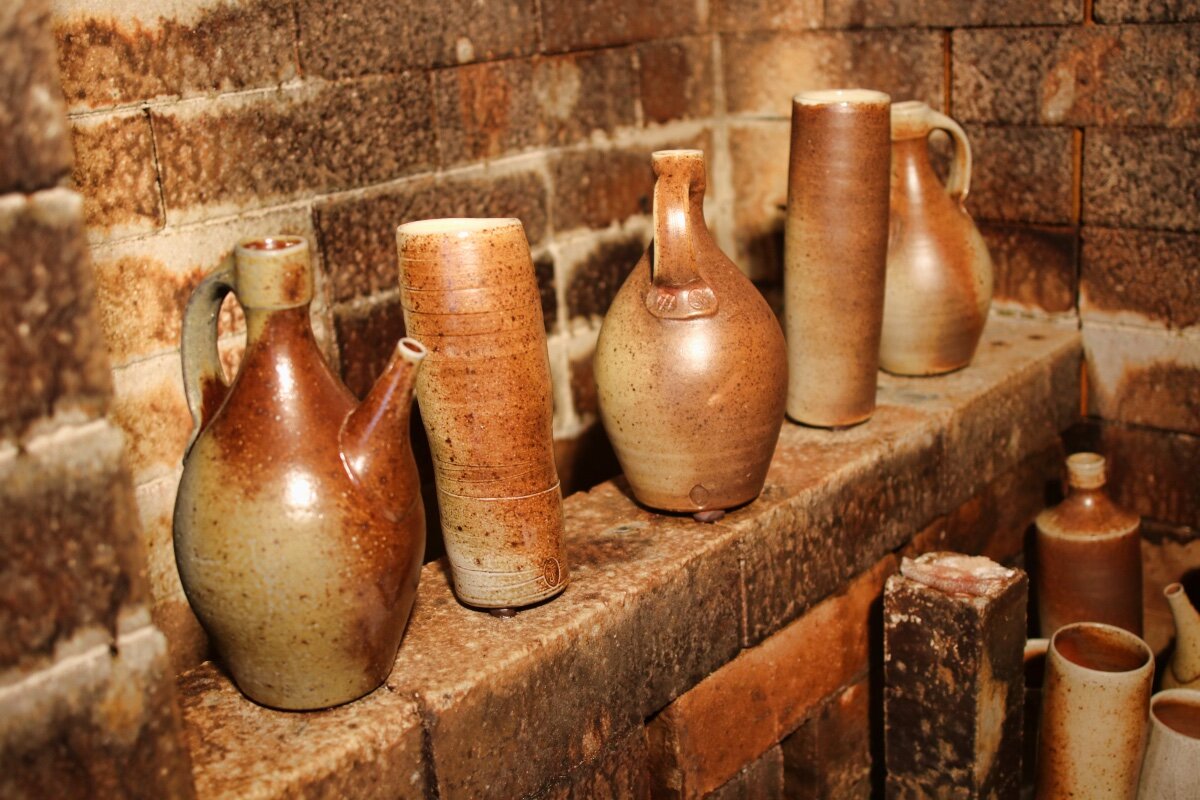

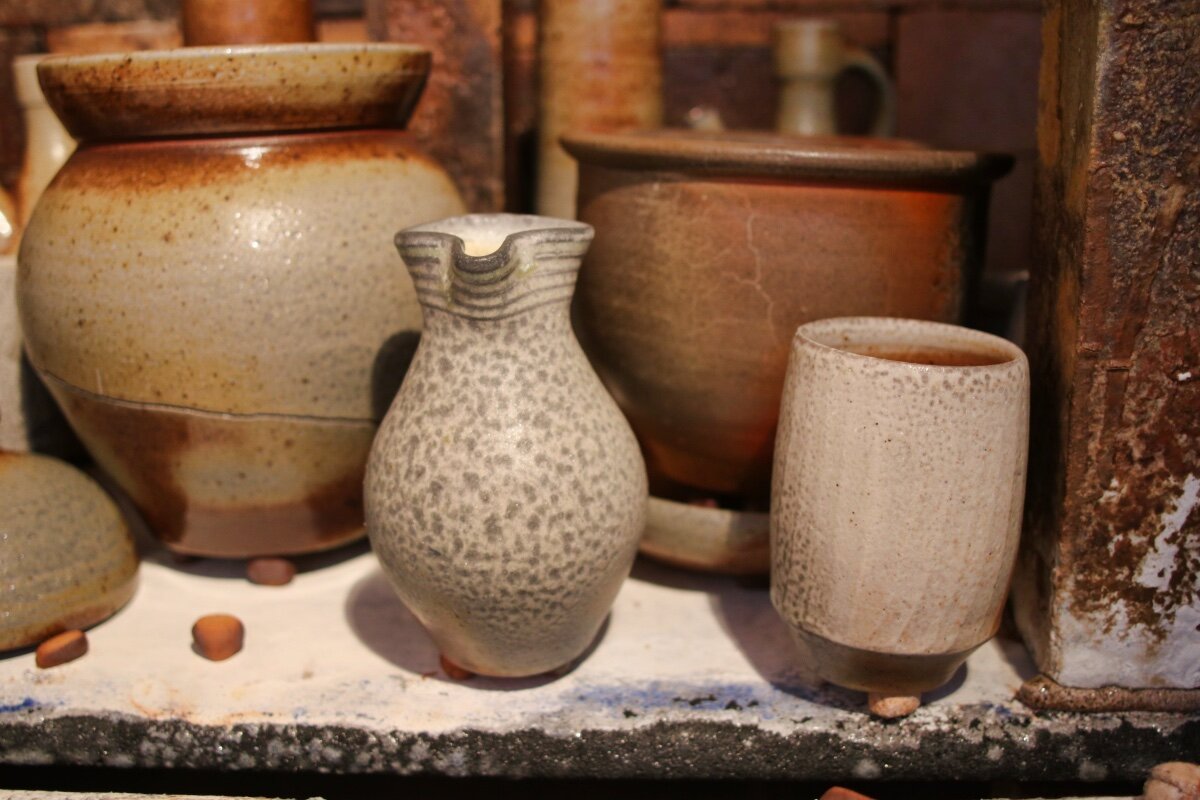

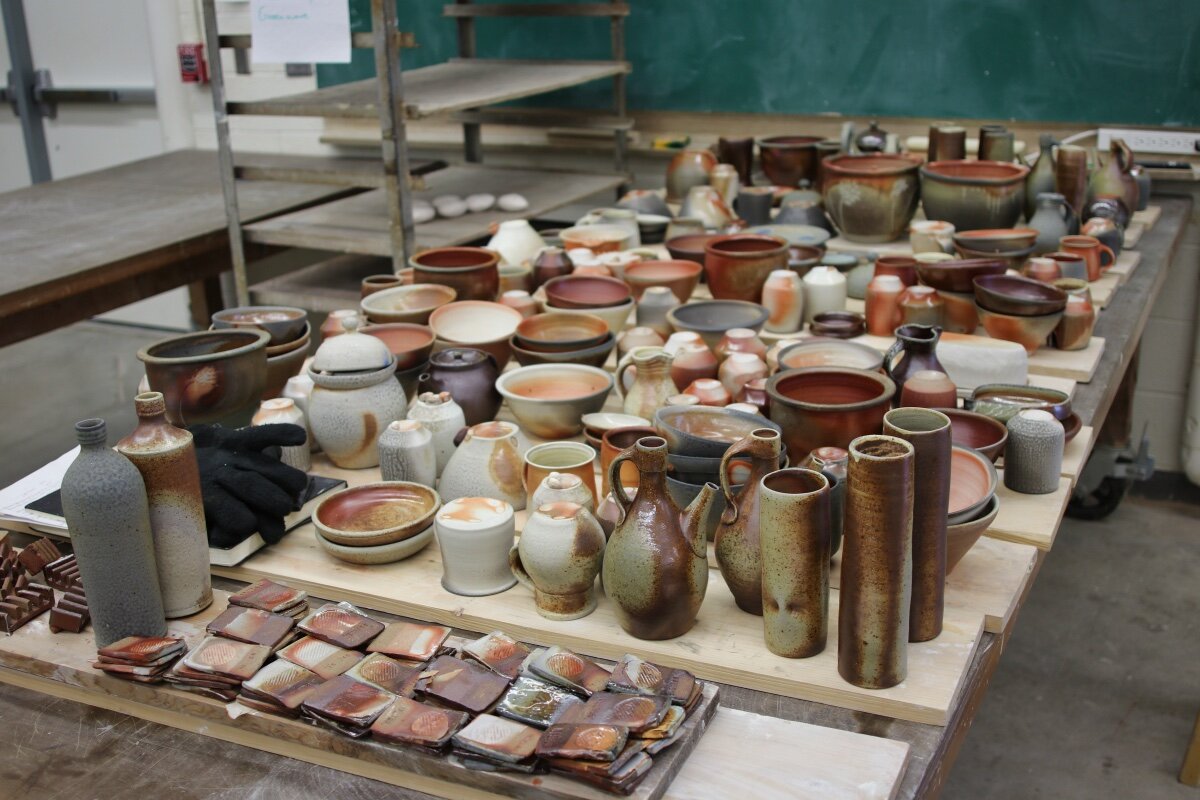
RESULTS
I sort of hoped that with this firing, I would get all the answers. That was not the case! I came away with more questions than answers… again. But I guess that’s why it’s so fascinating.
I packed the kiln tighter than my second firing (old habits die hard) and this made for some dry areas.
The top and bottom of the kiln got lots of soda, but the middle was pretty dry. To remedy this next time, I plan to pack the top and bottom tighter and leave the middle more open. Also just cramming less pots in.
The heavy reduction during the soda introduction made for quite a bit of carbon trapping… mostly up in the top of the kiln. There were lots of darker greys up there whereas down low, it was a lighter soda build up. Down low, I got more grey/black specks on a white surface rather than up high, where it was lighter grey spots on a darker grey surface.
I found the darker heavily carbon-trapped surfaces from the top of the kiln to be a bit too contrasty with the orange flashing. I don’t think I want to reduce this heavy during soda introduction going forward.


Here are some of the pots I found most interesting from my first couple of firings…


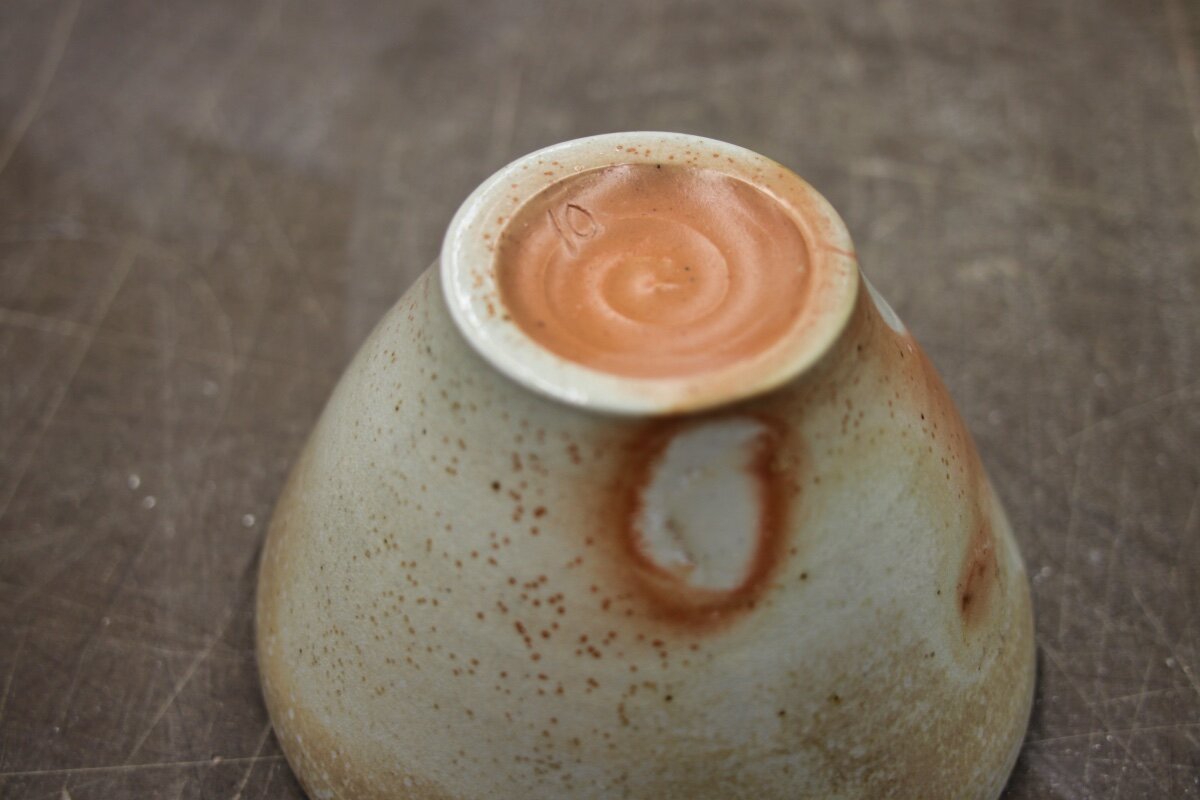


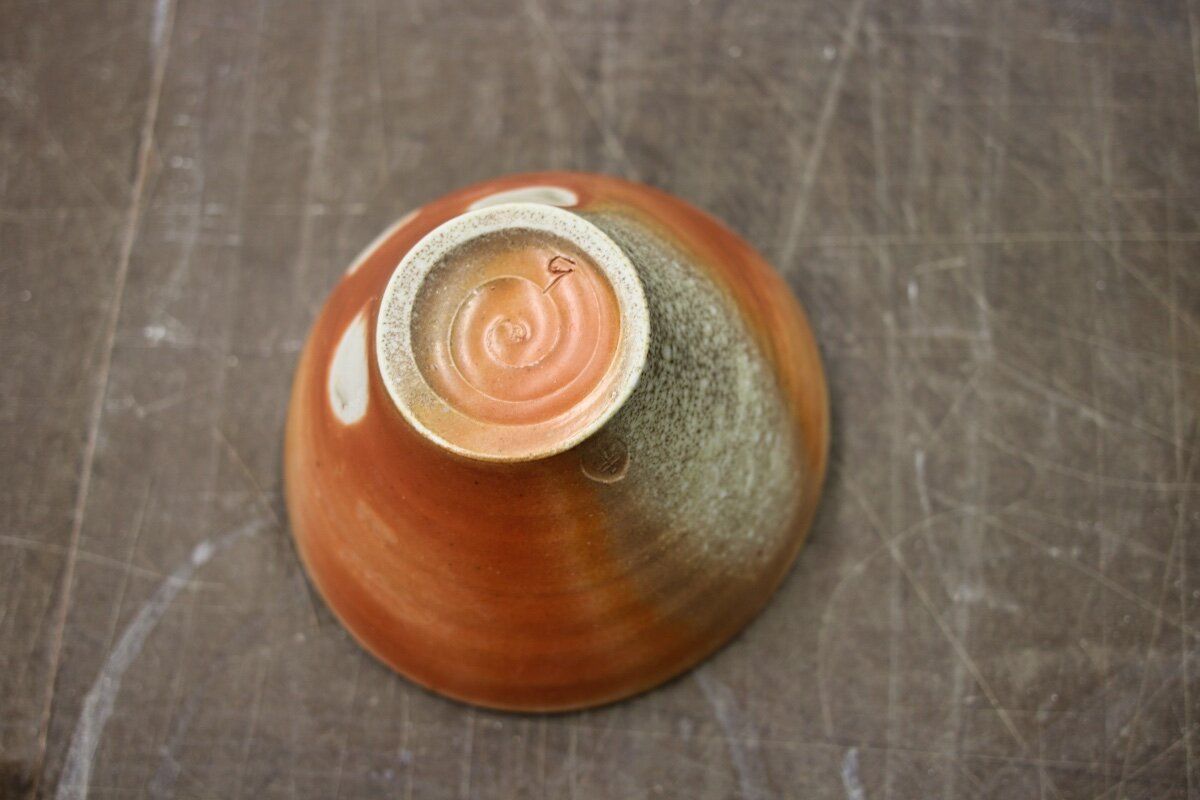


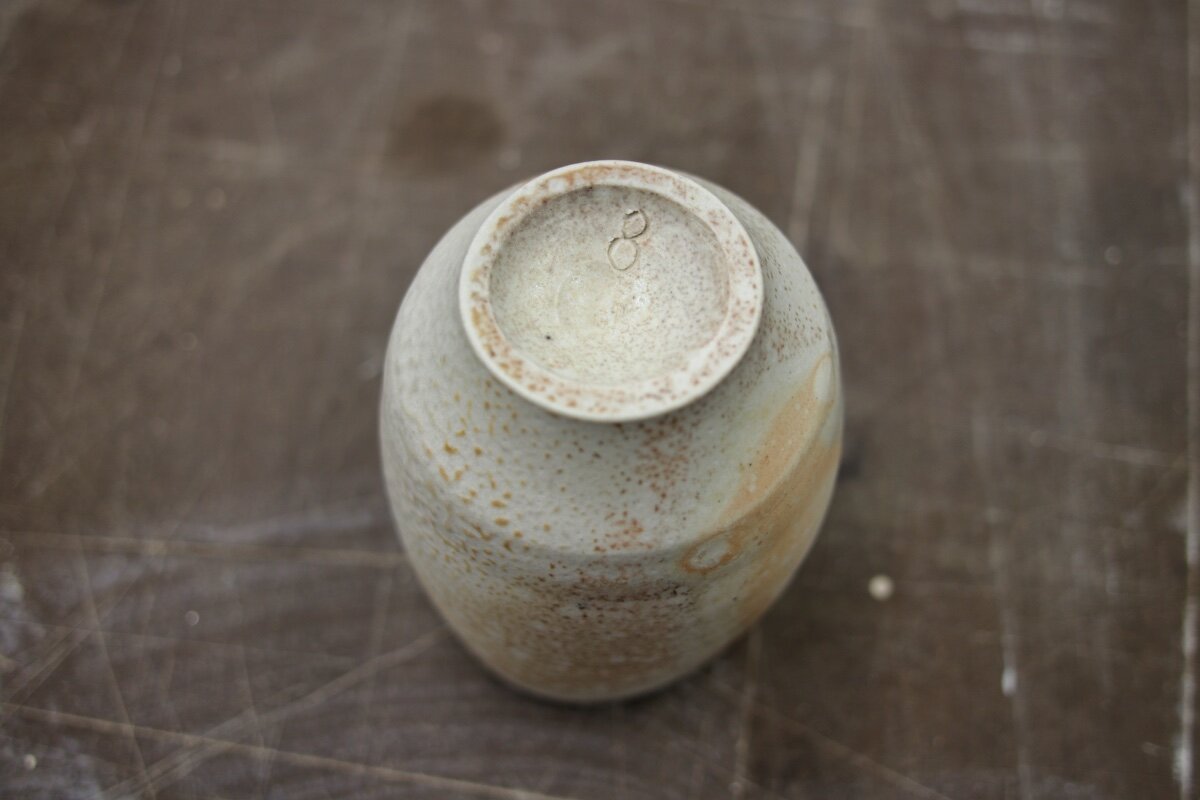


I organised the tests and put them to bed until I get back from the holiday break. Excited to get stuck in to my fourth soda firing in January of February. But for now, it’s time to read some books and relax!
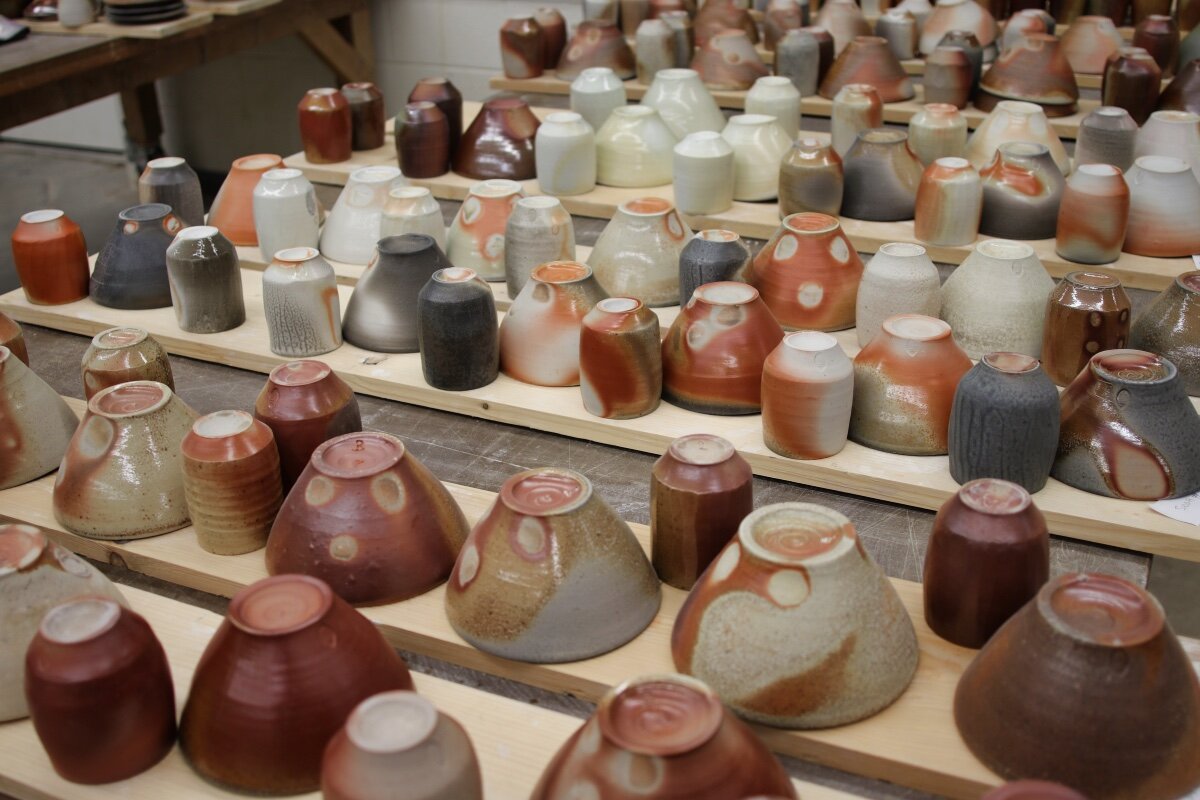

Hope you all have a lovely holiday and here’s to a better 2021!