
Autumn! And pots!
This last week has been wonderful. Autumn has officially arrived. The trees are shedding their yellow and rusty leaves, it's crisp but the sun has been out shining all day. Bright blue skies and fresh cool air. It's quite a relief after the summer's humidity. The mosquitoes are fading, but some still buzz around, looking for a meal. The pecan trees are heavily laden and dropping their packages all over the place. I have been competing with squirrels and crows for the bounty.
 |
| Lovely spot for a cup of tea |
 |
| There is a squirrel in this picture somewhere. |
 |
| Nuts, glorious nuts. |
 |
| Stay away, crow. |
 | |
| Mark's big pots, awaiting slip trailing. |
 |
| Mark's large canister jars, pink slip. |
 |
| Some of Mark's canister jars with red slip banding. |
 |
| Some of Mark's fat jars out to dry in the sun. |
 |
| Mark's mugs, plates, and lids. |
 |
| Big pots in the distance. |
 |
| This morning a film crew from UNC were in to interview Mark |
 |
| Adrian's work on the top two shelves, Mark's below. |
Now some of my pots, slipped and glazed, ready to be fired.
 |
| Pots, pots, pots. |
 |
| Some flower pots I made a couple of weeks ago. |
 |
| 1 1/2 lb jugs I was grappling with last week. |
 |
| Juice cups. |
 |
| Honey jars. |
 |
| Mixing bowl. |
 |
| Little creamers. |
 |
| Mugs. |
 |
| Bud vases. |
 |
| Small honey pots. |
 |
| Flower pots. |
 |
| Sushi dishes. |
I went into the barn to find some pots from the last firing that I'd made. There weren't that many left but here's a sampler.
 |
| Baby honey pot. |
 |
| Hip cups. |
 |
| Baluster jug. |
Getting the Goats
It's been almost two months since I got Lauren two goats to celebrate our first wedding anniversary. We picked them up in Smithfield, a village near our house. They were for sale because the mother goat had started headbutting a baby goat on the farm. Her son came as baggage. We thought twice about getting them due to her violent pedigree, but figured we could tame her.
Once we gave the okay, the farmer whisked them up and carried them over to the van (on loan from the pottery, and already containing a pottery wheel and electric kiln). They fit just fine behind the kiln, and were good as gold on the way home; no poop and just occasional bleats. Lauren was having second thoughts on the drive back, though. It did seem very real somehow. We had just gained two large animals. I mean they aren't really very large, being Nigerian Dwarf Goats, but still, they were significantly larger than our cats.
We parked the van near our back garden and encouraged them inside. They ran out and started eating the plump-almost-ready grapes off my one single grape vine. I had grand plans for these grapes; visions of wine vanished in seconds. I shooed them away and tried to construct a barrier between goats and grape, but they found a way around it. They also started eating the bark off our pecan tree, some garden furniture I'd made, and they climbed up on the new kiln. Not an ideal start. Every time we looked around, they were doing something naughty. We needed to take charge, so Lauren went and bought leashes and collars for them.
Getting the collar/harness on the boy goat (who we dubbed Brendan) was a whole afternoon's work. First we tried catching him by cornering him and leaping after him as he darted away. All this achieved was me laid out on the grass cursing, "Why did we think goats were a good idea?" and ruder exclamations. Brendan would not be caught. Morale was extremely low. I retreated to the Vitamix, made a smoothie, and called home. My parents suggested using food as a lure. Brilliant! I went out there with my delicious-smelling smoothie and sat in the middle of the garden drinking it, ignoring the goats completely, with the harness laid out on the ground next to me. Brendan was like a moth to a flame. Over he came, sniff sniff, lick lick. I directed him to the harness area with the open mouth of the mason jar. He put his head down and stepped one foot into the harness. I grabbed his other leg, inserted it, and pulled up the harness. He was wriggling and shaking, and I couldn't clasp the buckles -- I cried out, "Lauren, LAUREN, come quick, HELP!"
Lauren came out, fixed the harness, and clipped him into the twenty-five foot leash. What a relief that was! Getting Brendan's mum was easier because we had him as bait. After, we took them on a celebratory walk. Walking goats is not like walking dogs. You know how dogs just want to stop and smell everything? Goats just want to stop and eat everything. Especially crunchy dry leaves. I can't imagine that there are many nutrients in dead leaves, but the goats love them.
After a few short days with the new livestock, Lauren went on a Birthright trip to Israel and left me alone with them for a month. Before leaving, she organised a castration for Brendan. A nice couple from a local goat dairy came by with a metal tool that looked like a nut cracker. They helped put Brendan into a "goat yoga" position where his legs were tied up and he couldn't move at all. I held him whilst his balls were being inspected. At two months old, these things were gigantic. Really. Much bigger than you would expect. Apparently billie goats are much more placid without all that testosterone floating around.
They found the tube connecting Brendan's juice and clamped it down with the tool. I have never heard anything like it. He cried out like a baby being dropped into an ice bath. "Baaaaaaaaaaaaaaaaaaaghhhh!!!" It was a long pitiful cry that went right through us. Same again on the other side. "BAAAAAAAAGGHH!!!" Absolutely brutal. But afterwards, he didn't seem to be in any pain, just dazed and happily ate a bowl of food and lay down awhile. It was a closed castration, so no chance of infection and no special recovery time.
Whilst Lauren was away, I had a system of taking the goats out in the morning and back in at night. I had them leashed to a stake in different parts of the garden to keep them interested and evenly eat back the hedgerow. They were doing a pretty good job, but they kept getting tangled up around branches or logs or each other. Every morning, lunch, and evening I would untangle them. After a couple weeks, I started tethering them to different points, so that they could barely cross paths. It was working well, but then one day disaster struck.
It was actually whilst we were firing the kiln. I was set to come in for the 7 to midnight shift, an important time when the kiln must be heavily reducing. At 6:40, I went to check on the goats and found to my horror that they were badly tangled, and laying in an unusual position next to one another. Brendan's collar was all twisted up and had pinched his esophagus. His belly looked bloated and he wasn't moving. Brendan's mum was lying patiently next to him, her head pressed up against his. I took her off the leash and she wandered off to leave me to untangle Brendan. I worked fast, fleetingly thinking I might be able to save him. As the collar loosened, a hiss of air was released and his stomach flattened. He was stiff: nothing could be done. Brendan's mum came back in and sniffed the area, confused. Finding him like that was shocking, but the saddest part was Brendan's mum not knowing where he'd
gone. She trotted around the whole place looking for him, not understanding.
It was challenging to stay focused on firing the kiln that night, and very sad to have to break the news to Lauren, who was in Tel Aviv about to catch a flight home. I take full responsibility for what happened. I knew this was a possibility given the fact that they kept getting tangled, and I should have installed a proper fence so that they could roam freely. It was bad animal management and not a good start to my livestock care.
After my kiln shift, I watched several YouTube videos on goat butchery. The next morning, at first light I got up and skinned him. He was very healthy and had a nice layer of fat. I took the innards into a field for the vultures, kept some hide and hair for making paint brushes, and buried his head in the garden. The meat went into the freezer. I did slow cook some and bring it to the end of the kiln firing to share with the crew. Everyone agreed that Brendan was very tasty. We have since had a wonderful Moroccan-inspired tagine. There is some consolation to the tragedy, some silver lining.
So now we're down to one goat. You shouldn't keep a goat alone because they're such social animals, but Brendan's mum actually seemed more relaxed after he was gone. This only lasted a couple of weeks, though, and then she became more anxious. Yesterday we decided to give her to a couple who run a nearby goat farm. They liked her markings and will breed her. She's part of a herd now, and apparently she's settling in well with the other goats. But we were sad tonight when there was no goat to give our empty corn husks to.
Here's a tiny video of them...
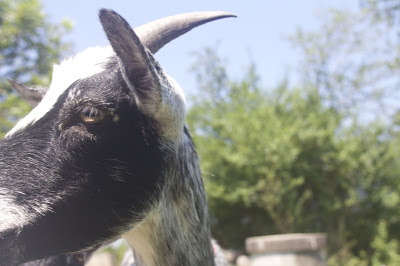 |
| Cheeky. |
Once we gave the okay, the farmer whisked them up and carried them over to the van (on loan from the pottery, and already containing a pottery wheel and electric kiln). They fit just fine behind the kiln, and were good as gold on the way home; no poop and just occasional bleats. Lauren was having second thoughts on the drive back, though. It did seem very real somehow. We had just gained two large animals. I mean they aren't really very large, being Nigerian Dwarf Goats, but still, they were significantly larger than our cats.
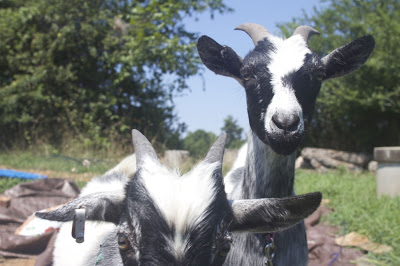 |
| What a menacing duo. |
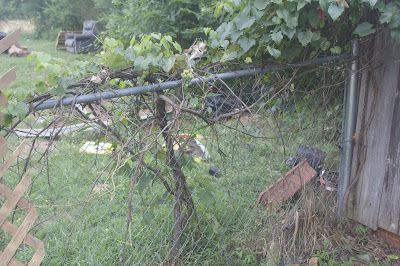 |
| Exhibit A: Grape vine. Bare. |
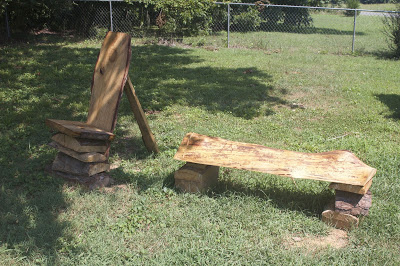 |
| Exhibit B: Bench and stool I constructed with friends over the July 4th weekend. Munched bark. |
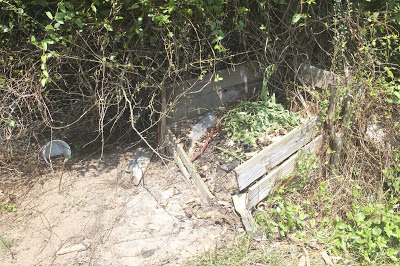 |
| Exhibit C: Deconstructed compost heap. |
Lauren came out, fixed the harness, and clipped him into the twenty-five foot leash. What a relief that was! Getting Brendan's mum was easier because we had him as bait. After, we took them on a celebratory walk. Walking goats is not like walking dogs. You know how dogs just want to stop and smell everything? Goats just want to stop and eat everything. Especially crunchy dry leaves. I can't imagine that there are many nutrients in dead leaves, but the goats love them.
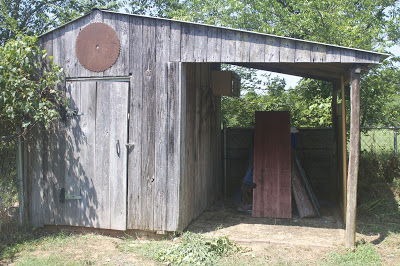 |
| Their shelter at night (electric kiln covered up and goat-proofed in the background) |
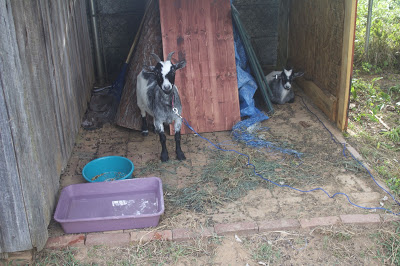 |
| Goat morning. |
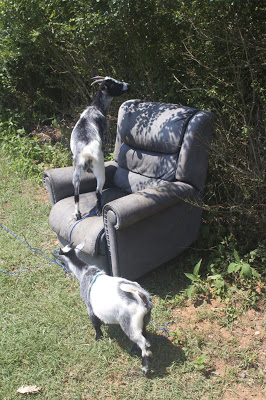 |
| Stairway to heaven = a La-Z-Boy |
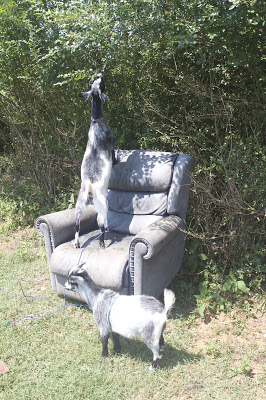 |
| "Don't you wish you had a neck as long as a giraffe?" |
They found the tube connecting Brendan's juice and clamped it down with the tool. I have never heard anything like it. He cried out like a baby being dropped into an ice bath. "Baaaaaaaaaaaaaaaaaaaghhhh!!!" It was a long pitiful cry that went right through us. Same again on the other side. "BAAAAAAAAGGHH!!!" Absolutely brutal. But afterwards, he didn't seem to be in any pain, just dazed and happily ate a bowl of food and lay down awhile. It was a closed castration, so no chance of infection and no special recovery time.
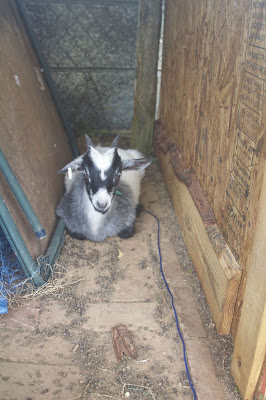 |
| Post castration blues. |
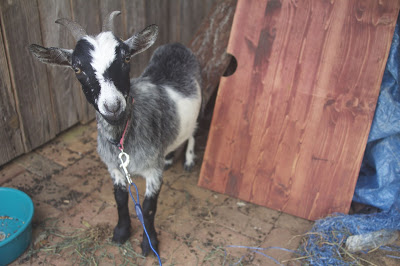 |
| Yes? |
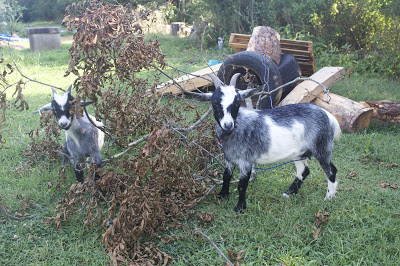 |
| The daily routine -- tangled up in branch. |
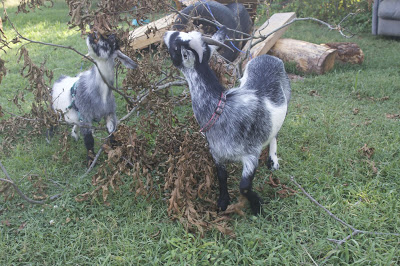 |
| They love dried leaves more than anything in the world. |
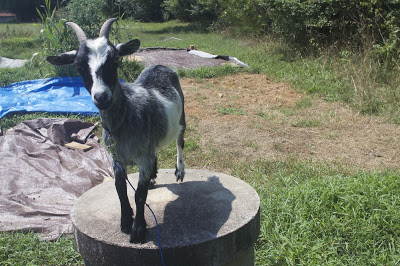 |
| Brendan's mum. |
After my kiln shift, I watched several YouTube videos on goat butchery. The next morning, at first light I got up and skinned him. He was very healthy and had a nice layer of fat. I took the innards into a field for the vultures, kept some hide and hair for making paint brushes, and buried his head in the garden. The meat went into the freezer. I did slow cook some and bring it to the end of the kiln firing to share with the crew. Everyone agreed that Brendan was very tasty. We have since had a wonderful Moroccan-inspired tagine. There is some consolation to the tragedy, some silver lining.
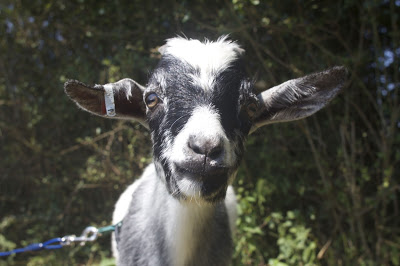 |
| He was really cute, I'll give him that. R.I.P. Brendan. |
Here's a tiny video of them...
The Great Sawanky Debacle of July 2015
Before we get to the debacle, let me set the scene. I am sat out on the porch enjoying a glass of iced Darjeeling tea, listening to a toy plane buzzing way overhead. Dragonflies and bugs snap and fizz close by, competing for my attention. The air is so alive here in North Carolina, thick with possibility and life. The pecan tree in front of our house is waving quietly in the breeze, casting a shadow over me and despite it being 2p.m., the temperature is relatively pleasant.
The last couple of weeks at the pottery have been demanding in various ways. We are getting ready to fire the kiln soon, so there has been kiln shelf grinding and prop cleaning to do. We use a heavy duty grinder with a diamond pad for the shelves, which makes the process quite fast, but lifting them onto the sawhorses and back takes its toll. They are thick, made out of silicon carbide and each weighs about 50lbs. The dust gets everywhere, so you have to wear a respirator and full length trousers/shirt; this gets pretty warm in the 95 degree heat. But it's not so bad; living so close by I come home for lunch and can have a shower. We only spend the mornings doing manual labour, and then get to throw pots or decorate them in the afternoons.
During the last couple of weeks I have been trying to figure out how to throw Sawanky jars. These are an old traditional form originally from a town in Northern Thailand called Sawankhalok. Here is an example below from 14th-15th century. The ones I am throwing will have a similar shape -- Mark has adapted it to his style -- with no handles.
 |
| Image from here |
 |
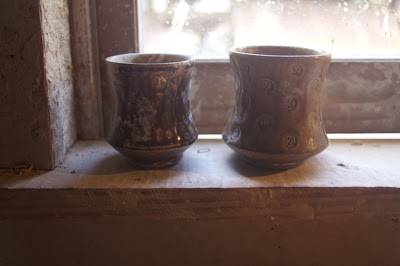
| John (the apprentice before me) made the one on the left and Mark made the one on the right. |
The first ones I made were nowhere near as fat as these, or anywhere near as large as the demonstration pot Mark threw for me. He told me they looked "boney." I had to agree. They seemed anemic in comparison to those on my window ledge. It's challenging throwing a new form for the first time, but especially when your teacher can stretch the clay so thin and still be in control. There were lots of nearly Sawanky's and not so many actual Sawanky's. But I think it's okay; Mark hasn't been pressuring me to make lots of pots, just to try to get the forms right. He told me that in time I'll be able to make more and they will get lighter. Form is the most important thing for now.
 |
| My second attempts. You will read below what happened to my first ones. Spoiler-its not good. |
Most of first batch of lids simply did not cut it -- they were way too small. So I had to cover my jars and make more lids, to trim and knob the next day. Even putting the knobs on is tricky. I am getting better at tap centering (making sure the lid is centered before you start trimming), but still this process can take a frustratingly long time. The knobs are small and shaped like little lozenges. Its fiddly work, using one forefinger and a pinky to squeeze the tiny lump of clay into the shape required.
But, and so. Finally. I am finished, I have my set of lids and bodies, ready to be matched up with my fully knobbed lids. Here's where the shit hits the fan.
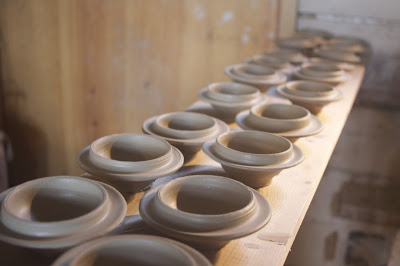 |
| Lids |
Absolute nightmare. Shame washed over me. The humidity coagulated in my head, as if it was about to explode. I felt like screaming. So much work on the floor. But there was some solace. At least they were my pots and not Mark's or Adrian's. It was actually good for me to learn this mistake with my pots, and to be honest (as some of my first attempts at the form), they should have probably ended up in the reclaim anyway. But still, I felt pretty rotten and self-loathing for a while. I think I went home and cleaned the house really thoroughly as penance.
 |
| A survivor. |
Now for a few other pots...
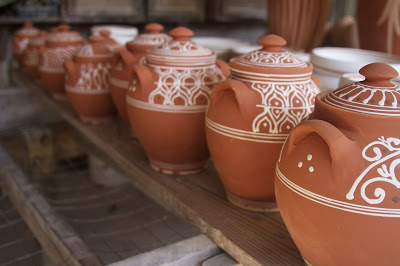 |
| Some of Adrian's large jars. |
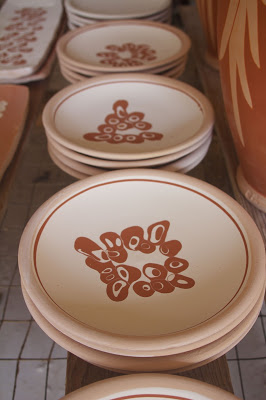 |
| Mark's bisqued marbled plates. |
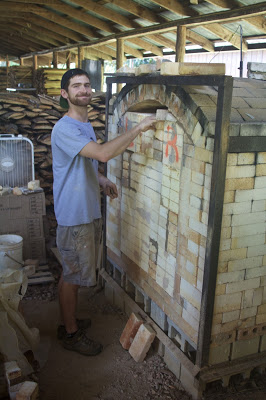 |
| Adrian bricking up the bisque kiln |
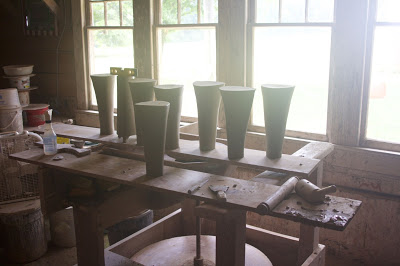 |
| Mark's triangle vases ready to gain some feet |
 |
| Example pots from apprentices past. |
 |
| Four more to fill the board. |
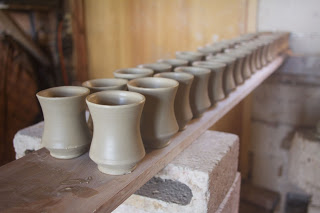 | ||
| Close up. |
 |
| Some bisqued tumblers, ready to be glazed. Red slip with white slip dots/trails. |
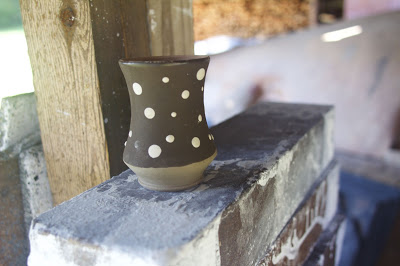 |
| Black slip with white glaze dots. |
First month as Mark Hewitt's Apprentice
Lauren and I moved down to Pittsboro, North Carolina at the end of May, and have been getting settled in to a house near Mark Hewitt's pottery. It's starting to feel like home; Lauren has been painting wildly with an off-white color called "drumskin" and some magic chalkboard paint.
Plans to make a vegetable patch in the garden are coming together. I have laid out tarps over the grass to kill it and get it ready for tilling next weekend. Once it's fenced in, we'll get a flock of chickens. Right in town we have the Livestock Conservancy who promote heritage breeds in order to keep livestock as diverse as possible. We're planning on raising struggling breeds. I want to get the chickens situated first, but Lauren is pretty excited about goats. The race is on.
It's been an adjustment moving here from New York. I was always busy in Brooklyn, but had a very loose schedule, whereas now I have a full on 8:30am-5pm job. The biggest culture shock has been the weather, though: from the relatively temperate climate of NY, we find ourselves in a positively wild one down here. Most days it's over 90 degrees Fahrenheit. The sun is unrelenting, but almost every afternoon we get a heavy shower. No wonder the plants grow so wild and trees so tall. Any portion of land left untended springs up like a jungle. A few days ago, we had a monumental storm with lightening striking repeatedly around us, winds so hard they broke a couple of my porch pots. Also there is an amazing amount of bugs here; large bugs, colorful bugs, biting bugs.
The work is very enjoyable; Adrian (the other apprentice, who has been here 2 1/2 years now) and I generally do labour in the mornings and make pots in the afternoon. The labour can be anything from sorting wood to mixing glazes to landscaping, but our day usually starts by prepping Mark's clay; pugging it to his desired consistency and balling it up. Mark is a machine: one day last week he threw 100 mugs before 3pm and handled them all the next day. My best effort so far was 43-ish, but some of them did not survive the cull. Adrian is a very skilled thrower too, and both he and Mark have been very generous with demonstrations, getting me into the swing of it. The clay is stiffer and more groggy than I'm used to, but I can see how far you can stretch it. So far I have tried my hand at a different pot each week; juice cups (tumblers), pancheons (wide straight sided bowls), mugs and now honey pots, in that order. I have not got close to mastering any of the forms, but it's nice to be able to try out different forms rather than making hundreds of four-inch bowls for weeks (which was how I started at Winchcombe). Raw glazing and slip decoration have been probably the hardest part so far; I have a long way to go in terms of decorating pots.
But enough text for now. Our place is only a five minute walk from the pottery, and a lovely walk it is. Let me take you down there...
Follow me into the workshop;
I made my first stab at these little pots today (12oz clay). They were quite tricky; you have to leave a good amount of clay at the rim for a gallery and push out the belly impossibly far. Mark told me "they cannot be too fat. That's a challenge." The trouble is that once you get them really fat they want to split or collapse. Tough times! The one below was the nicest shape I managed, despite it not being nearly as fat as Daniel's.
Here's some wares drying out (mostly Adrian and Mark's pots);
And finally some of Mark and Adrian's big pots;
Plans to make a vegetable patch in the garden are coming together. I have laid out tarps over the grass to kill it and get it ready for tilling next weekend. Once it's fenced in, we'll get a flock of chickens. Right in town we have the Livestock Conservancy who promote heritage breeds in order to keep livestock as diverse as possible. We're planning on raising struggling breeds. I want to get the chickens situated first, but Lauren is pretty excited about goats. The race is on.
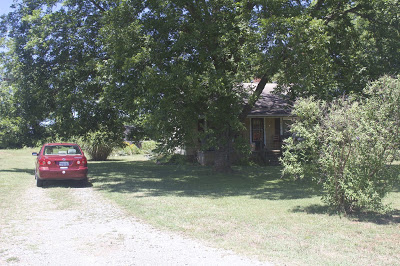 | ||
| Our valiant steed Lucille and the house, hidden by a big pecan tree. |
It's been an adjustment moving here from New York. I was always busy in Brooklyn, but had a very loose schedule, whereas now I have a full on 8:30am-5pm job. The biggest culture shock has been the weather, though: from the relatively temperate climate of NY, we find ourselves in a positively wild one down here. Most days it's over 90 degrees Fahrenheit. The sun is unrelenting, but almost every afternoon we get a heavy shower. No wonder the plants grow so wild and trees so tall. Any portion of land left untended springs up like a jungle. A few days ago, we had a monumental storm with lightening striking repeatedly around us, winds so hard they broke a couple of my porch pots. Also there is an amazing amount of bugs here; large bugs, colorful bugs, biting bugs.
 | |
| This shed is on our land (approximately an acre) and will house the chucks at night. The veg patch will be behind it. |
The work is very enjoyable; Adrian (the other apprentice, who has been here 2 1/2 years now) and I generally do labour in the mornings and make pots in the afternoon. The labour can be anything from sorting wood to mixing glazes to landscaping, but our day usually starts by prepping Mark's clay; pugging it to his desired consistency and balling it up. Mark is a machine: one day last week he threw 100 mugs before 3pm and handled them all the next day. My best effort so far was 43-ish, but some of them did not survive the cull. Adrian is a very skilled thrower too, and both he and Mark have been very generous with demonstrations, getting me into the swing of it. The clay is stiffer and more groggy than I'm used to, but I can see how far you can stretch it. So far I have tried my hand at a different pot each week; juice cups (tumblers), pancheons (wide straight sided bowls), mugs and now honey pots, in that order. I have not got close to mastering any of the forms, but it's nice to be able to try out different forms rather than making hundreds of four-inch bowls for weeks (which was how I started at Winchcombe). Raw glazing and slip decoration have been probably the hardest part so far; I have a long way to go in terms of decorating pots.
But enough text for now. Our place is only a five minute walk from the pottery, and a lovely walk it is. Let me take you down there...
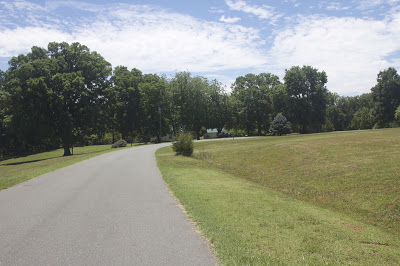 |
| Walking down the road tut pottery. |
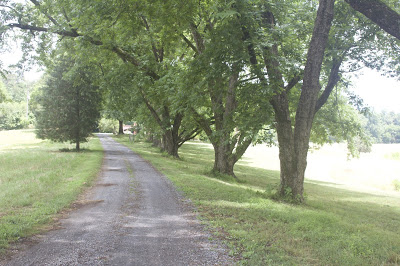 |
| Gorgeous trees lining the road. |
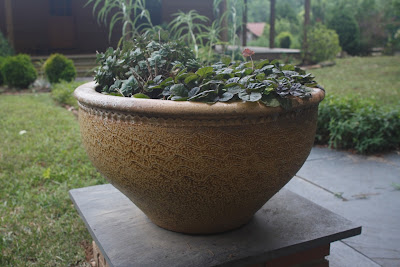 |
| One of Mark's planters. |
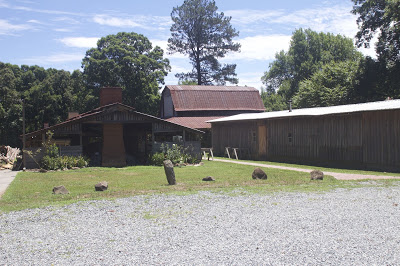 |
| Kiln shed to the left, workshop to the right and the barn (with finished pots) in the background. |
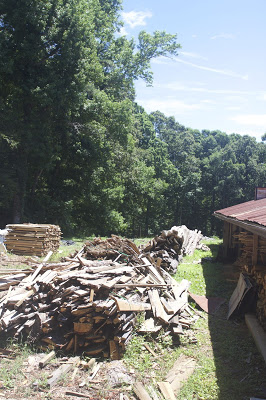 |
| Wood for the firing. Adrian and I were cutting some of this earlier today. |
 |
| A finished stack of strips for the end of the firing. |
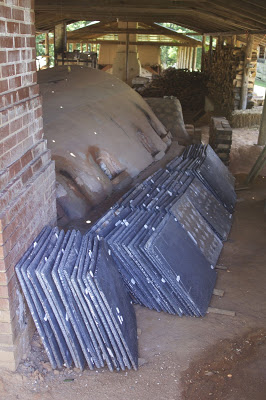 |
| Kiln shelves resting against the kiln, waiting for some TLC. |
Follow me into the workshop;
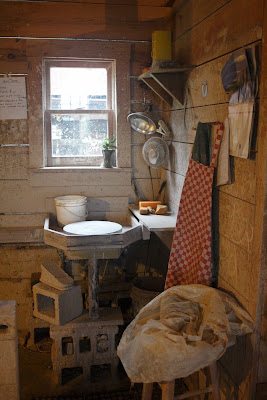 |
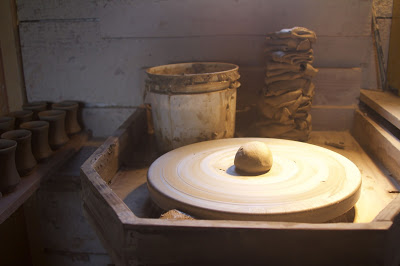
| This is the wheel I'm throwing on at present. |
 |
| One of Daniel Johnston's (a former apprentice) honey pots. |
I made my first stab at these little pots today (12oz clay). They were quite tricky; you have to leave a good amount of clay at the rim for a gallery and push out the belly impossibly far. Mark told me "they cannot be too fat. That's a challenge." The trouble is that once you get them really fat they want to split or collapse. Tough times! The one below was the nicest shape I managed, despite it not being nearly as fat as Daniel's.
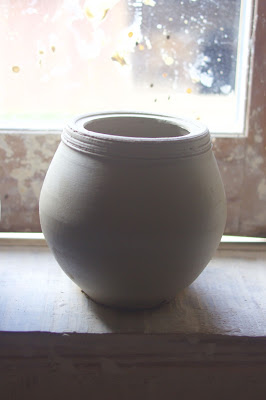 |
| My best effort today. |
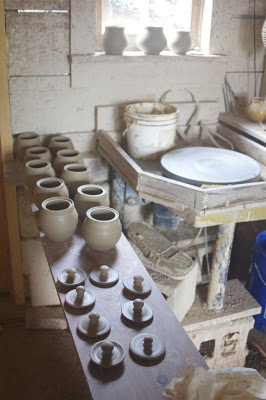 |
| A small collection of honey pots and lids. Many didn't make it! |
Here's some wares drying out (mostly Adrian and Mark's pots);
 |
| Bottles, tankards, tumblers, hanging plant pots, vases, platters, bowls and plates! |
 |
| Some mugs I made last week. Mark will often use blue glass squares in his pieces. They melt when fired. |
And finally some of Mark and Adrian's big pots;
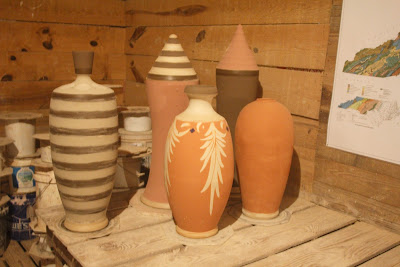 |
| Adrian's are the front two. |
NCECA in Review (Providence 2015). Friday 26th March.
[This post includes pictures from the NCECA annual cup sale, the Juried Student Show and the Armory Show including the Apprentice Lines Exhibition. I have included links to the featured artists' websites wherever possible].
I whisked myself out of bed bright and early for yoga and joined the long snaking queue for the opening of the annual cup sale after. There was still a decent selection when I got in there and bought myself a beautiful slip cast cup.
 |
| NCECA 2015 cup sale frenzy |
Next up I attended a meeting of the Green Task Force. There weren't that many of us at the meeting but some positive ideas came up, such as the potential for a collaborative project for next year's NCECA involving bricks made from recycled materials. From here I went to a very entertaining lecture on Grayson Perry and then over to the Apprenticeship Panel Discussion.
Mark Shapiro introduced the speakers; Louise Cort discussed the tradition of apprenticeships in Japan, Lucie Brisson about her time apprenticing with Simon Levin, and Daniel Johnson spoke about his experiences as an apprentice in Thailand, under Mark Hewitt and Clive Bowen, as well as taking on apprentices of his own now. Daniel blew me away with his straightforward attitude and the slides of his outrageously large and fine pots. He discussed the freedom of working for a studio and not "owning" the pots you make. Someone in the audience asked at the end about students not getting the chance to make their own work and he replied simply that every pot you make is your work. It is about building up your skills, not your collection of pots. I firmly believe this too. Daniel's talk gave me the shivers that stayed with me through the whole afternoon. I felt extremely privileged to have been accepted by Mark Hewitt to be his next apprentice (I'm starting in a few days).
 |
| Daniel's 100 Large Jars Project |
I spent a good section of the afternoon exploring the juried student show on display pretty close to the Convention Centre. Here are the pictures -- some incredible work.
 |
| Michelle Laxalt, Keeper (Chimera), Paper clay, underglaze, cone 04 electric fired, acrylic paint, oil paint, varnish, gold leaf. Georgia State University. |
 |
| Rachel Bigley, Calcium, Earthenware, latex paint, and dry pigments. Georgia State University. |
 |
| Wen-Dan Lin, White Curl / Iron Skin, Arizona State University. |
 |
| Ivan Camona, Royalty, Earthernware, hand built, engobe, glazes, fired at cone 04, cold-finish. Oregon College of Art and Craft. |
 |
| Abby Nohal, Topographical Recollections, Stoneware and glaze, fired in a gas kiln to cone 10 reduction. Duchess Community College. |
 |
| Sarah Heitmeyer, A Slice Of Ups And Downs, Earthenware, underglaze, cone 04, glaze. SUNY. |
 |
| Scott Steder, In Play, Stoneware, glaze, and copper oxide, wood/salt fired to cone10 reduction. Wichita State University. |
 |
| Love this piece but not sure who made it. |
 |
| Stuart Gair, Row of Vases, Carved stoneware, white slip, glazed white, soda fired to cone 11. University of Nebraska. |
 |
| Angela Biederman, Cow in Tall Grass, Stoneware, glaze, cone 6 oxidation. Kent State University. |
 |
| Brent Pafford, Skillets, Cone 9 porcelain, oxidation. Clemson University. |
 |
| Hannah Cameron, K23, Ceramic, encaustic, resin. Ohio University. |
 |
| Kelly Stevenson, GROUNDLESS DISENGAGEMENT, Lizella stoneware, cone 04, wood, acrylic, encaustic, resin. Georgia State University. |
 |
| Willian Harning, Mizusashi, Wood fired, Montana stoneware with shino. Montana State University. |
 |
| Sara Catapano, UNTITLED (EXCAVATION), Black stoneware, soda fired white stoneware, custom pedestal. University of Miami. |
 |
| Stuart Gair, Liquor Set, Carved stoneware, flashing slip, cone 11 soda fired. University of Nebraska. |
I was tired by the evening, but decided I couldn't miss the Armory Show opening in Pawtucket. I got on the wrong bus but the driver was very friendly and altered the end of his route to drop me right outside. I think this show was my favourite of NCECA 2015. There was a vast array of work, around the central "Apprentice Lines" exhibit.
Organised by Mark Shapiro, Apprentice Lines showcased many of Americas prominent masters and their apprentices. On the walls were cups/mugs from each master and their apprentices. These clusters were connected via black taped lines to pedestals bearing larger pieces of work. Walking around the exhibition was enjoyable because you could clearly see the connections and deviations in style. It was really interactive and I found myself going back round to pieces, circling the exhibit and gleaning more as I did. There was an excited buzz in the air and people clicking away with their cameras and phones everywhere you turned. I ran out of space on my camera's memory card so the latter half of these pics were kindly passed along to me by Rene Theberge.
 |
| Silvie Granatelli, Platter. |
 |
| Chris Gustin, Teabowl with dimple. |
 |
| Mark Hewitt, Stoneware Jar. |
 |
| Mark Hewitt, Pitcher. |
 |
| Brian R. Jones, Lidded Pitcher. |
 |
| Simon Levin, Platter. |
 |
| Daniel Garretson, Teapot. |
 |
| Michael McCarthy, Covered Jar. |
 |
| Steve Theberge, Teapot. |
 |
| Maya Machin, Stacked Containers. |
 |
| Mark Shapiro, Set of 3 Bottles. |
Now for the professional snaps by Rene Theberge:
 |
| Photo by Rene Theberge |
 |
| Photo by Rene Theberge |
 |
| Photo by Rene Theberge |
 |
| Photo by Rene Theberge |
 |
| Photo by Rene Theberge |
 |
| Photo by Rene Theberge |
 |
| Photo by Rene Theberge |
 |
| Photo by Rene Theberge |
 |
| Photo by Rene Theberge |
 |
| Photo by Rene Theberge |
 |
| Photo by Rene Theberge |
 |
| Photo by Rene Theberge |
There were five other exhibits in the Armory Show with some very interesting work too, but I only have these few pictures below. The little figures tickled me. Unsure of the artist though.
 |

 |
| This was in the centre of the plates in the picture above. |
NCECA in Review (Providence 2015). Thursday 26th March.
[This post includes pictures from the K-12 exhibit, the Resources Hall, demonstrating artists and the NCECA Biennial, with links to the featured artists websites wherever possible.]
I started the day with sunrise yoga taught by Debra Chronister. Lots of shoulder-opening stretches and wrist-strengthening exercises. Her series of wrist and forearm stretches felt really good; it's on her website (linked above). I had breakfast at the wonderful Ellie's Bakery nearby, packed full of pottery people with blue NCECA badges hanging around their necks.
Back in the Convention Centre, I attended a couple of lectures. The first on "The Basics of Business in the Arts" by Heidi McKenzie and then one called "Become Your Own Photographer" by Dustin Miyakawa. Heidi's talk reminded me of many things I have been meaning to do, but putting off, like writing an artist's statement. Dustin's talk proved to me that I had been photographing my work all wrong: he was fond of saying "that's just amateur hour."
 |
| Dustin and his lighting set up |
From here, I wandered into the K-12 exhibition. There were some absolutely stunning ceramics that would have been at home in any of the exhibits at NCECA. Here are a few snaps:
 |
| Jimin Park, Grandfather's Teapot, Grade 12. |
 |
| Joshua Castle, Teapot Set, Grade 8. |
 |
| George Liu, Perception, Grade 12 |
 |
| Rhys Castro, Kitchen Yellow, Grade 12. |
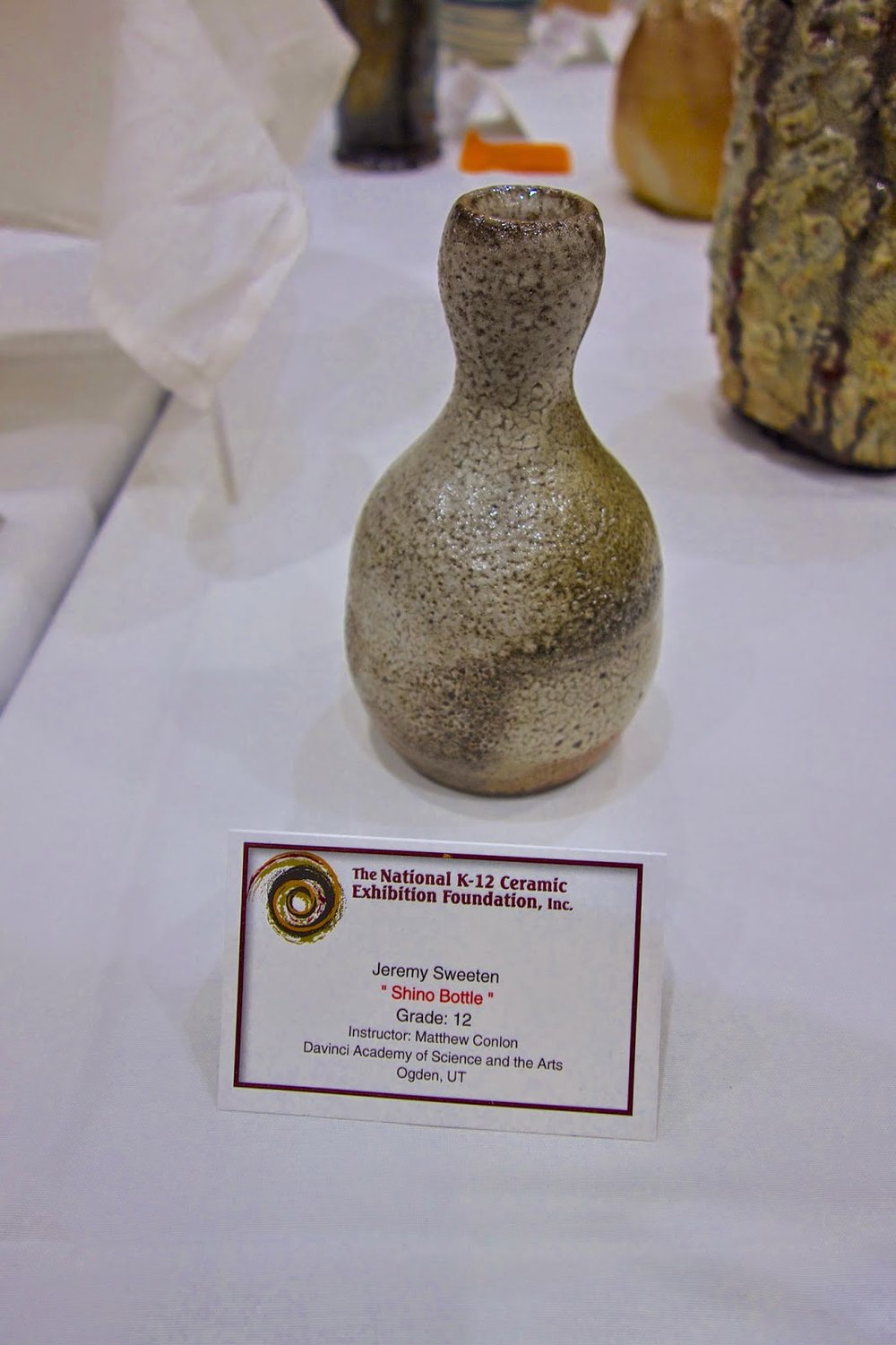 |
| Jeremy Sweeten, Shino Bottle, Grade 12. |
 |
| Johanna Engebrecht, Nancy's Teapot, Grade 9. |
 |
| Brandon Benson, Sink, Grade 11. |
Next I bumbled in to see Gustavo Perez and Linda Christianson demonstrating. They worked well together, with Gustavo describing his process as Linda threw the beginnings of her pieces. I found Gustavo's process fascinating. He works with cylinders and alters them; usually with a scalpel or several scalpels strapped together, and by pushing out parts of the form from the inside. He embodied the idea that ceramics should be playful, saying, "my idea is that you have to try every idea that comes into your head." Gustavo only finds the piece interesting whilst he is changing it; once fired, he loses interest.
 |
| Gustavo Perez |
 |
| Altered cylinder |
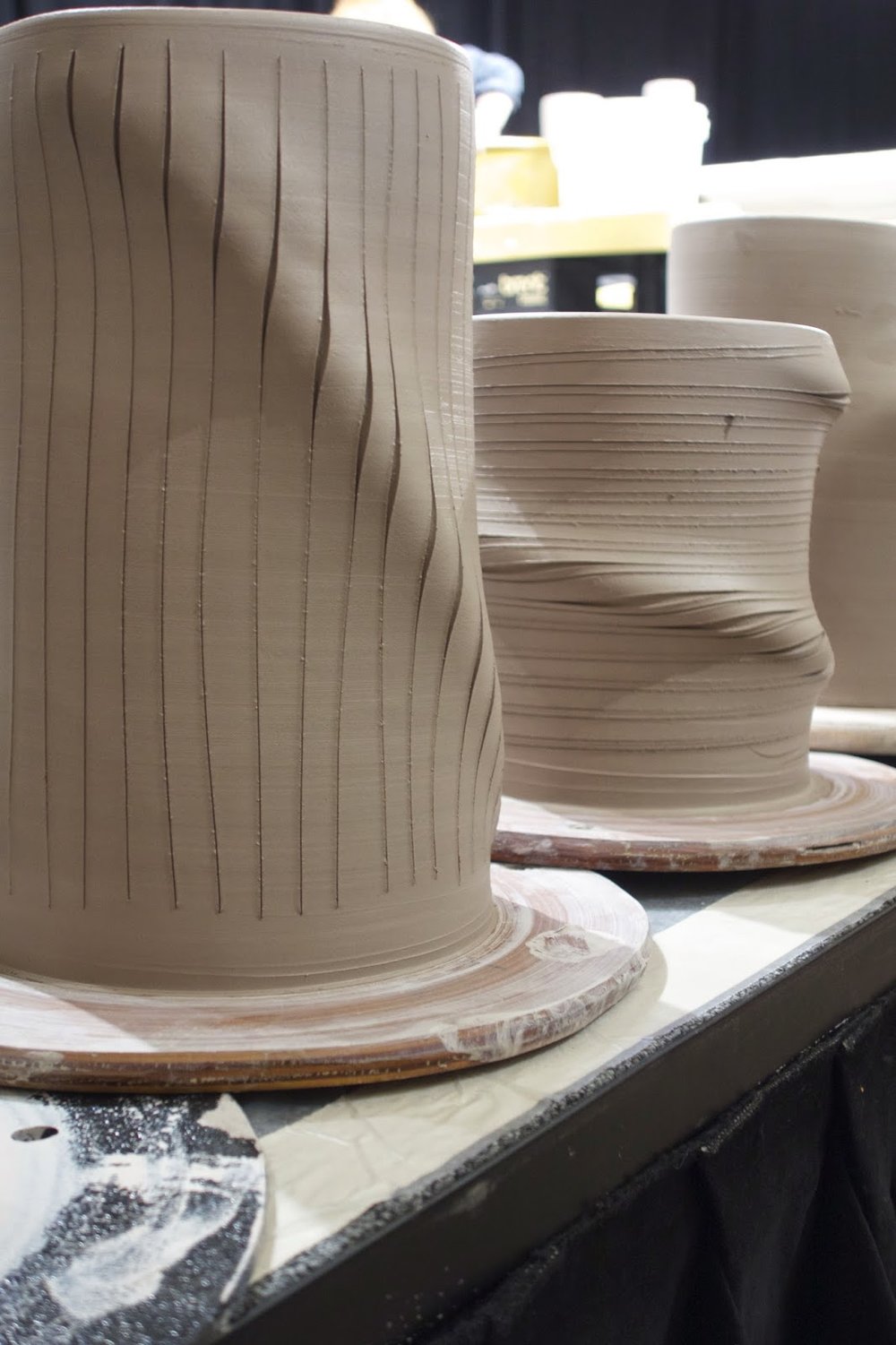 |
| More altered cylinders |
 |
| Gustavo in action |
I fancied a wander after this, so I took a look around the Resources Hall. I spoke to quite a few people including the lovely folks at the log book (a long-running wood-firing journal) and Claudia and Pietro from La Meridiana. It was great seeing Claudia and Pietro again, and reminded me of my time at their school in Tuscany. It's a magical place, and I recommend going if you can!
I also found lots of interesting pots in the Resources Hall. Most of the pictures have captions with the artist and a link to their site, but there were a couple I failed to note down; help out in a comment if you know the artist.
 |
| Marian Baker, Green stoneware teapot, Yarmouth, 2014. |
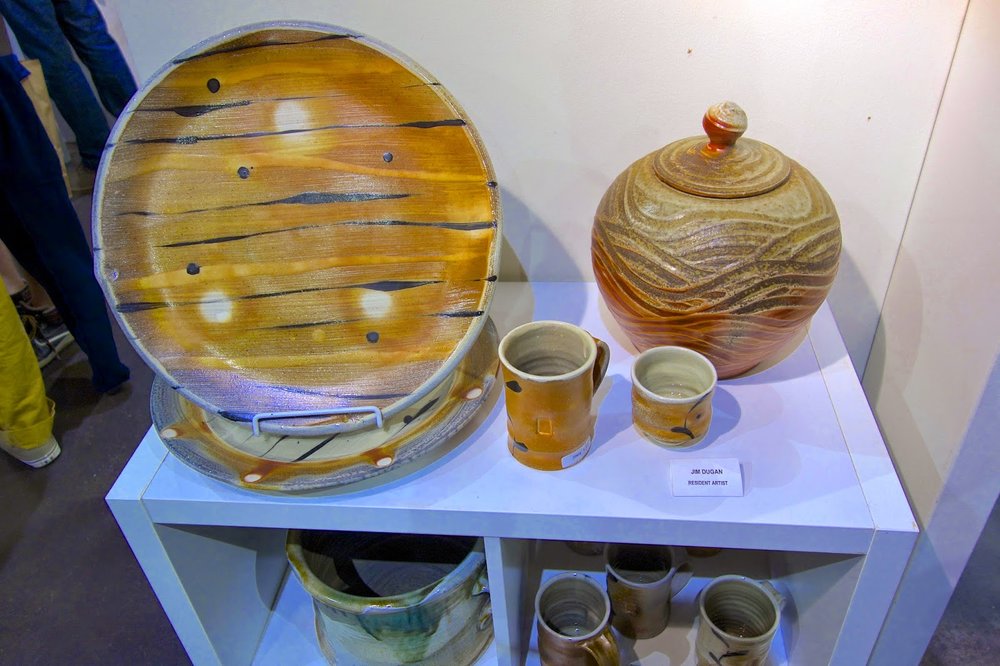 |
| Jim Dugan, Resident Artist, Baltimore Clayworks. |
 |
| Kevin Rhode, Oyster Seeds. |
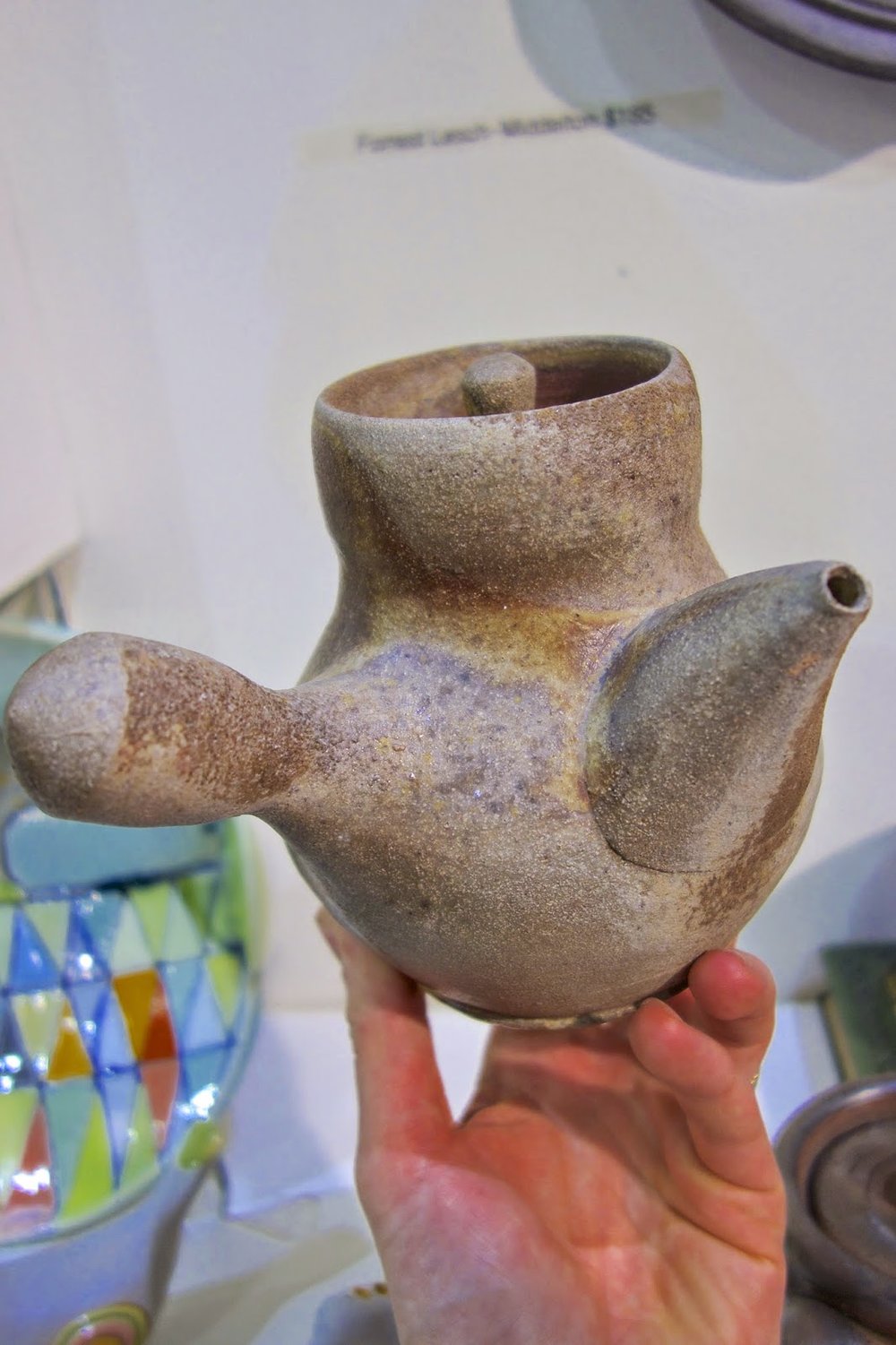 |
| I love this teapot but don't know who made it: anyone know? Please leave it in a comment if you do! |
 |
| Hunt Dalglish, Finger combed slip platter. |
 |
| Hunt Dalglish, Finger combed slip platter. |
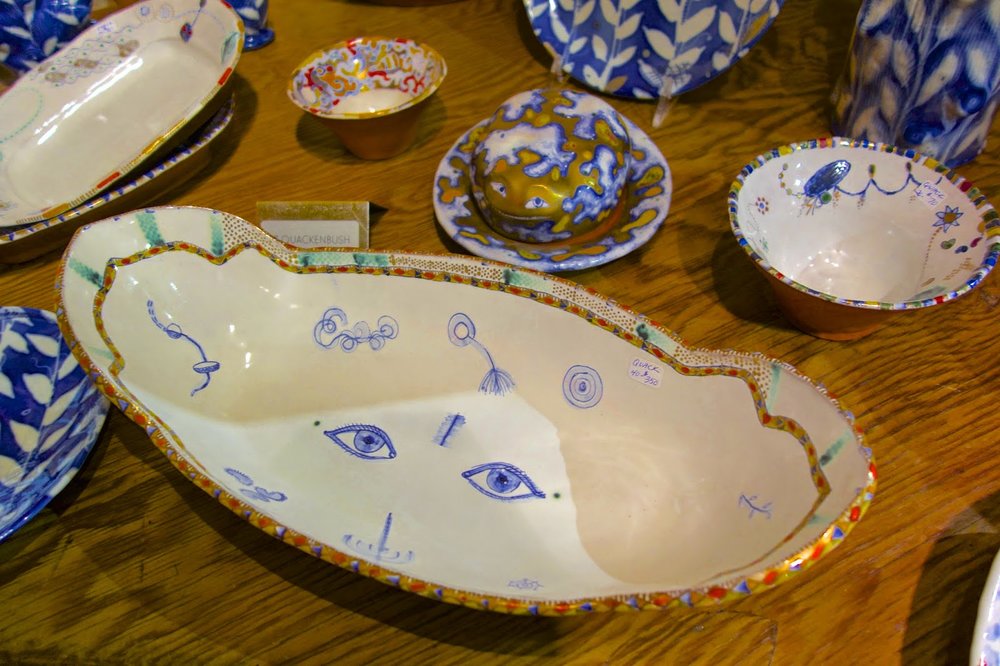 |
| Liz Quackenbush, various pieces. |
 |
| An airstream full of pots. |
 |
| Inside the stream. |
 |
| David Bogus, Optimist Luggage 101, Earthenware, 2014, $1500. |
 |
| David Bogus |
 |
| David Bogus, Boot Stack, Earthenware, Suitcase, 2014, $4000. |
 |
| Unsure of this artist. |
 |
| More pots. Pots everywhere! |
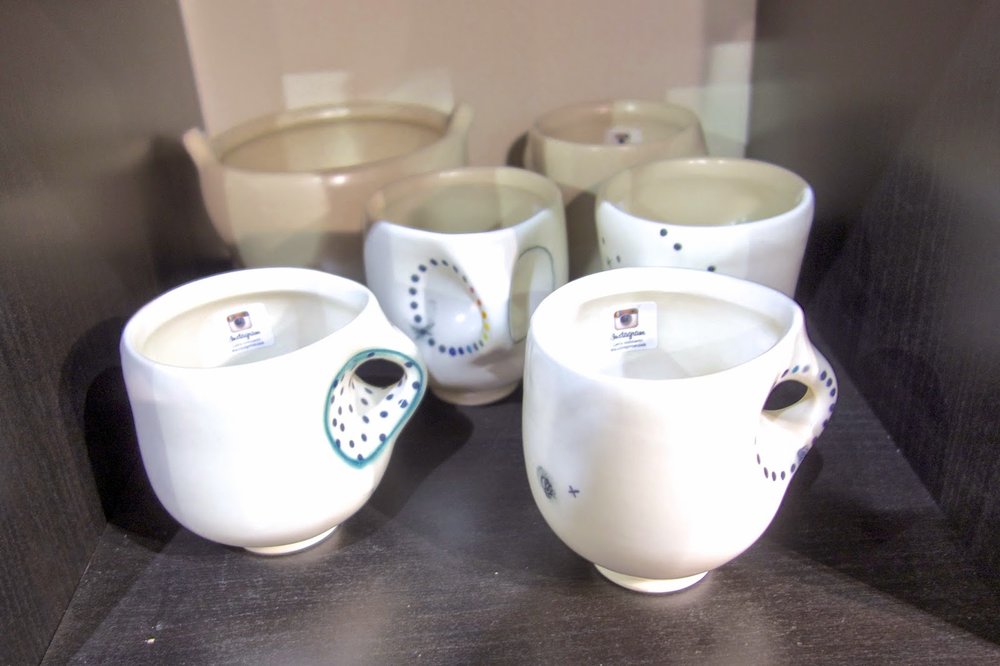 |
| Audrey Roseluk (these mugs feel amazing in the hand and I bought one for my wife Lauren). |
 |
| Steven Hill |
 |
| Henderson's Redware |
 |
| I bought a lovely brush from this chap, whose name I cannot recall. |
 |
| Bamboo handled brushes with various hairs. |
 |
| Lots of clay on that wheel. |
After much exploring downstairs I went back up to hear John Baymore's talk, "What Makes a Teabowl a Chawan?" This was awesome. John cleared up many questions I had had about the Japanese Tea Ceremony and made me realise that I must go and see it for real and participate. I learnt the difference between coach and oust for example: thick and thin tea. It became clear that there was a level of intricate detail to the movements and conventions that John did not begin to describe.
I nearly went to grab some dinner but decided to head straight to the Biennial at Brown University, stomach rumbling away. I was so happy to arrive and find a long table laid out with pita breads, falafel, hummus and other executive snacks, as well as obliging barmen serving wine. I ate far too much and meandered around happily red wine in hand. The work was mostly sculptural and tended towards conceptual art rather than functional pieces.
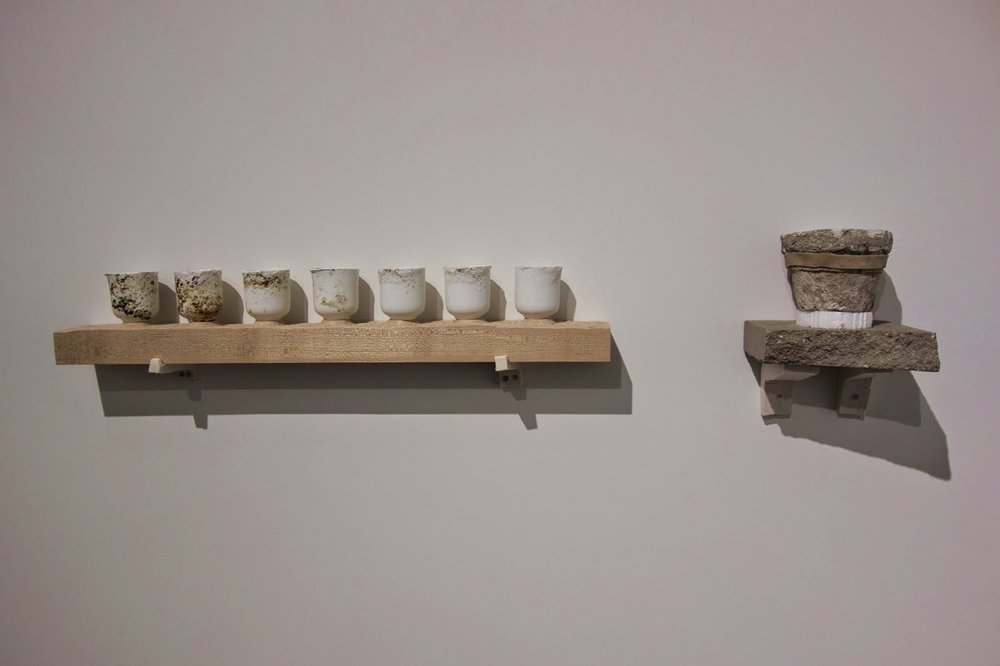 |
| Christy Wittmer, Scavanged, 2014, Porcelain, wood, concrete, styrofoam cup, dirt, rubber band. |
 |
| Nancy Green, Wood Fired Hollow Square Tray, 2013. Anagram wood fired, Shigaraki clay. |
 |
| Donna Cole, Regeneration II, 2014, Porcelain, Crystalline glaze. |
 |
| Zac Spates, Firebox Pitcher, 2013, Wood fired porcelain, shino slip. |
 |
| Virginia Pates, The Lower Parking Lot, 2014, Thrown and altered porcelain, fired dirt from the lower parking lot at the Annandale Campus of Northern Virginia Community College (NB: best notecard description I saw at NCECA). |
 |
| Liza Riddle, Closed Form #321, Hand built wet clay applied to a previously fired form, water soluble metals, iron, nickel, cobalt and other metal salts. |
 |
| Aaron Nelson, Pixel, 2013, Upcycled vintage porcelain plates, digital decals, rare earth magnets, steel, data matrix code. |
 |
| Vlad Basarab, The Archeology of Memory-Large Book, 2014, Unfired white clay and video. |
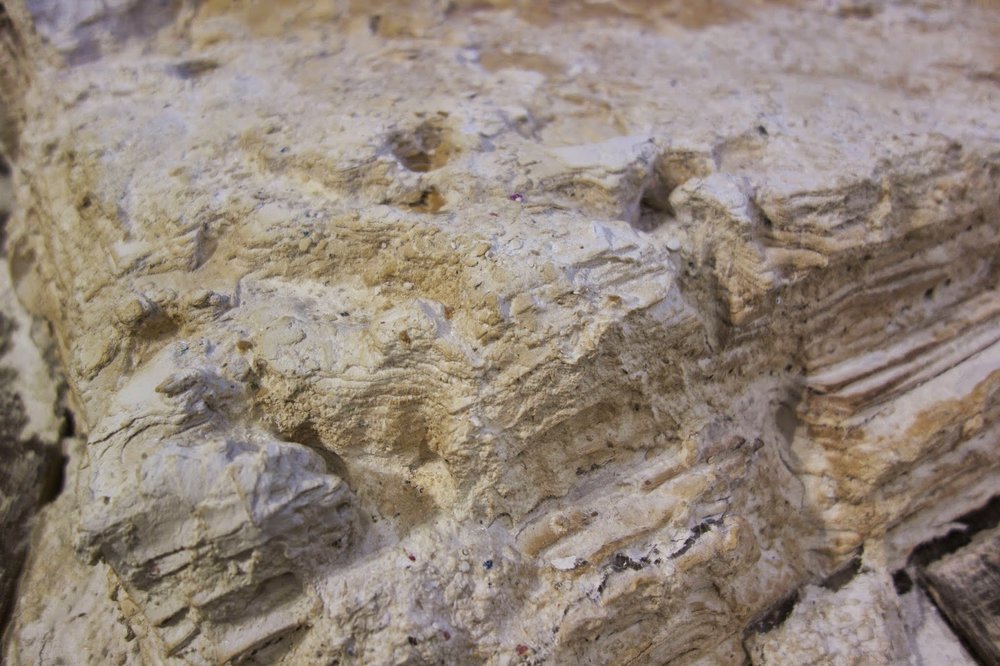 |
| Vlad Basarab, The Archeology of Memory-Large Book, 2014. (You could see how rain water had started forming streams that cut through and eroded sections of the clay book). |
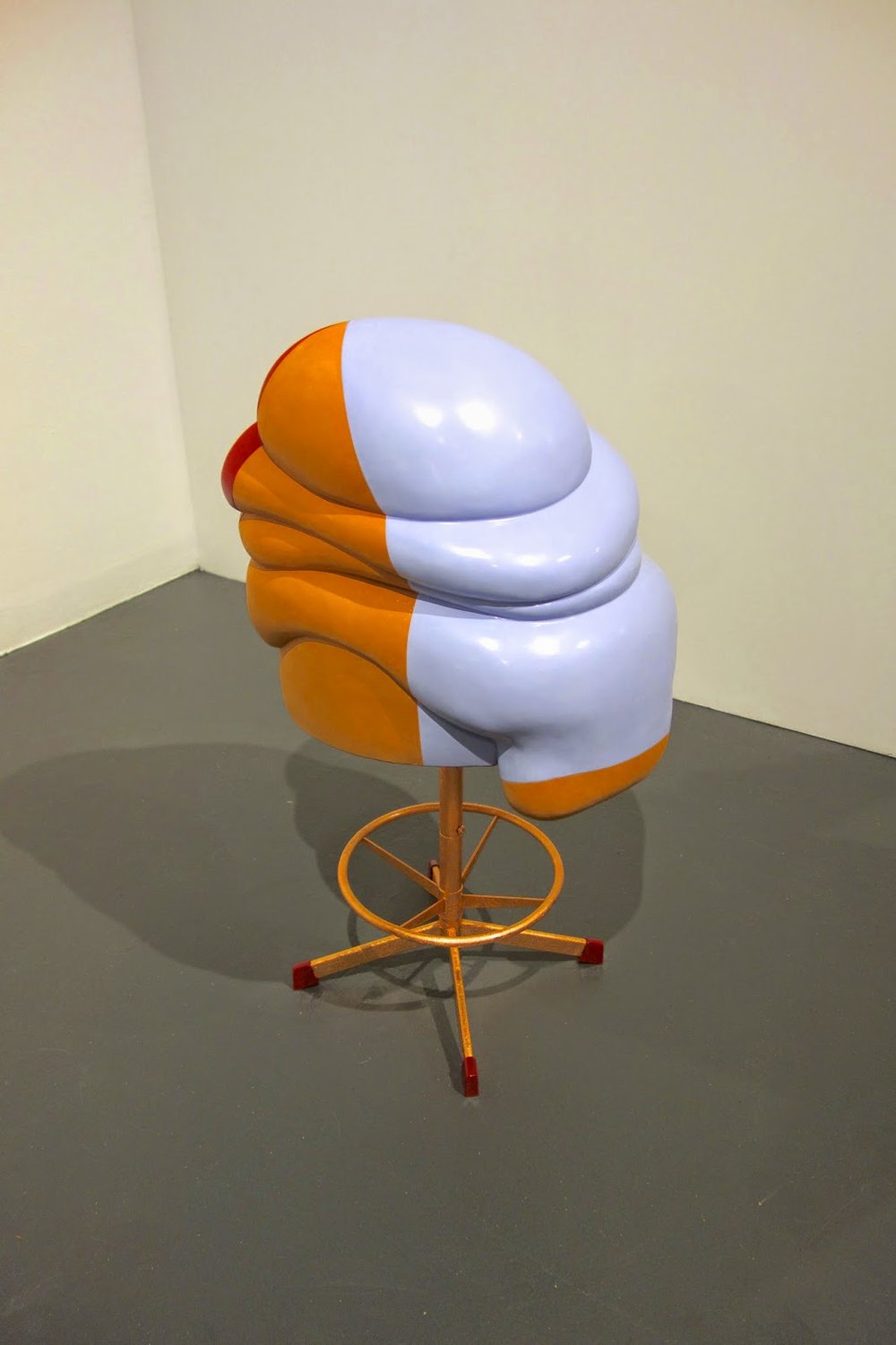 |
| Jessika Edgar, Seated Woman, 2014. Red earthenware with mica, majolica glaze, rubber, copper leaf, metal stool. |
 |
| YunWook Mun, Poof 2.0, 2014. Unglazed porcelain, porcelain slip, steel shelves, pedestals. |
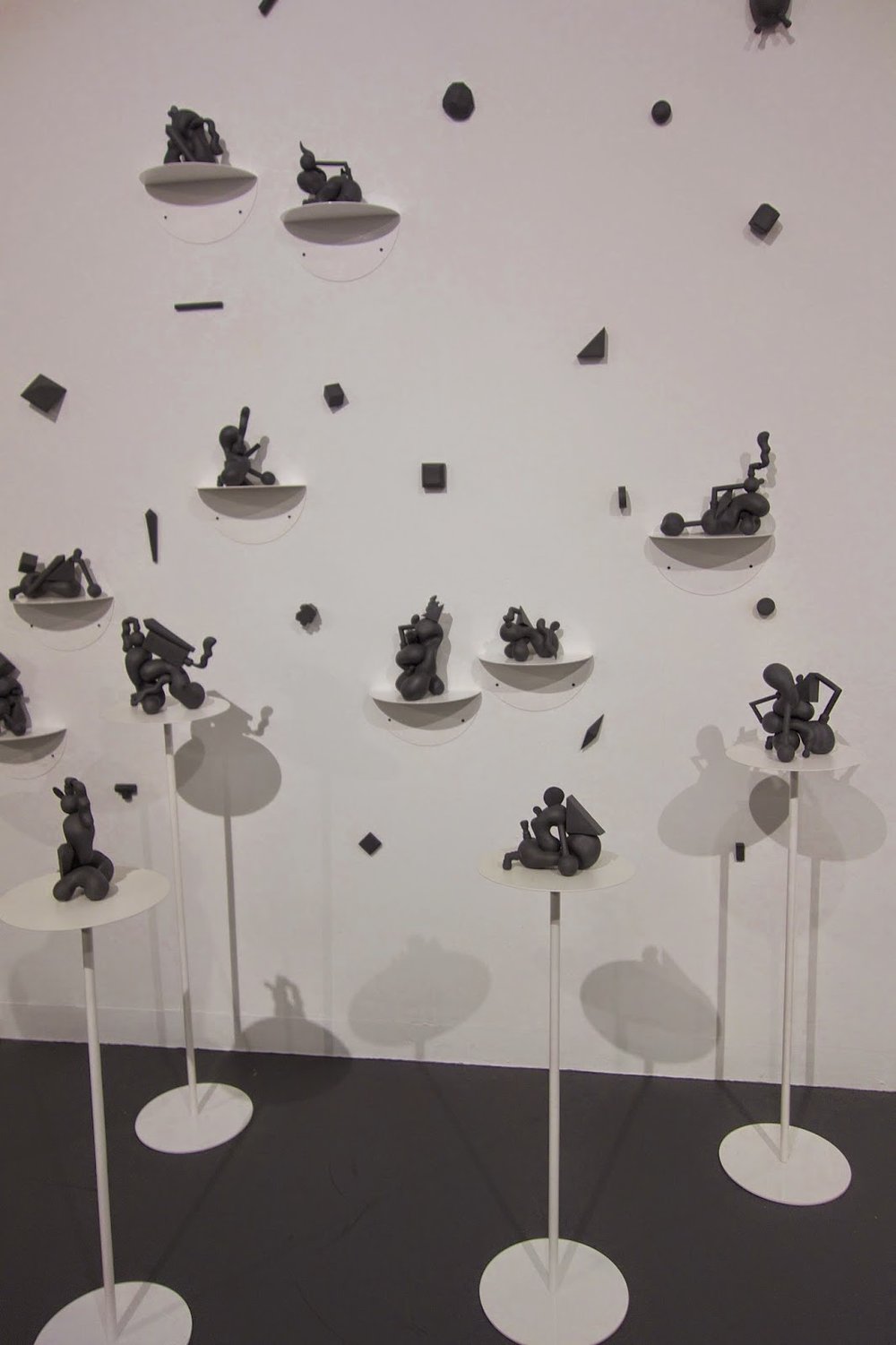 |
| YunWook Mun, Poof 2.0, 2014. Unglazed porcelain, porcelain slip, steel shelves, pedestals. |
 |
| YunWook Mun, Poof 2.0, 2014. Unglazed porcelain, porcelain slip, steel shelves, pedestals. |
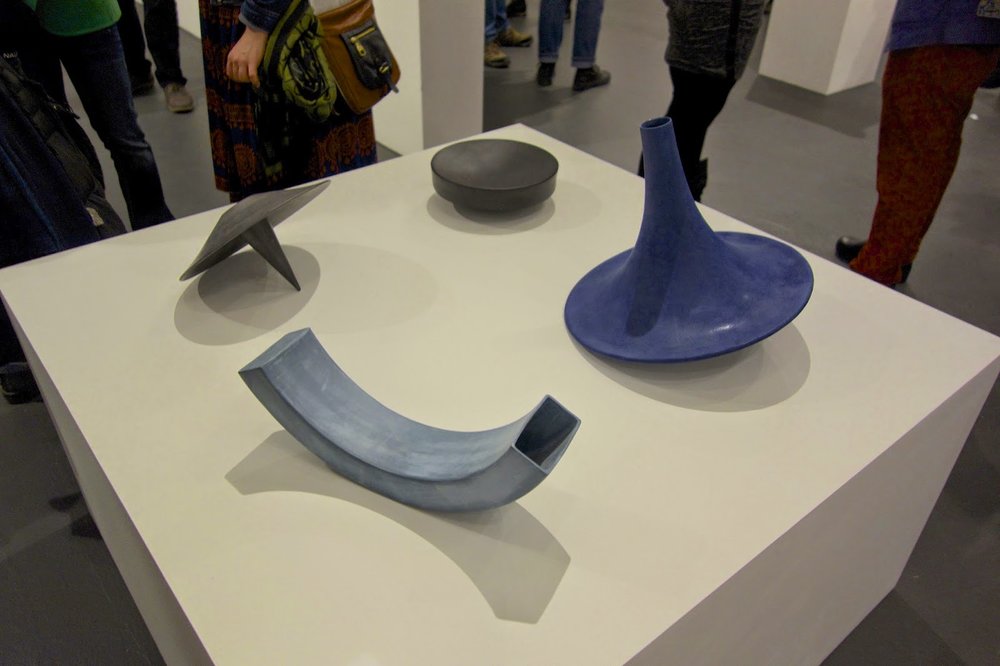 |
| Brooks Oliver, Wobble Vessels, (wobble vase, wobble curved vase, wobble bowl, wobble vase/bowl), 2014. Cast porcelain. |
 |
| Young Mi Kim, Vessel 1, 2013. Coiled and pinched stoneware, glaze. |
 |
| Jeremy Brooks, Shinowear, 2014. Wood fired stoneware, shine glaze, ceramic decal. |
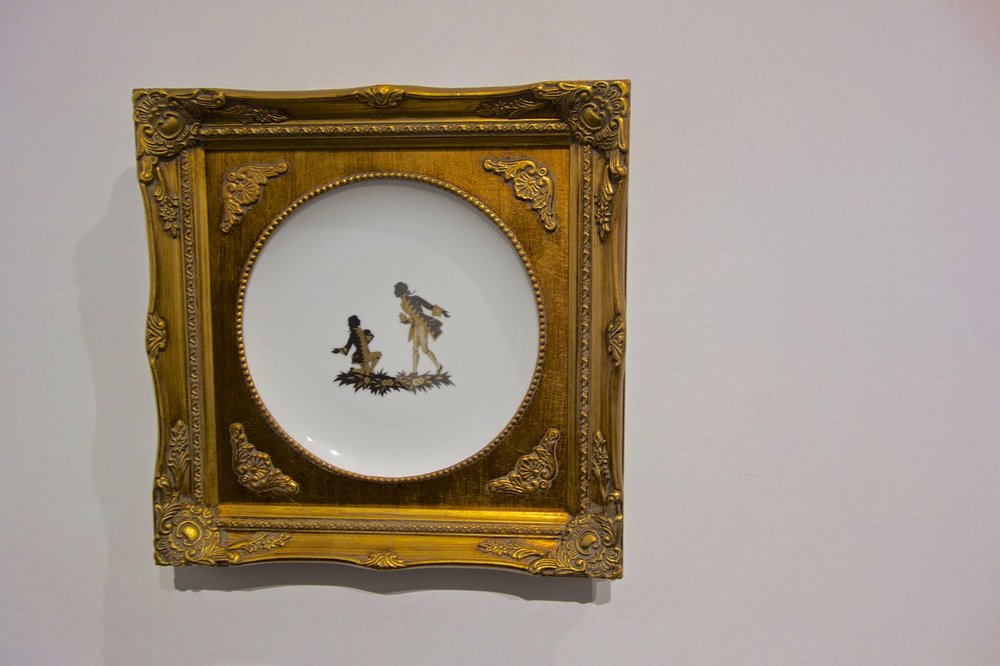 |
| Jeremy Brooks, Coming Out, 2013. Manufactured porcelain plate, frame, ceramic decal. |
 |
| Ivan Albreht, Re-deconstructed platter, 2014. Broken and reassembled glazed porcelain, custom decals, gold luster, epoxy, gold leaf powder. |
 |
| Lorna Meaden, Shot Glasses, 2014. Wood and soda fired porcelain, slip inlay. |
 |
| Philip Finder, Teapot, 2014, Stoneware, glazed and sandblasted. |
 |
| Marissa Neuman, 90 Degrees and Sunny, 2014. Stoneware, underglaze, clear glaze, wood, foam, textiles. |
 |
| Zimra Beiner, Grey Alphabet, 2013. Glazed earthenware, wooden bench. |
 |
| Zimra Beiner, Grey Alphabet, 2013. Glazed earthenware, wooden bench. |
 |
| Jeffrey Mongrain, State of the Union Address, Dec 3rd 1929, President Herbert Hoover;"... returning to normal...", 2012. Sculpted sound translation, clay and marble dust. |
 |
| Eva Kwong, KERMES, 2013. Coil-built stoneware, glaze, oxide painting with flashing. |
 |
| Misty Gamble, Sunday, 2013. Casting slip, beads, enamel pearls, rhinestones, glaze. |
 |
| Misty Gamble, Sunday, 2013. Casting slip, beads, enamel, pearls, rhinestones, glaze. |
 |
| Jin Kim, Heteronymous, 2014, Porcelain and Plexiglas. |
Well, that took awhile to catalogue! I hope you enjoyed the pictures, and I will be posting soon about Friday of NCECA.